Lê Phổ
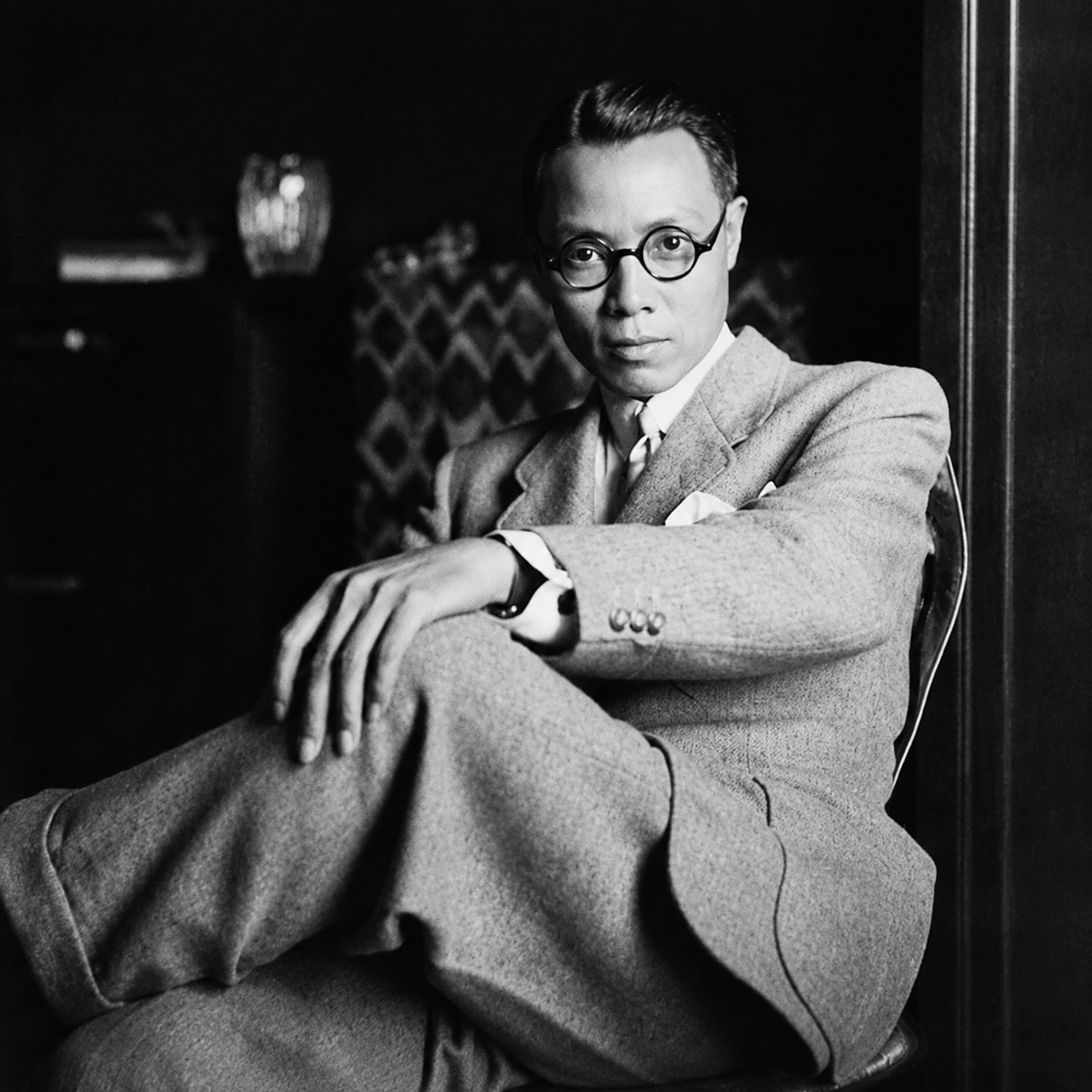
Le Pho (Vietnam/France, 1907-2001)
Born in Hanoi in 1907, Le Pho belonged to the first generation of artists trained at the École des Beaux-Arts de l’Indochine. He graduated in 1930 alongside Nguyen Phan Chanh and Mai Trung Thu, at a moment when the school was establishing a new framework for modern painting in Vietnam. Victor Tardieu quickly recognised his ability and selected him to assist with the school’s participation in the 1931 Exposition Coloniale Internationale in Paris.
The journey proved decisive. Le Pho travelled through France and other parts of Europe, studying museums, churches and collections before returning to Hanoi in 1932, where he taught at the École des Beaux-Arts de l’Indochine. In 1937, he left Vietnam for Paris, settling permanently in France and never returning to his native country.
His oeuvre is generally divided into three periods. The early works, extending from the late 1920s to 1945, include oils, rare lacquers and, above all, ink and gouache on silk. These works are distinguished by restrained colour, precise drawing and compositions deeply rooted in the visual culture of Hanoi and Tonkin.
From 1946 to 1962, during the Romanet period, his palette intensified and his silk paintings assumed a greater density of colour and surface. In 1963, his association with Wally Findlay Galleries marked a further change. Oil on canvas became increasingly important, accompanied by stronger brushwork and brighter colour. Women, mothers and children, gardens and flower bouquets became recurrent subjects.
Across these successive phases, Le Pho repeatedly returned to Vietnamese memory and subject matter while adapting his technique to the artistic environment of France. His career, extending from Hanoi to Paris and later to an international audience, occupies a central position in the history of twentieth-century Vietnamese painting.