Vũ Cao Đàm
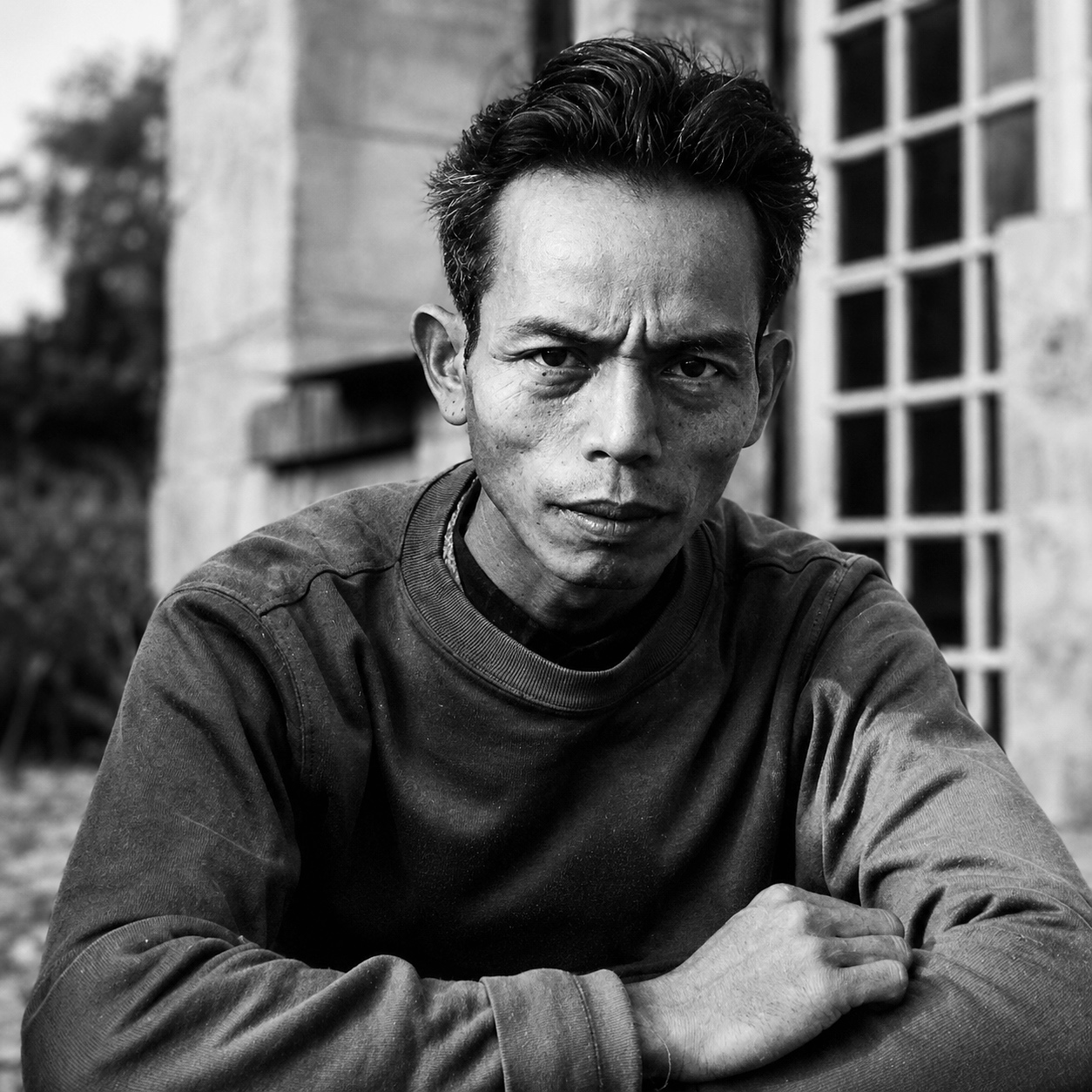
Vu Cao Dam (Vietnam, 1908-2000)
Born in Hanoi in 1908, Vu Cao Dam entered the École des Beaux-Arts de l’Indochine in 1926, where he specialised in sculpture. His ability was recognised early. In 1931, during his final year at the school, Victor Tardieu selected six of his sculptures for presentation at the Exposition Coloniale Internationale in Paris, five cast in bronze and one executed in plaster. That same year, Vu Cao Dam left Vietnam for France, where he would remain for the rest of his life.
In Paris, he continued to work as both sculptor and painter. Sculpture remained fundamental to his understanding of the human figure: even in his paintings on silk, heads, hands and bodies are constructed with a pronounced sense of volume, balance and physical presence. During the 1930s and 1940s, he developed a refined body of works in ink and gouache on silk, frequently representing women, families and figures drawn from Vietnamese history and literature.
After the Second World War, Vu Cao Dam increasingly turned towards oil painting. His move to the south of France brought him into proximity with the artistic circles of Vence and Saint-Paul-de-Vence. His palette grew lighter and his handling freer, while the subjects that had long occupied him, mother and child, lovers, musicians, horses and literary figures, continued to recur.
Although he never returned to Vietnam after 1931, Vietnamese memory remained persistent throughout his work. Rather than repeating a fixed repertory, Vu Cao Dam continually reworked familiar figures and themes through changes of medium, colour and pictorial structure. His dual formation as sculptor and painter distinguishes his practice within the first generation of artists trained at the École des Beaux-Arts de l’Indochine.