

Boi Tran Through the Eyes of Vietnamese Painters: A Poem by Dinh Cuong
Dinh Cuong
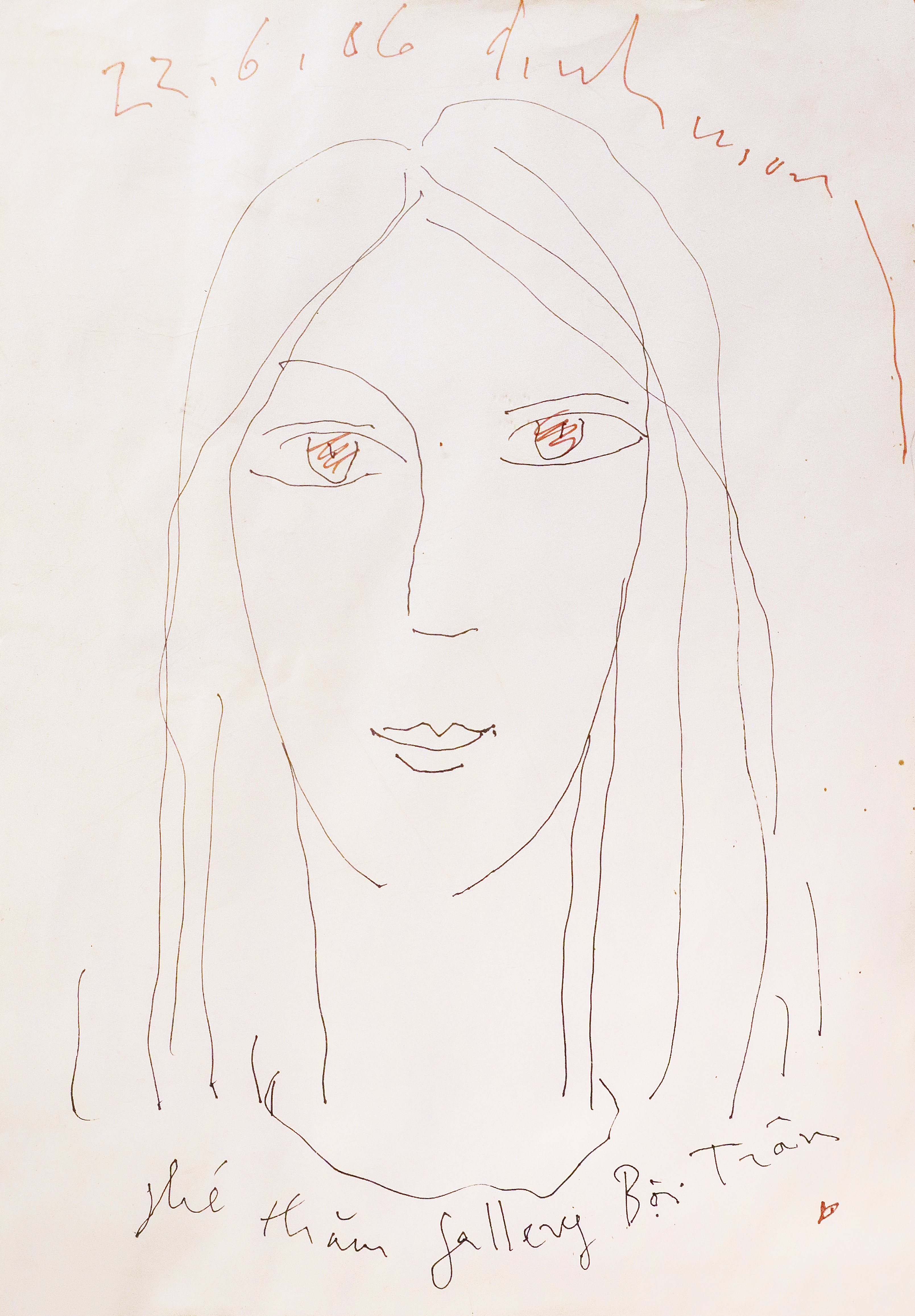
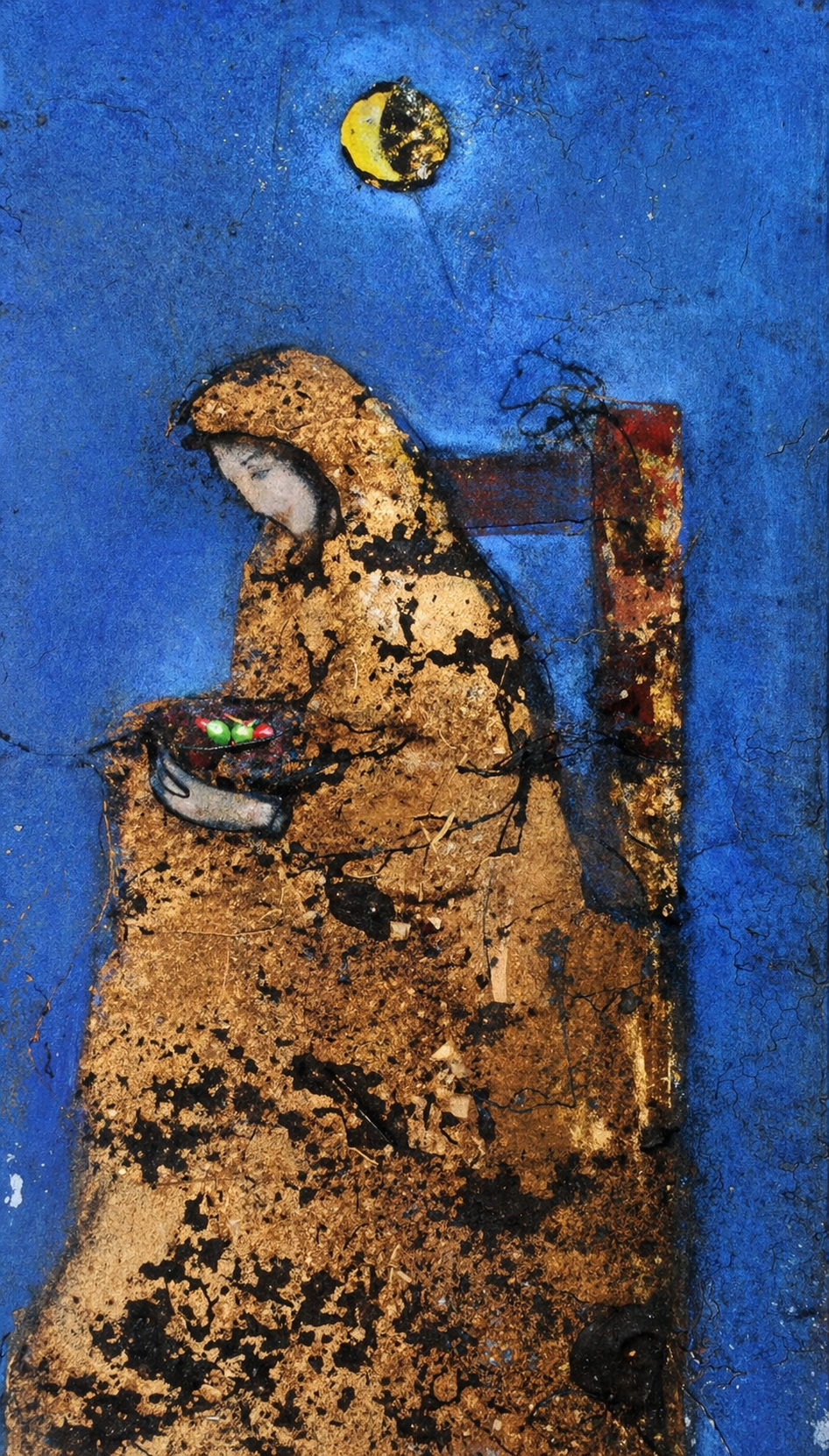
Boi Tran is not described because she does not need to be. She remains, not as image, but as presence, not as subject, but as the place to which feeling returns.
The poem is written at a distance.
Not only in geography, from Virginia to Hue, but in time, in memory, in a space where what remains is no longer what is seen, but what endures.
Dinh Cuong’s text, dated October 10, 2011, is addressed simply to “a lady on Thien An Hill.” It does not name her. It does not introduce her. It assumes her presence.
The poem is reproduced here in full:
A piece of poetry to a lady on Thien An Hill on a rainy day
A lady on Thien An Hill
heavy rains without leaving home
heavy rains over the centuries-old pine trees
heavy rains through October in Hue
incense smoke in the middle of the house
has the roll of the sea subsided
has the Queen of the Night blossomed
whitening over the hall in the rain?
nostalgic about the wine night
under the neon lights
heavy rains these days
has the light been off halfway?
Is a lady on Thien An Hill
with the door latched feeling blue?
Dinh Cuong, Virginia, 10 October 2011
The poem does not move outward. It does not describe a scene in order to fix it. It remains within recurrence, rain, memory, question, pause.
Its language is simple, almost unguarded. And yet, it is precisely through this restraint that something else becomes perceptible.
The repetition of rain is not meteorological. It is temporal. It carries duration, continuity, a condition that extends beyond the present moment.
The house is interior, but not closed. Incense smoke rises. The Queen of the Night may or may not bloom. Light flickers. Nothing is certain, yet nothing disappears.
The poem does not resolve. It remains suspended.
Is a lady on Thien An Hill
with the door latched feeling blue?
This question is not meant to be answered. It marks the limit of what distance allows.
And yet, within that distance, one thing holds.
The “lady on Thien An Hill” is not described because she does not need to be. She is already known, not through image, but through continuity.
She is not a subject. She is a point of orientation.
It is in this sense that the poem becomes less about weather, memory, or place, and more about relation.
Dinh Cuong was not alone in this recognition.
For artists who came to Hue, and to Boi Tran Art Gallery, the encounter was rarely defined by exhibition alone. It unfolded instead through a different register, one shaped by presence, by hospitality, and by a space that did not impose itself, but received.
In 2010, at the Hue Fine Arts Museum, Dinh Cuong and Boi Tran were present alongside Truong Be and Vinh Phoi for the exhibition Hoang Dang Nhuan and Dinh Cuong in Hue. The gathering did not take on the weight of a formal event. It remained closer to a shared moment, quietly held rather than defined.
Across such encounters, a pattern emerges.
Boi Tran does not appear as a figure to be described. She is not positioned within the discourse of style, nor confined within a single narrative of practice.
She is recognised instead as something more elusive.
A presence that holds.
A place that remains.
For painters, whose work often depends on image, this form of recognition is unusual. It does not produce representation. It does not translate into portrait or likeness.
It results instead in gesture, a poem, a visit, a return.
At Boi Tran Garden, this condition persists.
Art is not separated from life. It is not framed as object alone. It exists within a continuum, where painting, architecture, memory, and encounter remain inseparable.
The poem, in this sense, does not stand apart from the place.
It belongs to it.
Not as description, but as trace.