
Nguyen Phan Chanh
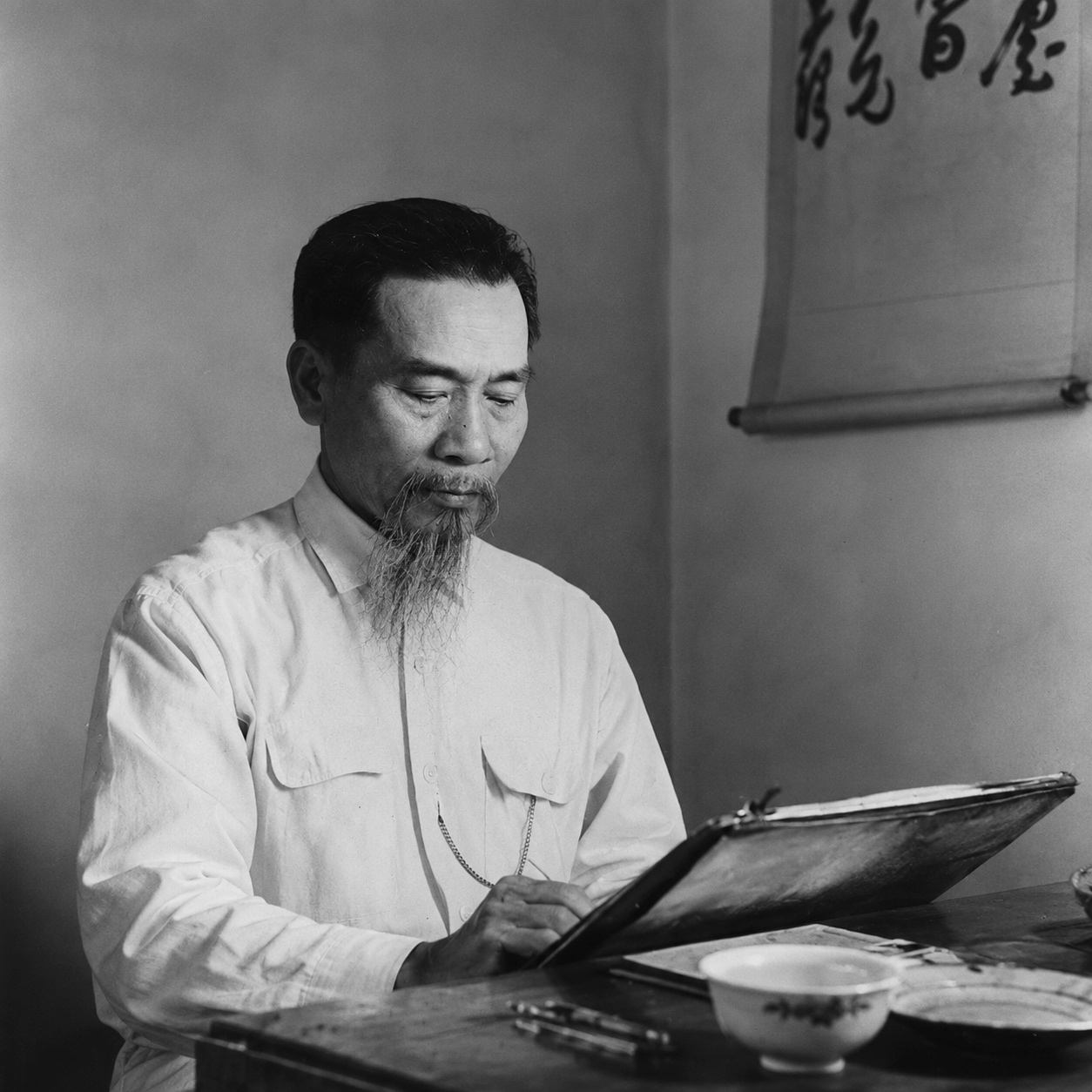
Nguyen Phan Chanh (Vietnam, 1892–1984)
Born in Trung Tiet, Ha Tinh, in 1892, Nguyen Phan Chanh grew up within a Confucian scholarly tradition and studied Chinese calligraphy with his father. He later trained at the Hue Pedagogy School, graduating in 1923 before teaching at Dong Ba Primary School. In 1925, he was the only candidate from central Vietnam admitted to the first class of the École des Beaux-Arts de l’Indochine in Hanoi.
Older than most of his fellow students, Nguyen Phan Chanh brought to the school a markedly different formation. Encouraged to explore painting on silk, he produced his first works in ink and gouache on the medium at the end of the 1920s. He graduated in 1930. The following years established the principal characteristics of his mature work: restrained tonal harmonies, carefully balanced compositions and an exceptional sensitivity to the absorbent surface of silk.
His subjects were drawn largely from everyday Vietnamese life: women sewing, washing vegetables, selling betel or sugar cane, children at play and figures occupied with domestic tasks. These activities are observed without anecdotal excess. Gesture, posture and the relation between figures carry the composition, while a limited range of browns, blacks, creams and occasional muted colour lends many of his early works their distinctive gravity.
Nguyen Phan Chanh’s paintings attracted attention in France from the beginning of the 1930s. Works sent to Paris in 1931 were exhibited, collected and subsequently reproduced in L’Illustration, contributing to the early recognition of Vietnamese modern painting beyond Indochina.
His sustained mastery of ink and gouache on silk established a pictorial language in which technical restraint, daily life and the dignity of ordinary gesture remained closely joined. His work occupies a singular position within the first generation of modern Vietnamese painters.