Beyond Art: Tran Luu Hau, Boi Tran, and the Ethics of Regard
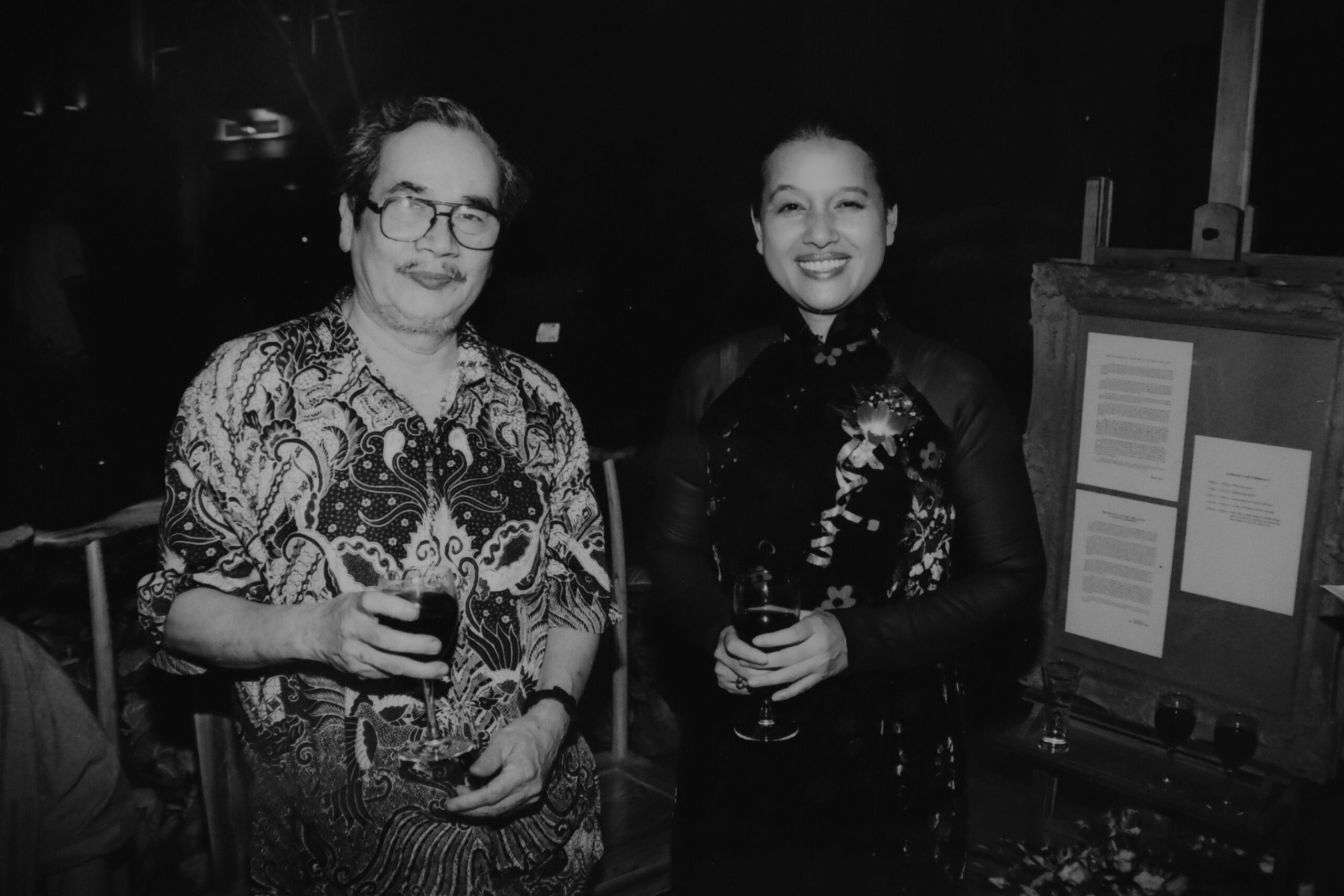
To name a fellow artist in the open is to recognise without reservation. In his words, Tran Luu Hau affirmed Boi Tran not only as a painter, but as a presence through which art is preserved, lived, and shared.
In art, it is rare for one painter to speak of another with clarity that does not depend on context, theory, or distance. More often, recognition is mediated, softened, or framed within the language of critique. Yet there are moments when such mediation falls away, and what remains is a direct articulation of regard, grounded not in abstraction, but in lived knowledge.
The words that Tran Luu Hau wrote for Boi Tran belong to this rarer condition. They do not describe her through categories, nor do they attempt to position her within a particular movement or lineage. Instead, they speak from a familiarity with the person as much as with the work, and in doing so, they reveal a more complete understanding of what it means to exist within art.
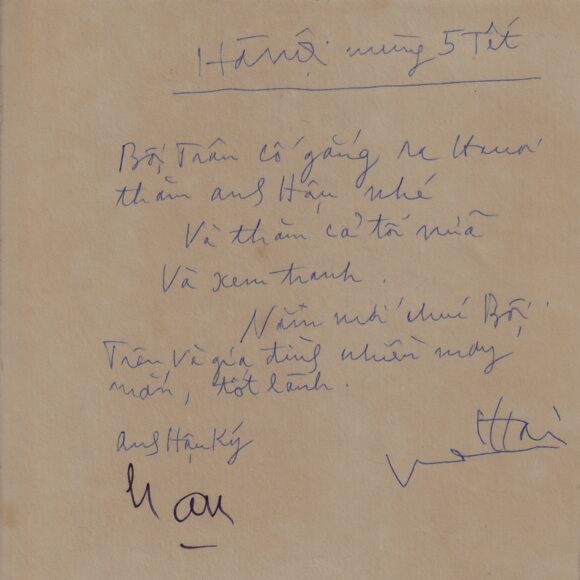
In 2001, an invitation was sent from Hanoi for the exhibition Nature and People from an Old Outlook. Alongside its formal structure, a handwritten note appeared, asking Boi Tran to travel, to meet, to see. The gesture moved easily between professional and personal spheres, reflecting a relationship that did not need to be defined. It was understood.
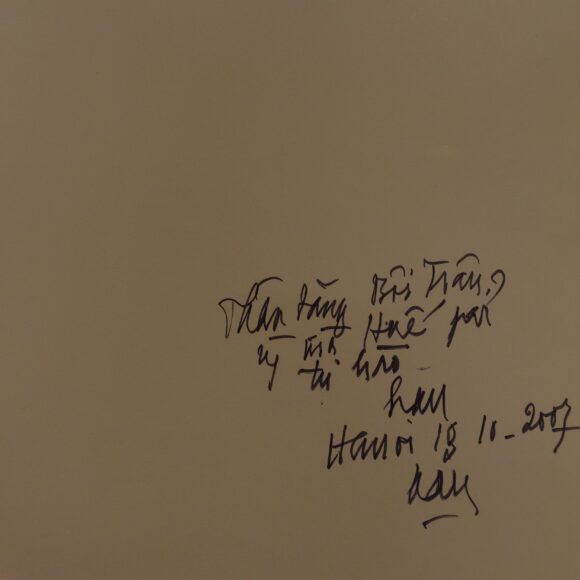
Over time, this understanding found a more explicit form. Tran Luu Hau wrote directly: “Dearly gift to Boi Tran, the one Hue must be proud of.”
In this line, what is affirmed is not only an individual, but a position within a place. To be named in such a way is to be recognised as someone who carries, and reflects, a cultural identity beyond personal achievement.
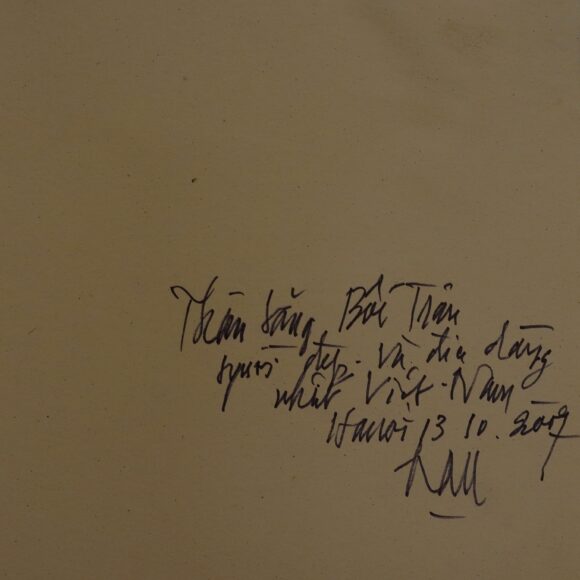
He continues: “Dearly gift to Boi Tran - the most charming and elegant lady of Vietnam.”
Here, the language shifts, not toward superficial praise, but toward a recognition of presence, of manner, of a way of being that accompanies the work. It acknowledges that what defines an artist does not end at the canvas.
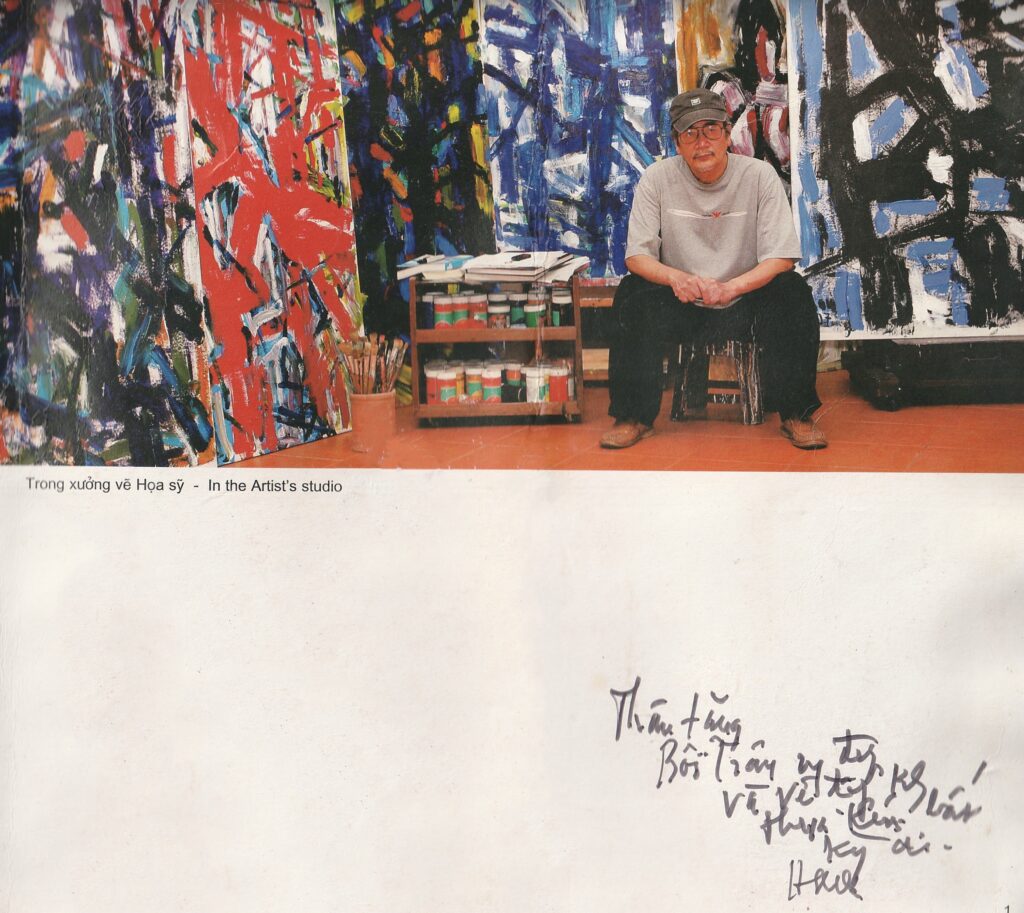
And finally: “To Boi Tran, the most elegant lady and as a woman painter, she is second to none.”
This statement does not hesitate. It does not qualify itself through comparison or context. It places Boi Tran unequivocally within the field of painting, not as exception, nor as category, but as equal, without diminution.
Taken together, these lines form more than a series of compliments. They articulate a perception that extends across roles.
Boi Tran is not seen only as a painter. She is recognised as someone who sustains art in multiple forms, through creation, through collection, and through the act of making space for others.
As a painter, her work stands within a personal language shaped by discipline and persistence.
As a collector, she has preserved and brought together works that might otherwise remain dispersed, forming a continuity that is both historical and lived.
As a figure engaged in the organisation and circulation of art, she has created conditions in which artists, works, and audiences may encounter one another, not through abstraction, but through experience.
It is this totality that Tran Luu Hau’s words, in their directness, begin to reveal.
To recognise a fellow artist in this way is not to elevate them through rhetoric, but to acknowledge the full extent of their presence within art. It is to see not only what is made, but what is sustained.
At Boi Tran Art Gallery, and later at Boi Tran Garden, this presence does not fragment into separate roles. It remains continuous. The painter, the collector, and the organiser of art are not distinct identities, but aspects of a single practice.
In this sense, what Tran Luu Hau names is not simply an individual, but a way of inhabiting art, one that does not separate creation from responsibility, nor recognition from respect.