
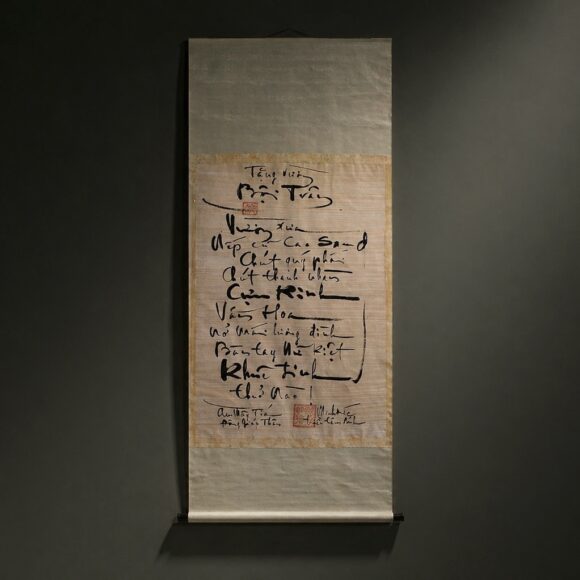
A sheet of aged paper, a few strokes of ink, and the authority of a discerning eye. In a brief dedication to Boi Tran, Thượng tọa Giới Đức, known in letters as Minh Đức Triều Tâm Ảnh, offered not casual praise but recognition of something rare: the survival of Hue refinement through house, garden, art and conduct.
Category: <span>Publications</span>
Boi Tran, The Woman Who Paints the Dream of Hué
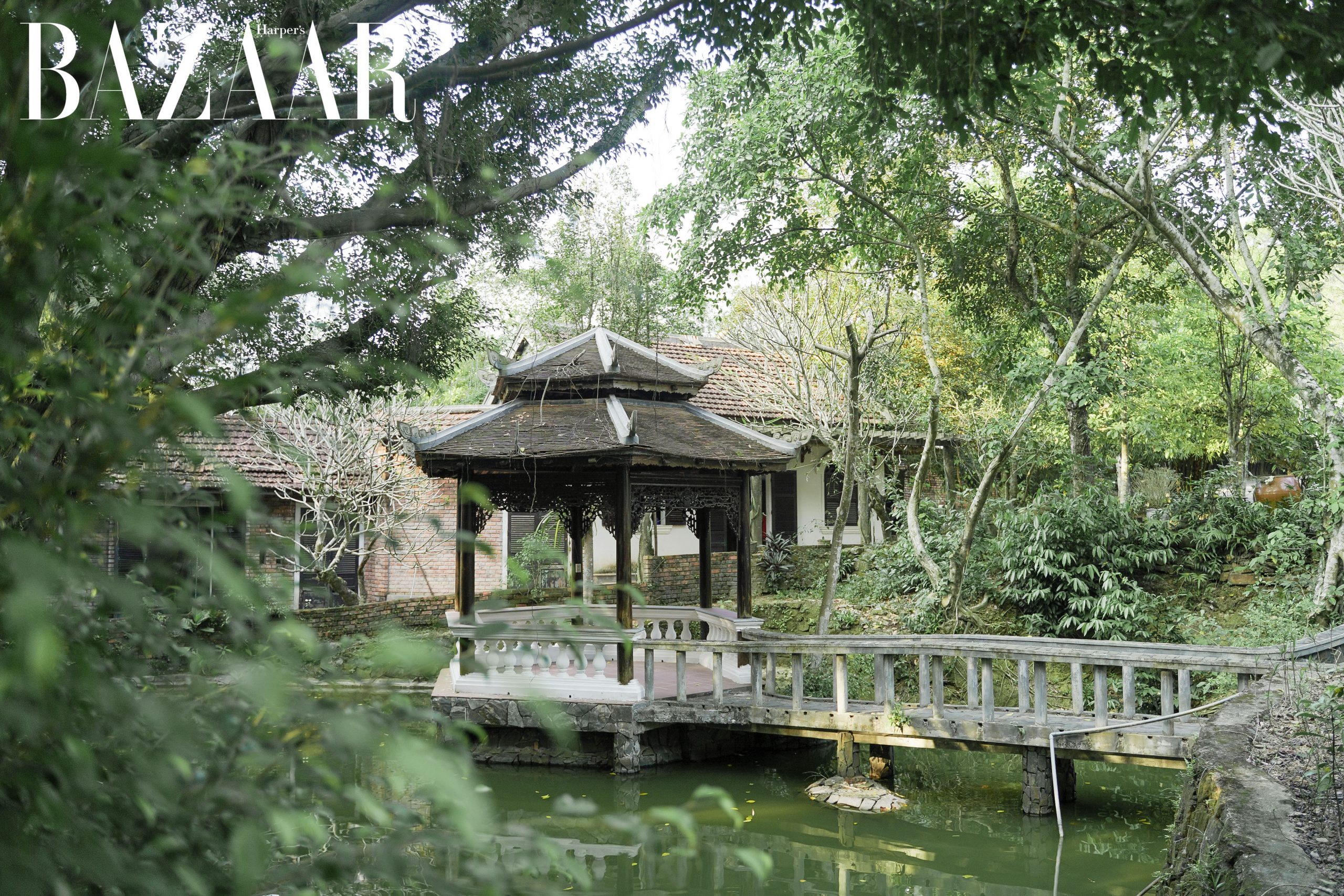
Boi Tran extends her practice beyond painting into the spatial reconstruction of Hue’s aesthetic consciousness. On Thien An and Kim Son hills, she reinterprets the traditional nhà rường within a contemporary garden setting. Her use of wood, brick, tile, and stone and her restraint toward steel and concrete, reflects not nostalgia but a cultural position. For her, architecture is not placed upon the land, but embedded within it. Heritage, therefore, survives not through replicated form, but through the continuity of spirit.
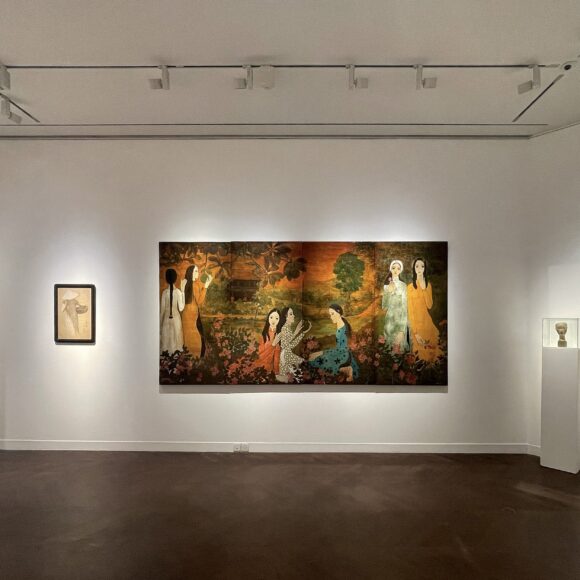
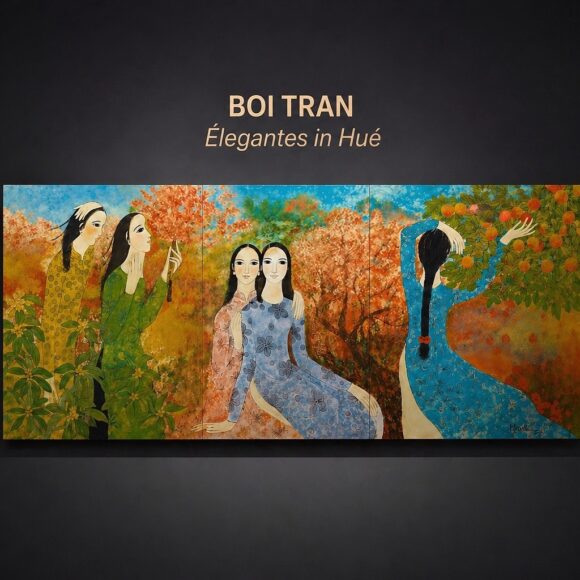
Boi Tran, “The Elegants Of Hué”, 2015, or The Inevitable Choice of Distinction Against Fate
In the hush that follows ruin, some shout; others whisper. Boi Tran paints. The Élégantes de Hue, seven women in flowing áo dài, do not ask to be seen; they endure, as Hue endured. Wounded, quiet, and radiant. Their beauty is not spectacle, but refuge. Melchior Dejouany’s journey into Vietnamese art began not with grandeur, but with the quiet soul of Boi Tran’s lacquer.
Among lacquer and legacy, her work is not loud. It is lasting.
Christie’s Paris | The Phoenix Glue and the Broken Silk Thread: Important Vietnamese Artworks from the Melchior Dejouany Collection
The Melchior Dejouany Collection showcases the brilliance of Vietnamese masters: Nguyen Gia Tri’s layered lacquer dreams, Le Pho’s elegant silks, and Vu Cao Dam’s poetic forms. And yet, it began with a single painting by Boi Tran, a quiet work of lacquer that spoke not of grandeur, but of grace. It was her voice, contemporary, contemplative, deeply human, that first drew him in. Among legends, her presence is not loud; it is luminous.
Boi Tran Garden, an Artistic Space Imbued with the Spirit of Hue
Boi Tran Garden is situated on Thien An Hill, nearly ten kilometers from the center of Hue. It has long been a familiar address for artists of the former imperial city, as well as for many international visitors arriving in Hue.
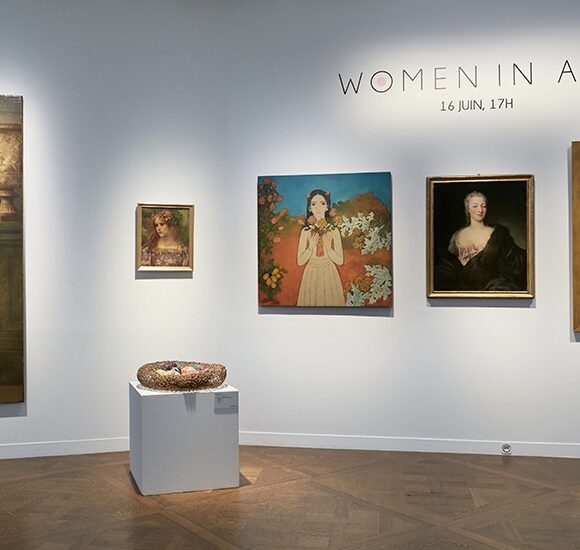
Christie’s Paris | Women in Art From the XVIth to the XXIst Century, or Boi Tran: When a Singular Presence from Vietnam Does Not Remain in the Shadows
In June 2021, Christie's Paris presented its first sale dedicated entirely to women artists, spanning five centuries. Within this panorama, a single Vietnamese female artist appeared: Boi Tran. Her lacquer work was not positioned as an exception, but as part of a continuity, a presence already formed, entering a wider field of visibility. In a sale conceived to illuminate those long in the shadows, her work did not emerge as a rediscovery, but as a quiet unfolding.
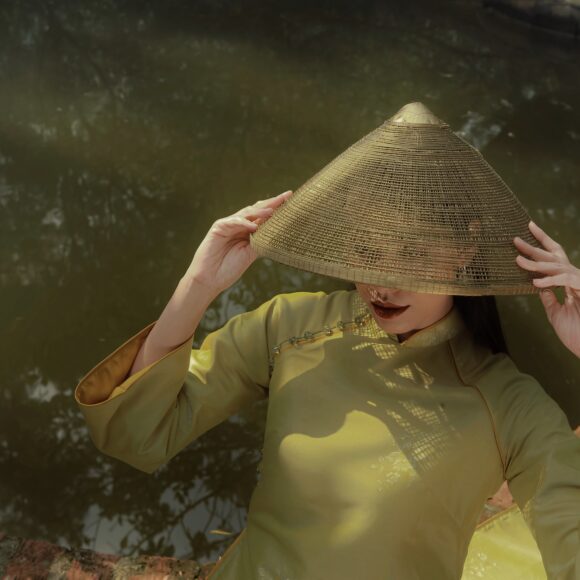
Éternité Magazine | Cloud Landing Collection by Photographer Tran Dinh Thuc Doan
Set within the quiet presence of Boi Tran Garden, the Cloud Landing collection unfolds not as a staged narrative, but as a moment suspended between fabric, light, and space. Through the lens of Thuc Doan, the garments do not simply appear, they settle, gently, as if arriving. Architecture, nature, and movement remain in balance, allowing each image to exist with a sense of stillness, where nothing insists, yet everything is felt.
The Hue To Go by KF Seetoh | Royal Cuisine & Cultural Interview at Boi Tran Garden
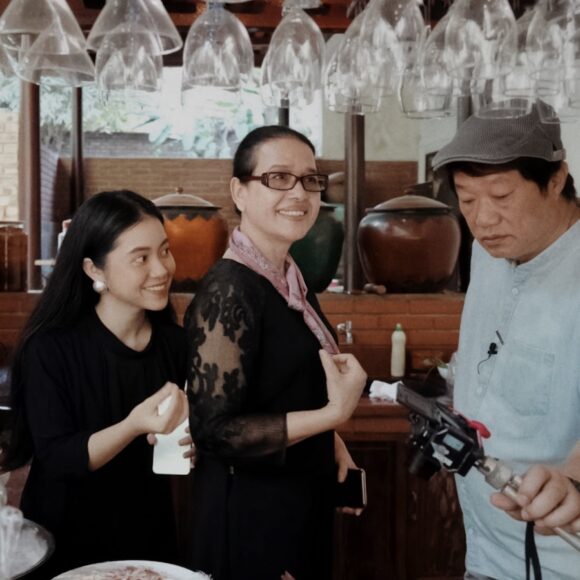
In Huế, where memory rarely separates form from ritual, a meal at Boi Tran Garden does not present itself as dining alone. It unfolds as a continuity, where painting, architecture, and cuisine converge within a single lived environment. Observed through the words of KF Seetoh, what emerges is not simply an experience of taste, but a moment in which cultural knowledge is transmitted through gesture, space, and time.
Anne-Solenne Hatte’s “La Cuisine De Bà”, or “Tasting Vietnam” at Boi Tran Garden
Some returns do not follow roads, nor do they answer to maps. They arrive through memory, through the hand that prepares, through flavours carried across time. In Huế, the visit of Anne-Solenne Hatte to Boi Tran Garden became such a return, where questions of origin, feminine inheritance, and Vietnamese cuisine were gathered within a house where culture continues to breathe.
Ravenel, Vietnamese Modern Art, or the Architecture Of Elegance and the Discipline of Beauty in Boi Tran
Boi Tran is one of the few outstanding Vietnamese female artists. Her style is influenced by her teacher, Trung Nguyen. She also worked as Nguyen's model, serving as a source of creative inspiration for the artist. Boi Tran's Elegant in Hue trilogy is presented in a classical European triptych form. They depict a group of beautiful goddesses strolling, sitting and dancing in a glorious garden. The composition of the piece is extraordinary and spectacular.