

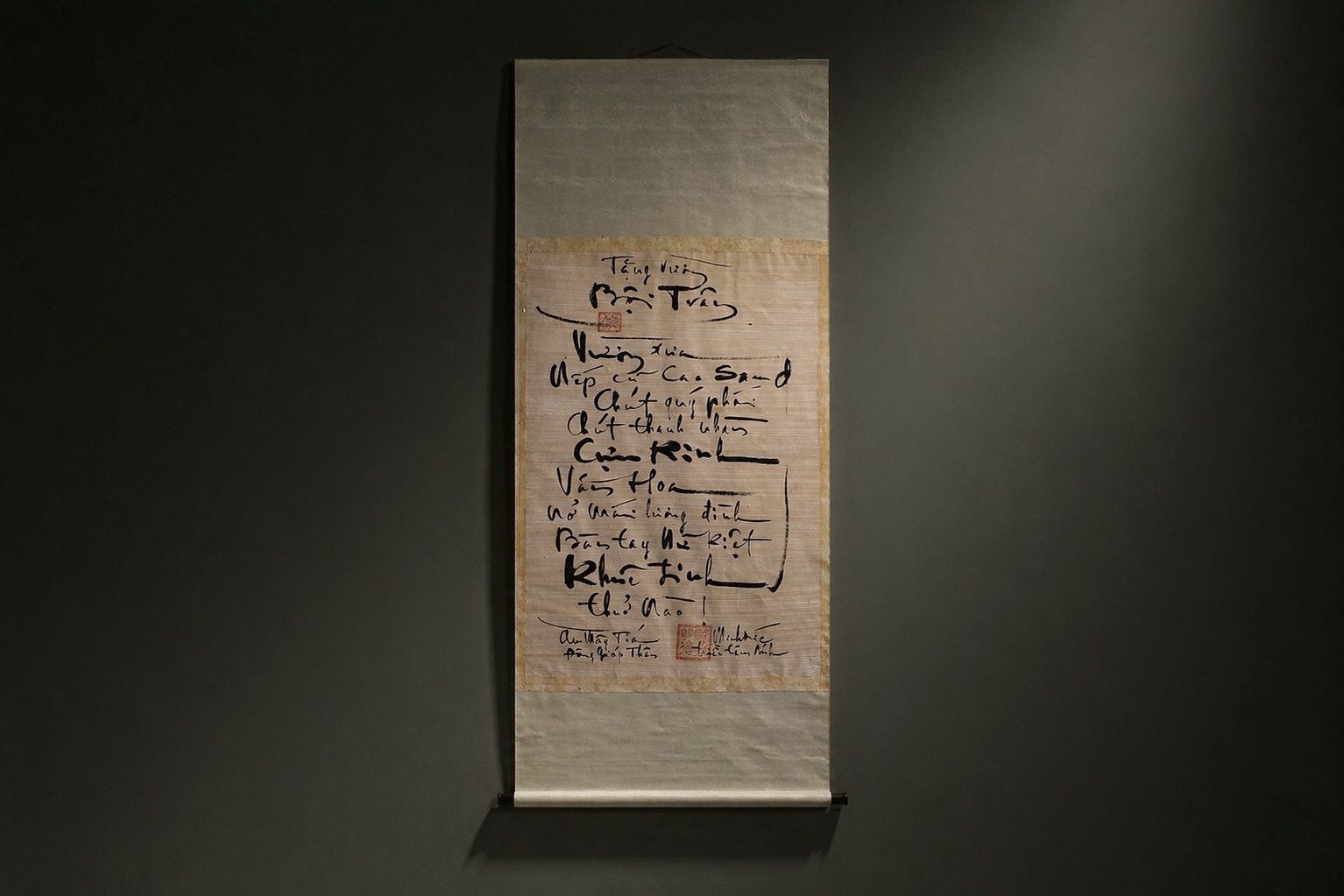
Lines of Noble Regard: The Venerable Giới Đức (Minh Đức Triều Tâm Ảnh) Writes for Boi Tran, 2004
A sheet of aged paper, a few strokes of ink, and the authority of a discerning eye. In a brief dedication to Boi Tran, Thượng tọa Giới Đức, known in letters as Minh Đức Triều Tâm Ảnh, offered not casual praise but recognition of something rare: the survival of Hue refinement through house, garden, art and conduct.
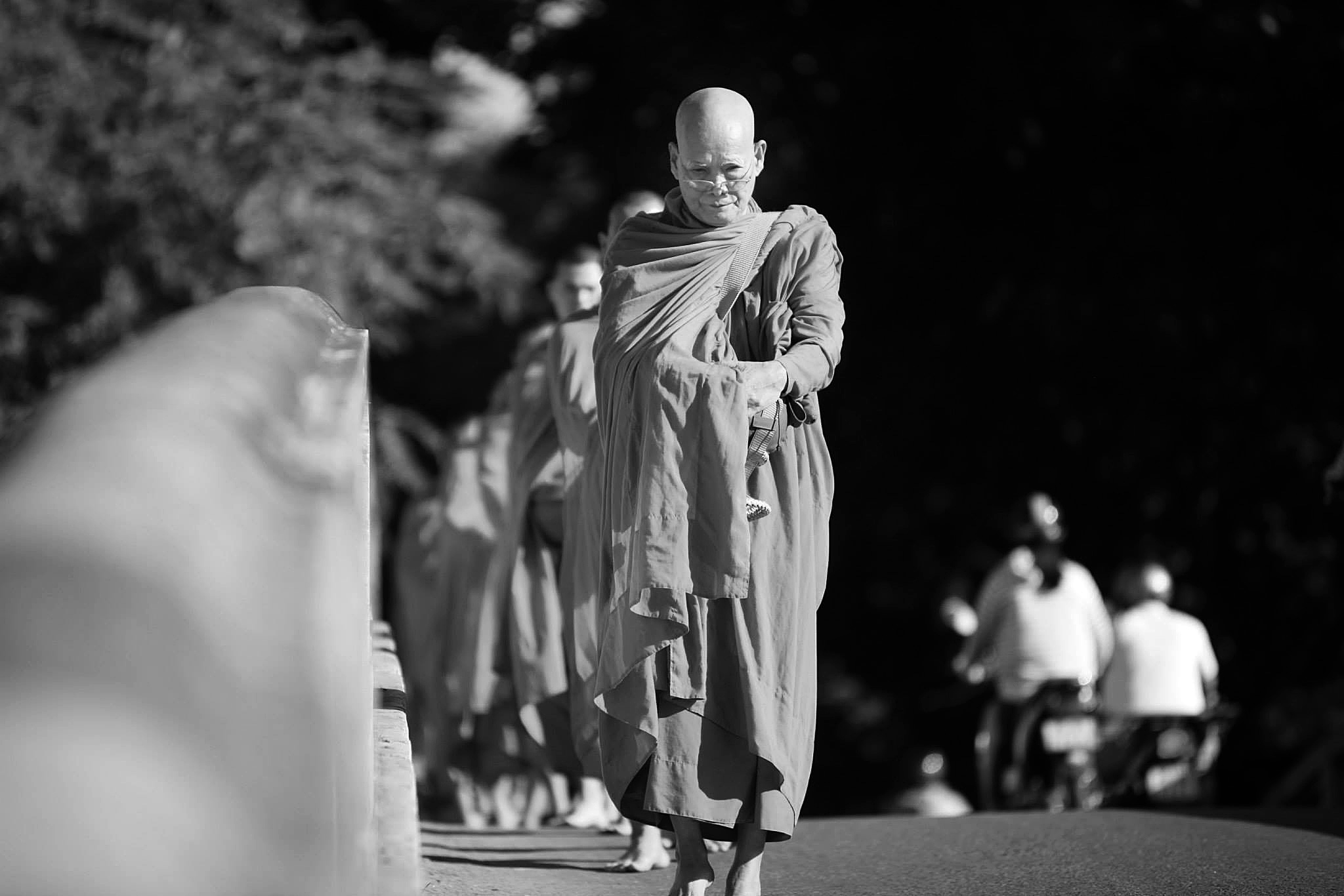
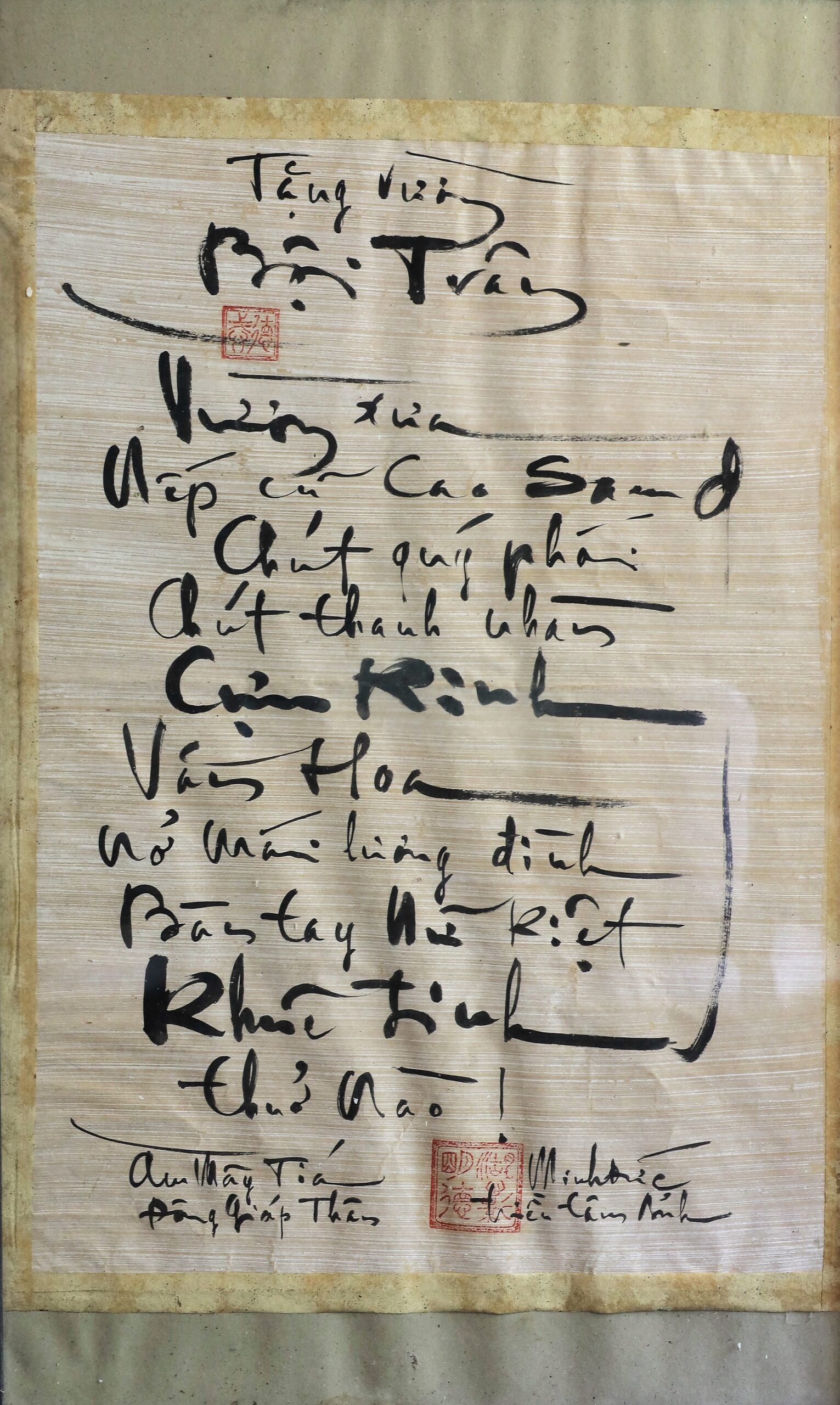
The paper had already taken on the colour of years.
Across its softened surface, black ink moves with confidence and repose. The hand is free, yet disciplined; expressive, yet never indulgent. Such writing belongs to those who no longer seek effect. They write as they breathe.
The author was Thượng tọa Giới Đức, who also wrote under the literary name Minh Đức Triều Tâm Ảnh. In Hue, his presence has long been associated with a cultivated union of spiritual life and aesthetic intelligence. Monk, poet, calligrapher, garden-maker and man of letters, he belongs to that increasingly rare order in which contemplation does not withdraw from beauty, but deepens it.
His lines were written for Boi Tran:
Dedicated to Boi Tran Garden
An old garden, ancient manners, noble grace.
A touch of distinction, a touch of leisure of the Former Capital.
Literary blossom flowering beneath the worthy roof.
By the hand of a heroic lady, chamber-star of another age.Purple Cloud Hermitage
Winter of the Year of the Monkey (2004)Minh Đức Triều Tâm Ảnh
The text is brief, but not slight. It speaks in the old manner, where compression carries richness and allusion replaces explanation.
“Old garden” is more than description. It suggests a place inhabited by memory. In Hue, the garden has never been merely ornamental. It extends the house into nature, and nature into character. Trees, stones, water, paths and shadows form part of an ethics of dwelling.
“Ancient manners, noble grace” is especially exact. Grace here has nothing to do with wealth. It refers instead to proportion, restraint, and the quiet elegance that cannot be purchased because it must be inherited, then maintained.
Then come two delicate measures: “A touch of distinction, a touch of leisure.” The repetition is telling. Refinement in the classical sense never arrives in excess. It reveals itself lightly, almost reluctantly.
“Former Capital, Literary blossom” summons Hue without naming monuments. One thinks instead of scholarship, ceremony, poetry, music, etiquette and the long discipline of taste.
Perhaps the most beautiful phrase is “flowering beneath the worthy roof.” A private house becomes significant when it shelters more than comfort. When it gives place to conversation, hospitality, painting, memory and friendship, it enters another category altogether.
Only then does the poem turn fully toward the person:
By the hand of a heroic lady, chamber-star of another age.
This is praise of a high order. The hand signifies action, making, stewardship. The noble woman is not decorative, but formative. The chamber star, drawn from older East Asian imagery, evokes feminine brilliance, cultivated dignity, and a presence that lends order and radiance to domestic life.
In a few lines, The Venerable Giới Đức identified what many visitors have sensed at Boi Tran Garden. This is not simply a residence, nor merely a place of exhibition. It is a lived interior world where painting, architecture, meals, archives, conversation and memory remain in relation.
The importance of the text lies equally in its author. A small inscription can sometimes do what larger monuments cannot. It confirms that a life of taste has been seen, understood, and honoured.