Harper’s Bazaar | “Dream of Dreams” Group Exhibition, Poetic Amid the Ancient Capital of Hue

“Dream of Dreams” Group Exhibition, Poetic Amid the Ancient Capital of Hue

Pham Ngoc Anh, Harper's Bazaar Vietnam

The exhibition unfolds as a space where imagination is carried across generations, where each work holds a fragment of memory, a longing, and a possibility not yet fully formed. Within this artistic garden, the artists do not tell a single shared story, but instead create a polyphonic field of feeling, rich with layered sensibilities.
“Dream of Dreams” Group Exhibition, Poetic Amid the Ancient Capital of Hue

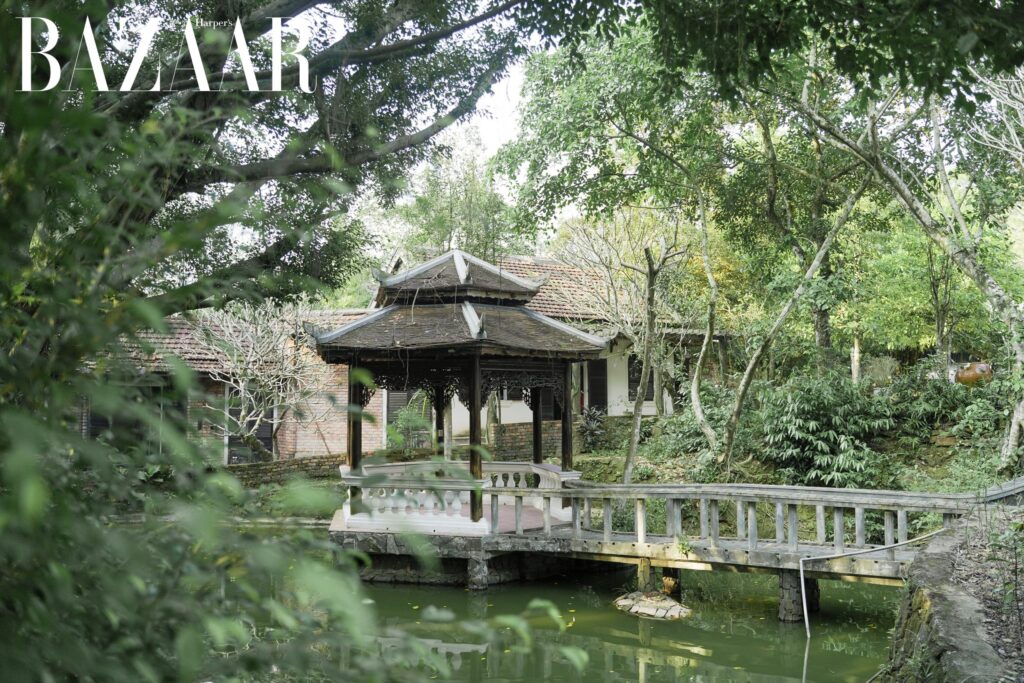
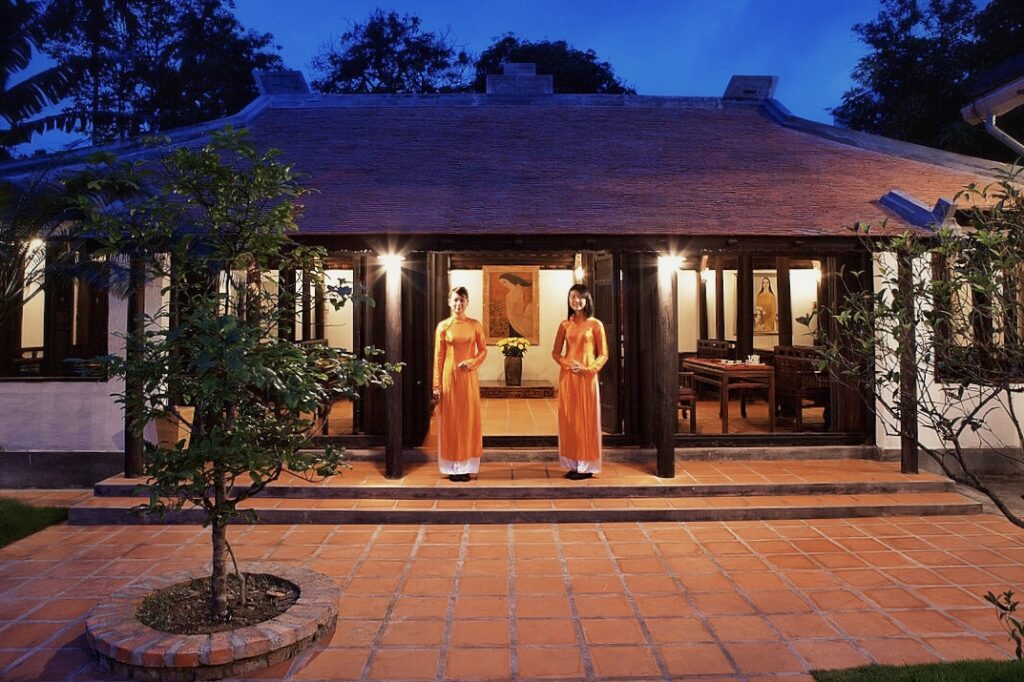
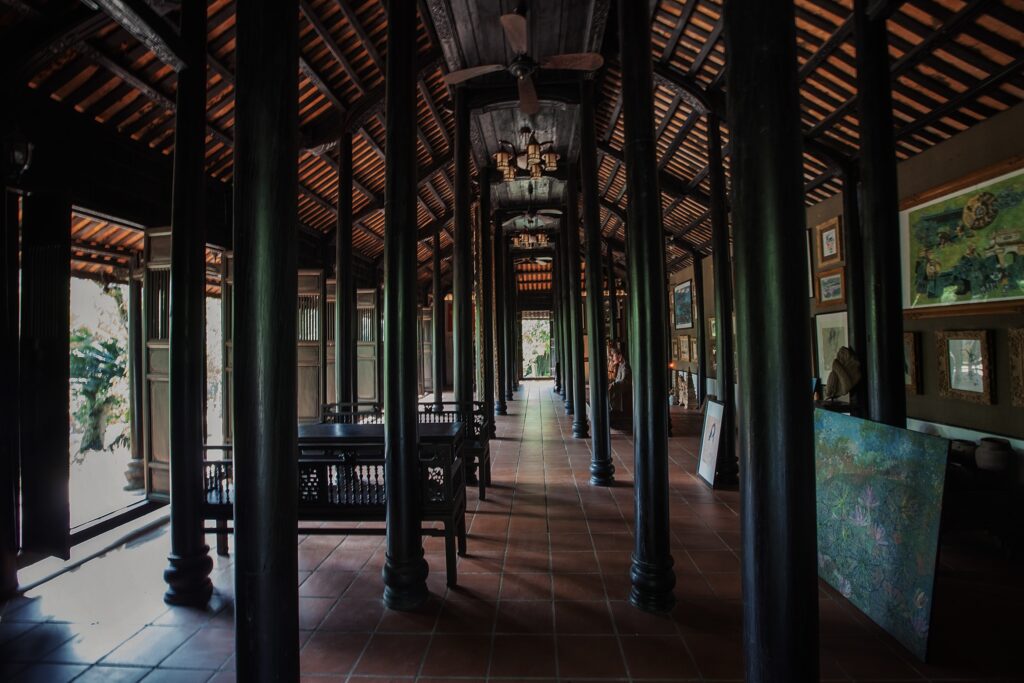
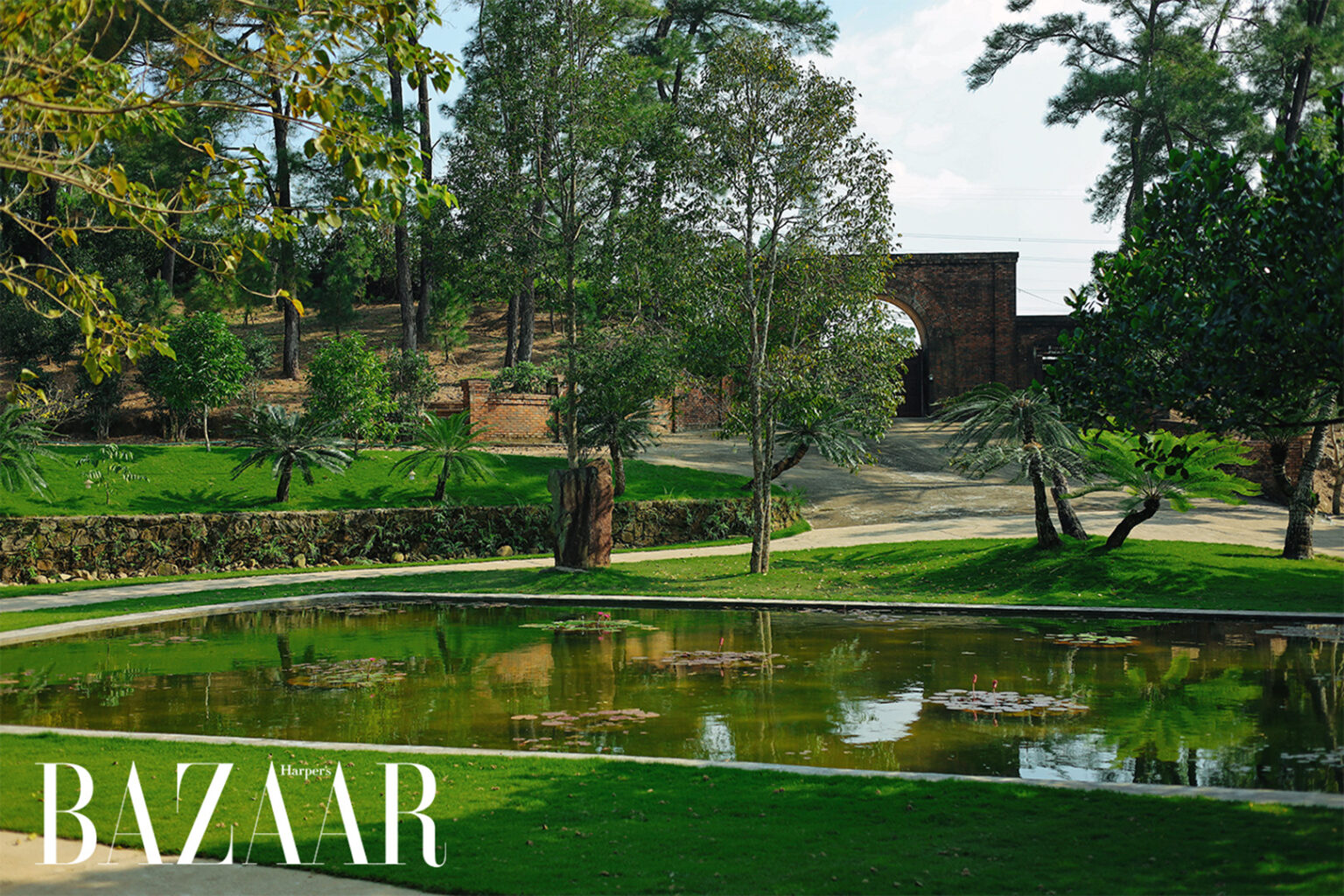
Boi Tran Garden, Kim Son, Hue, Vietnam

On view from 21–23 March 2026 at Boi Tran Garden, Huế, unfolds not as a defined thematic proposition, but as a state in which imagination is cultivated and carried across layered temporalities. Its poetic title evokes the quiet persistence of dreams, subtle yet enduring, continually seeking renewal in new forms. Within this context, memory does not remain static, but is in constant motion, opening new possibilities for both artistic expression and lived experience.

Dream of Dreams is layered with interwoven emotions and reflections, forming a network of connected sensibilities.

Dream of Dreams brings together eight artists: Trần Nguyên Đán, Trần Văn Mãng, Phan Thanh Bình, Trần Anh Huy, Nguyễn Vũ Lân, Hoàng Đăng Khanh, Lê Hữu Long and Lê Thừa Hải. Each works with a distinct practice and visual language, yet when seen together, they form a quiet harmony, like converging currents within a shared landscape of contemporary Vietnamese art.

Rather than following a linear structure, the exhibition unfolds as an open space, a point of encounter where different artistic voices coexist. Each work becomes a fragment of memory, a reflection on lived experience, or a vision of something not yet realised. There is no single narrative to follow; instead, viewers are invited to move freely through layers of meaning, where emotion and thought gently intertwine.

Advisor Trần Đình Thục Đoan, representing Boi Tran Garden, shares:

“In Vietnamese culture, dreams often exist on a fine line between poetry and destiny. They are at once intimate and shared. This sensibility runs through the works in the exhibition, from landscapes and abstraction to fragments of urban life and imagined worlds, each quietly in dialogue within a wider reflection on humanity and time.

For Boi Tran Garden, this exhibition is also the continuation of a dream long held. Within the garden that bears its name, connections begin to form between generations, between memory and the future. From here, dreams do not end, but continue to travel, as seeds carried outward, taking root and flowering in new creative grounds.”

Eight leading artists of contemporary Vietnamese painting.
Dream of Dreams11

Artist Trần Nguyên Đán

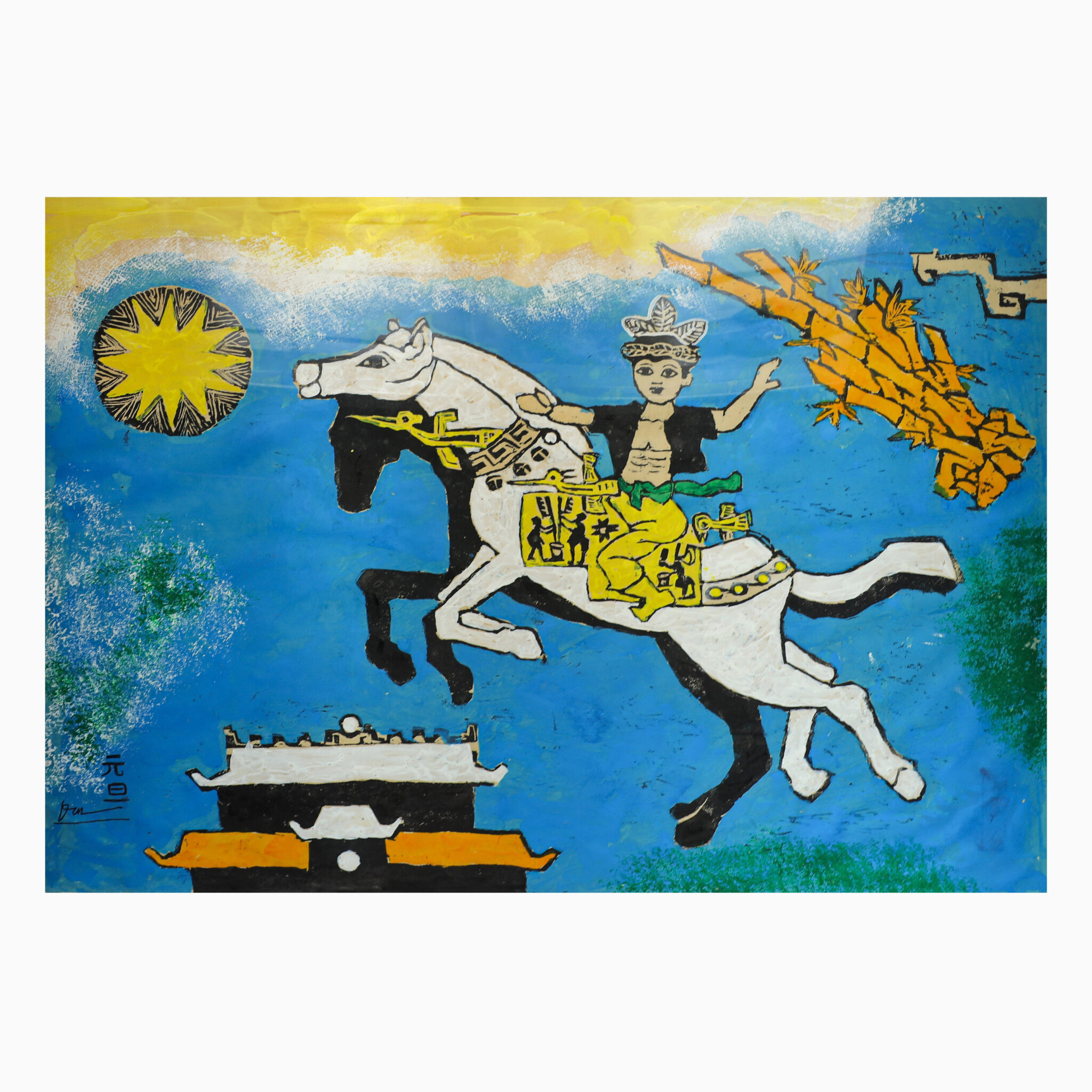
Born in 1941, Trần Nguyên Đán belongs to a generation of artists who continually return to the visual roots of folk tradition, where images are not only seen, but remembered. In Market Fair Revelry and The Legend of Saint Gióng, the artist places everyday life alongside the mythic realm, two currents that may seem separate, yet are deeply intertwined within Vietnamese culture.

Executed in traditional woodblock printing, the works are defined by bold colour, decisive line, and an unadorned, almost elemental composition. A highland market scene unfolds with a man leading a horse, children gathered nearby, the setting at once simple and familiar. Yet within this grounded reality, the figure of Saint Gióng suddenly appears, riding across the sky, as though a layer of collective memory has entered the present moment.

In Trần Nguyên Đán’s work, reality and myth are not opposed, but coexist as two facets of a shared cultural memory. These images may begin as personal recollection or echo well-known folk narratives, yet ultimately they move beyond history, becoming part of a living Vietnamese imagination.

Dream of Dreams14

Artist Trần Văn Mãng

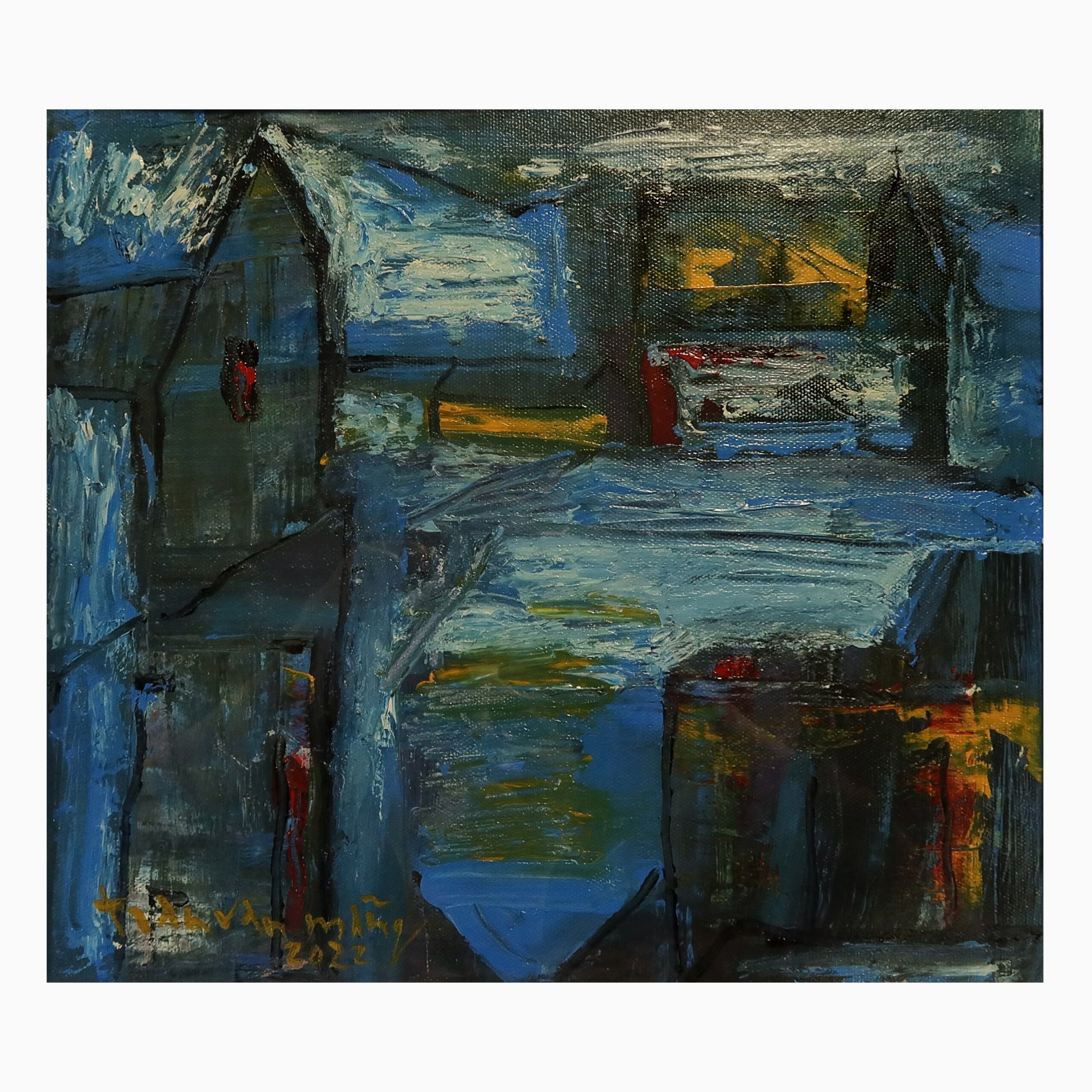
Trần Văn Mãng is often associated with Huế in much the same way that Bùi Xuân Phái is inseparable from the streets of Hanoi. If Hanoi is marked by “Phái’s Streets,” then Huế, with its quieter and more introspective rhythm, finds its own visual counterpart in the works of Trần Văn Mãng.

In three works, Sunlight Through the Village, Blue Street and Winter, the artist approaches the landscape of Bao Vinh not through direct depiction, but through shifting states of memory and light.

In Blue Street, rooftops emerge through layers of blue and grey, dissolving into a surface that recalls water. Sunlight Through the Village captures the fleeting sensation of light passing swiftly across a rural scene. By contrast, Winter recedes into a darker palette, where forms seem to appear only to dissolve again within dense layers of paint.

Dream of Dreams31

Artist Phan Thanh Bình

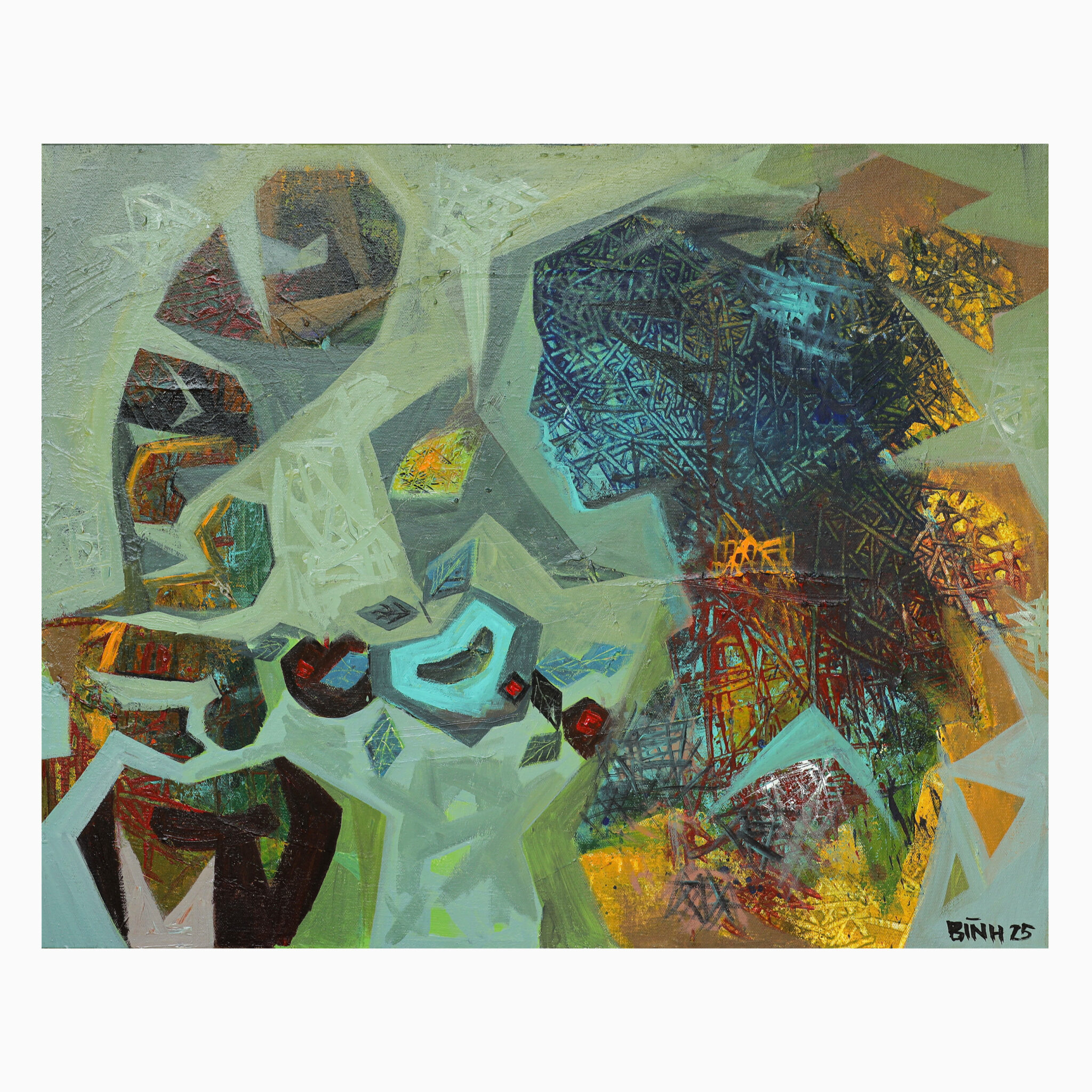
Phan Thanh Bình approaches painting as a process of emergence rather than description. In works such as Afternoon Light, Shadow of Time and Season of the Night Herons, fields of colour collide, layer upon one another, and unexpectedly give way to light.

In Garden of Eden and Echo, angular structures suggest forms in the process of assembly, while in Memory and Highland Realm, the image gradually dissolves into a more atmospheric, emotional state.

His paintings do not anchor themselves in a defined space, but instead evoke an order in the process of becoming, where colour itself serves as a language of thought.

Dream of Dreams10

Artist Trần Anh Huy

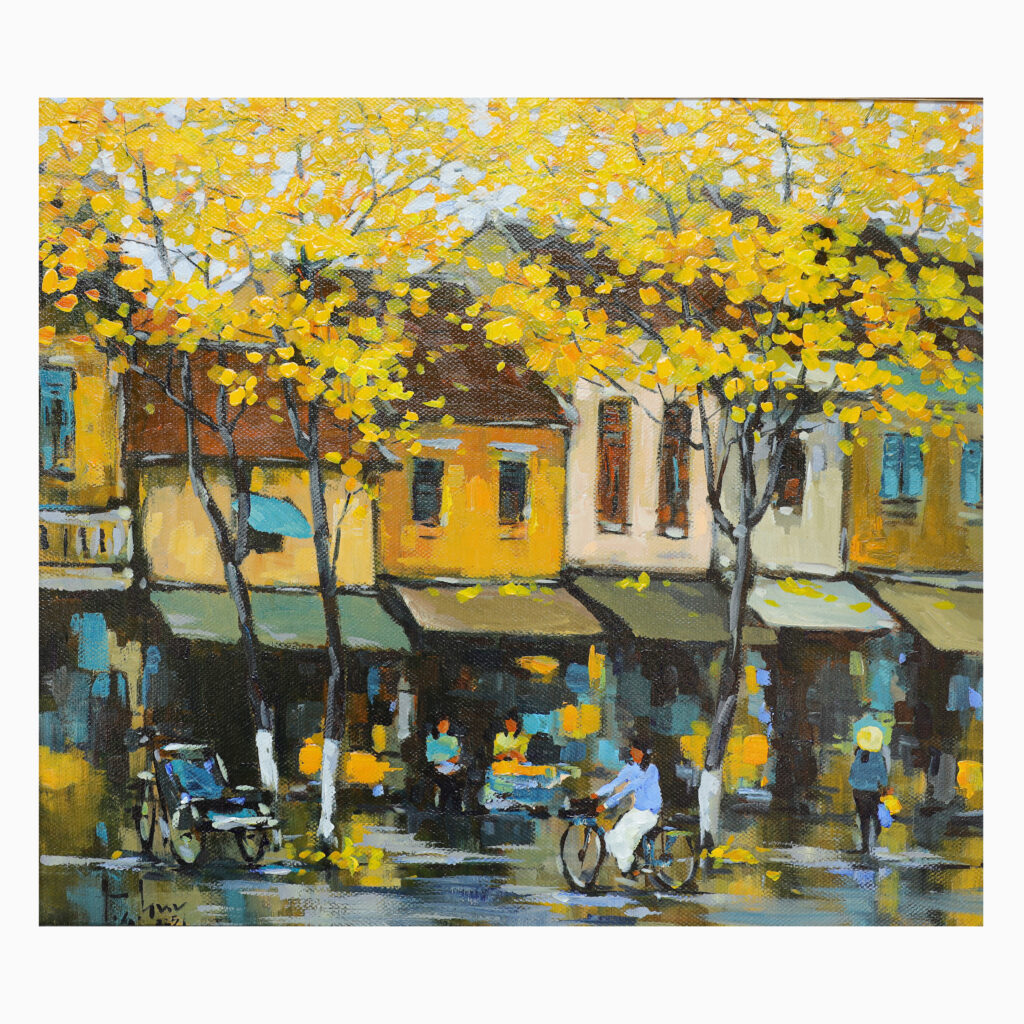
Born into a family with a strong painting tradition in Huế and guided early on by the artist Trần Mậu Lộc, Trần Anh Huy developed a visual language closely attuned to light and the rhythms of urban life.

In Bạch Đằng Street After the Rain, the wet pavement becomes a reflective surface, where rooftops, bicycles and figures dissolve into shimmering fields of colour. Spring Blossoms on the Street unfolds in a gentle flow of pinks and yellows, while Spring Market appears dense and animated, like a choreography of everyday life.

For the artist, the street is not simply a place, but a moment in which light reconfigures space.

Dream of Dreams6

Artist Nguyễn Vũ Lân

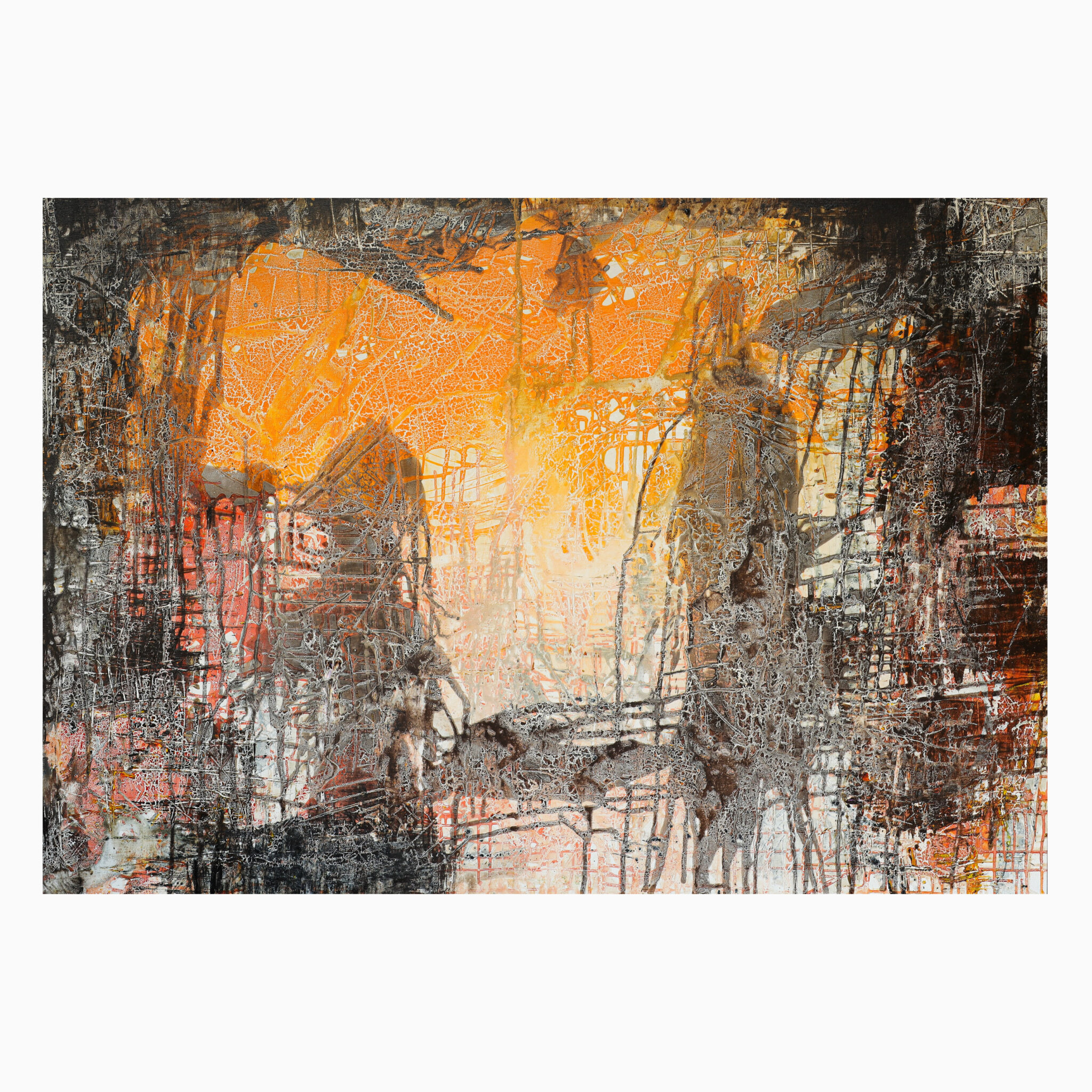
Nguyễn Vũ Lân’s paintings seem less painted than excavated. Their surfaces are built through layers of acrylic, applied, scraped back, fractured and reconstructed. What emerges is not a single image, but a field of traces, where colour, material and gesture record their own process of becoming.

In Fragment of Memory and Traces of Time, structural elements appear like remnants of walls or landscapes gradually revealed. Intersections heighten a sense of visual tension, as lines cut across one another before dissolving. With Sediment, the surface grows dense and weighty, almost geological in presence.

In Street within Memory, the outline of the city briefly surfaces, only to merge again into the material body of the painting. Dragon and Clouds in Celebration of Water and Shadow of Time extend this visual field further, where colour moves less as description and more as a natural force in motion.

Dream of Dreams25

Artist Hoàng Đăng Khanh

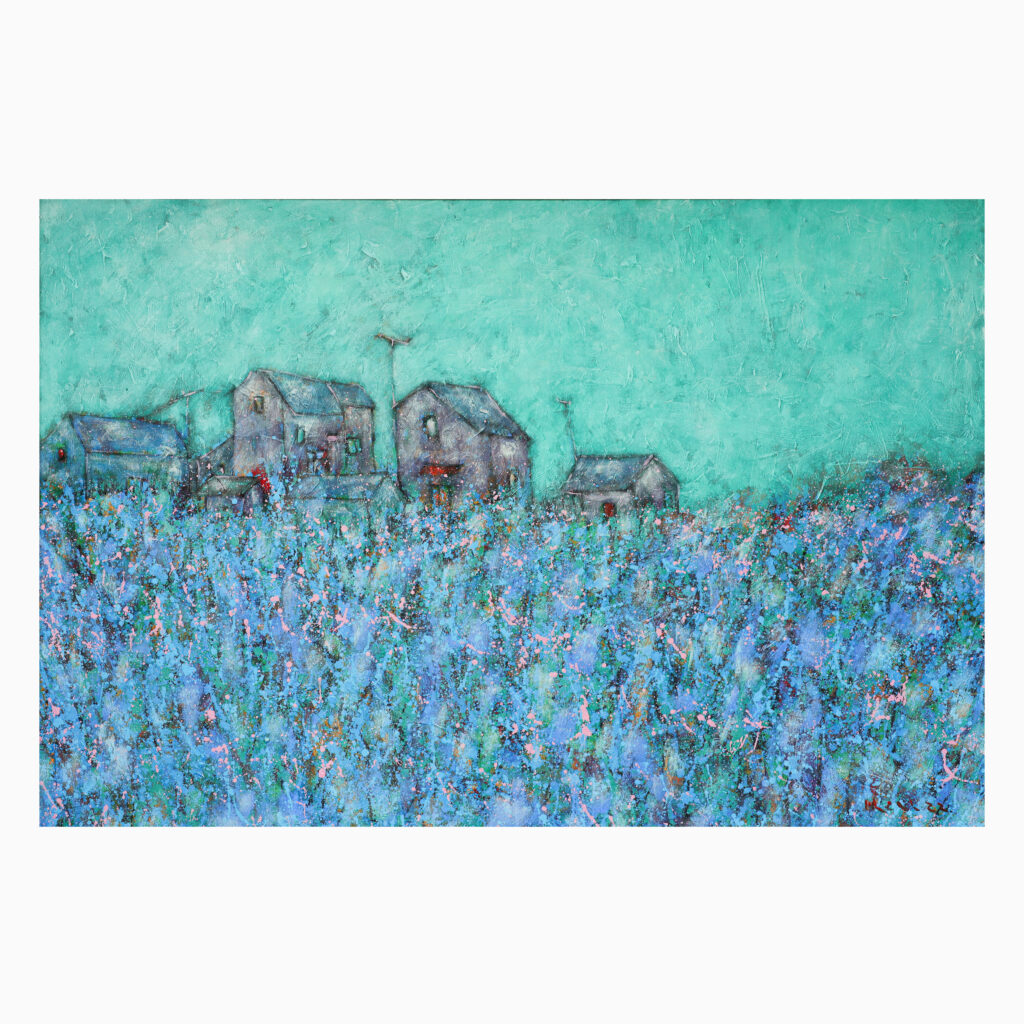
Stillness emerges before the landscape fully takes shape. In Hoàng Đăng Khanh’s paintings, scenes seem to drift within a fragile atmosphere, where colour softens contours and the world slows to an almost suspended state.

In House on the Hill, a few small dwellings rest quietly above a field of flowers. The horizon dissolves into a pale sky, as if the landscape were suspended between earth and air. Two Children opens onto a luminous field, where, beneath an expansive pink sky, small figures move almost imperceptibly within a sea of trembling blossoms.

With Inner Citadel Moon, the palette deepens. The gates of Huế emerge under the blue of night, their architectural gravity gently offset by the quiet presence of a lone cyclist passing through. Finally, Moonlit Street draws the viewer into a narrow lane, where houses emit a faint glow beneath a crescent moon. These places remain recognisable, yet time appears to slow, and the world settles into a quiet, poetic stillness.

Dream of Dreams29

Artist Lê Hữu Long

Born in 1988, Lê Hữu Long represents a younger generation of painters engaged in constructing space through layered visual perception. In his work, landscape is not simply recorded, but built through light, colour and depth.

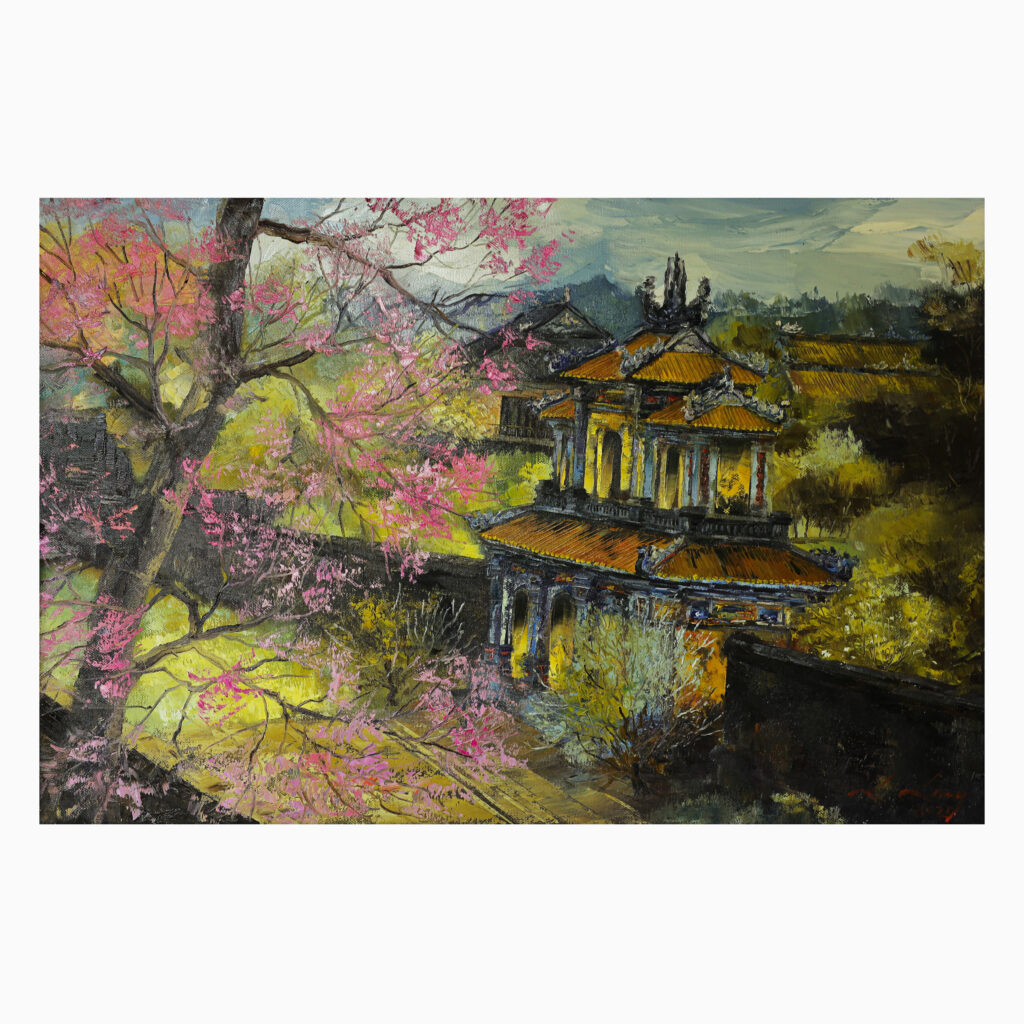
Northwest in Repetition unfolds as a series of mountainous folds, where light touches each stratum of terrain, guiding the eye from the foreground into the far distance. In Emerald Citadel, the focus shifts toward architectural structure, with the Imperial City of Huế appearing as an ordered network of forms.

In Scent of the Ngô Đồng Tree, nature and architecture intersect, creating a space that feels at once tangible and atmospheric.

Dream of Dreams30

Artist Lê Thừa Hải

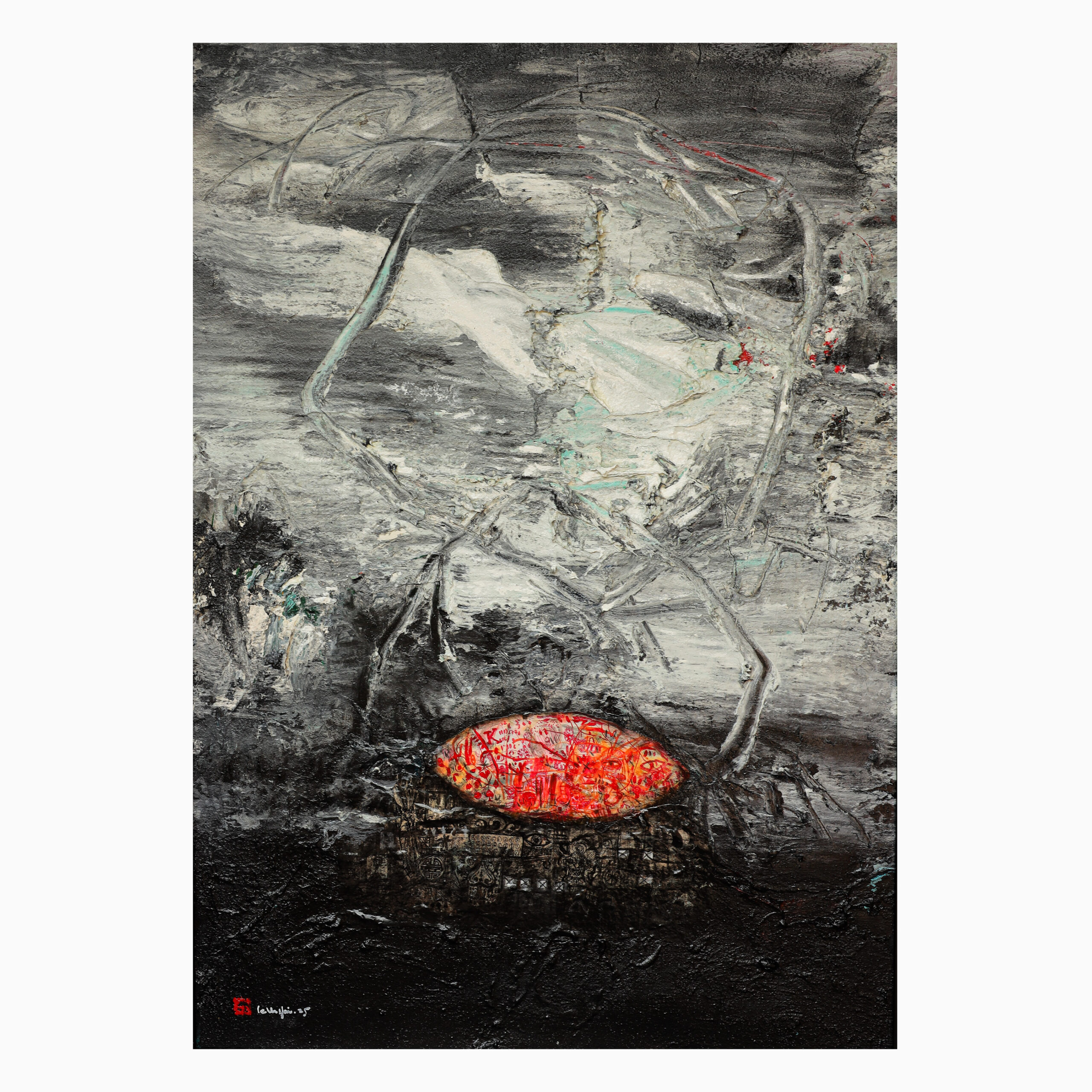
Lê Thừa Hải approaches painting as an act of excavation rather than representation. In the series Traces I, II, III, the canvas no longer serves as a window onto the world, but as a surface marked by time, layered, eroded and wounded. Images do not present themselves immediately, but remain embedded within strata of material, waiting to be revealed.

Traces I is defined by a gaunt figure emerging amid forceful passages of grey and black, while a muted red mass beneath it glows like an ember not yet extinguished. In Traces II, the space expands horizontally, the surface scraped and torn to expose fragmented imagery, as though memory itself were caught within layers of paint. By Traces III, the painting takes on an almost geological presence, with extended bands of colour interrupted by small forms that recall unearthed relics.

Within Lê Thừa Hải’s practice, painting is no longer about rendering an image, but about uncovering what has been buried. Each scratch, each layer, each void carries the imprint of time, like wounds not yet healed, from which meaning begins to emerge.

You may also like

Minh Duc Trieu Tam Anh

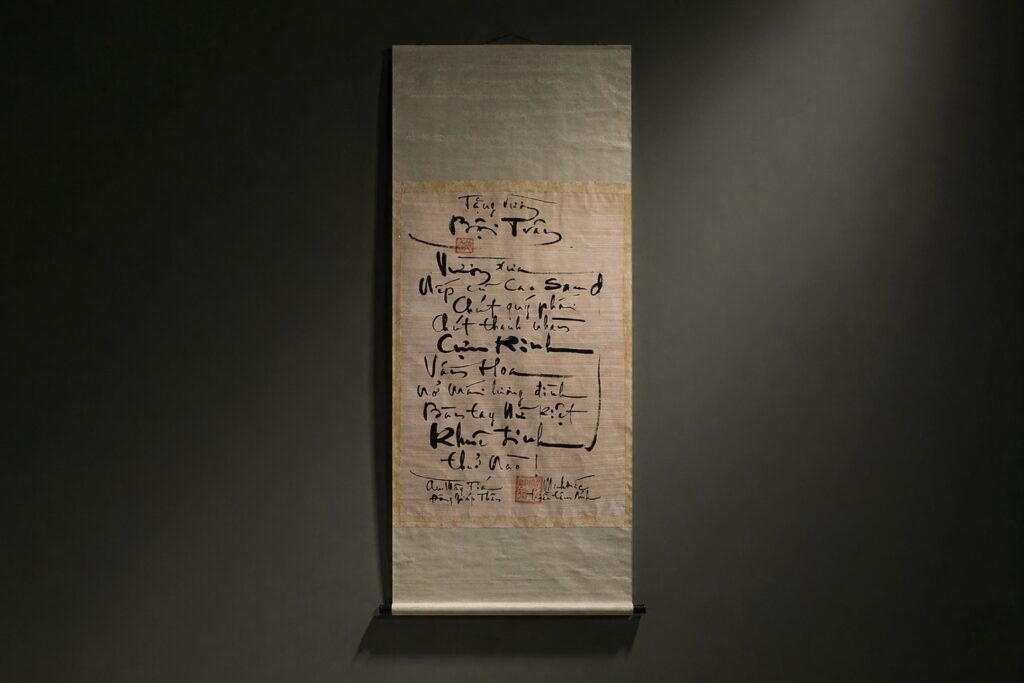
Lines of Noble Regard: The Venerable Giới Đức (Minh Đức Triều Tâm Ảnh) Writes for Boi Tran, 2004

Dr Phan Thanh Hai & Artist Boi Tran

Boi Tran, The Woman Who Paints the Dream of Hué

Boi Tran, “The Elegants Of Hué”, 2015, or The Inevitable Choice of Distinction Against Fate

Boi Tran, “The Elegants Of Hué”, 2015, or The Inevitable Choice of Distinction Against Fate

Christie’s Paris | The Phoenix Glue and the Broken Silk Thread: Important Vietnamese Artworks from the Melchior Dejouany Collection

Christie’s Paris | The Phoenix Glue and the Broken Silk Thread: Important Vietnamese Artworks from the Melchior Dejouany Collection

Boi Tran Garden, an Artistic Space Imbued with the Spirit of Hue

Christie’s Paris | Women in Art From the XVIth to the XXIst Century, or Boi Tran: When a Singular Presence from Vietnam Does Not Remain in the Shadows

Éternité Magazine | Cloud Landing Collection by Photographer Tran Dinh Thuc Doan

Éternité Magazine | Cloud Landing Collection by Photographer Tran Dinh Thuc Doan

The Hue To Go by KF Seetoh | Royal Cuisine & Cultural Interview at Boi Tran Garden

Anne-Solenne Hatte’s “La Cuisine De Bà”, or “Tasting Vietnam” at Boi Tran Garden

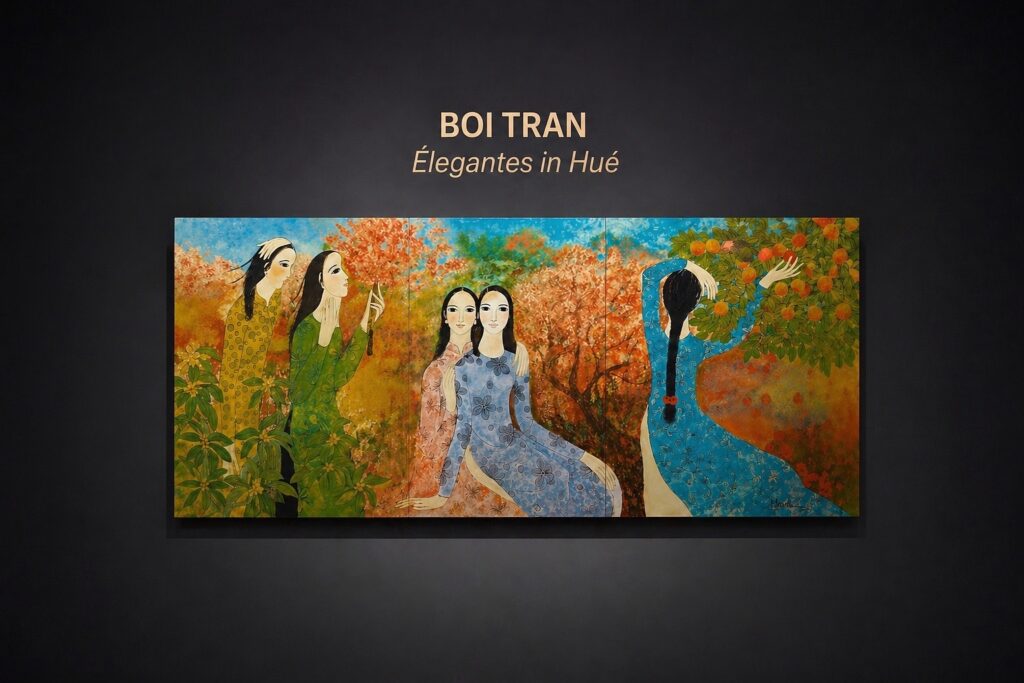
Elégantes in Hué | lacquer on panel (triptych) | each 120 x 80 cm (47 1/4 x 31 1/2 in.), overall 120 x 240 cm (47 1/4 x 94 1/2 in.). Hammered Price: USD 15,189 at Ravenel: Select Modern & Contemporary Art, Vietnamese Modern Art, 2019

Ravenel, Vietnamese Modern Art, or the Architecture Of Elegance and the Discipline of Beauty in Boi Tran

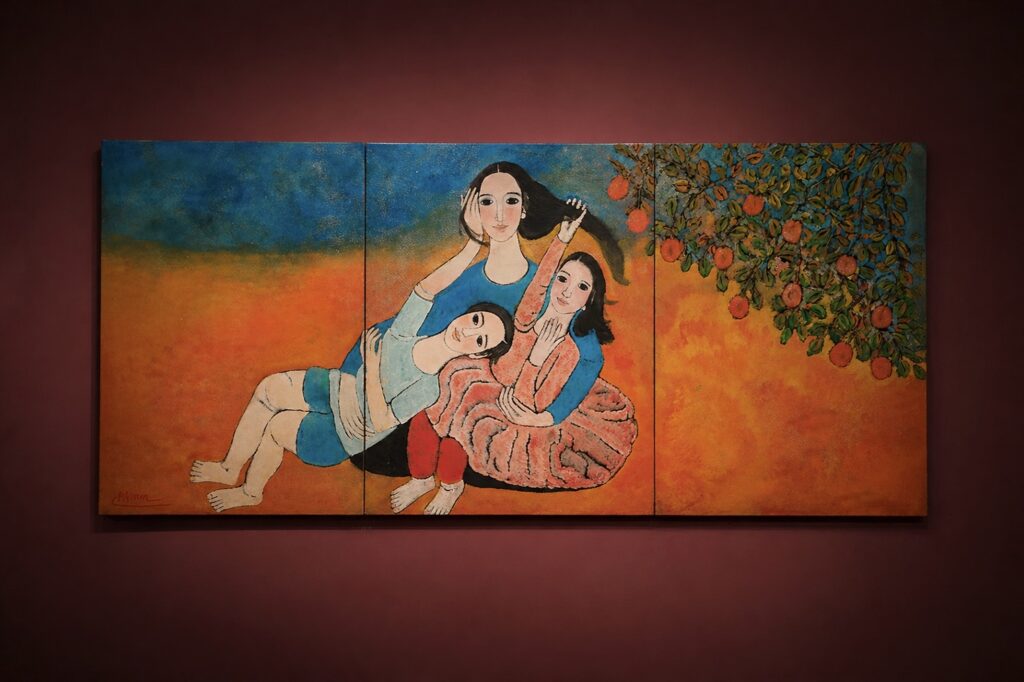
Boi Tran (Vietnam, B. 1957)
Mother and Children
signed 'Btran' (lower left)
lacquer on panel (triptych)
each 120 x 80 cm. (47 1/4 x 31 1/2 in.)
overall 120 x 240 cm. (47 1/4 x 94 1/2 in.)
Painted in 2010

Thanh Nien News | Complete Transcendence

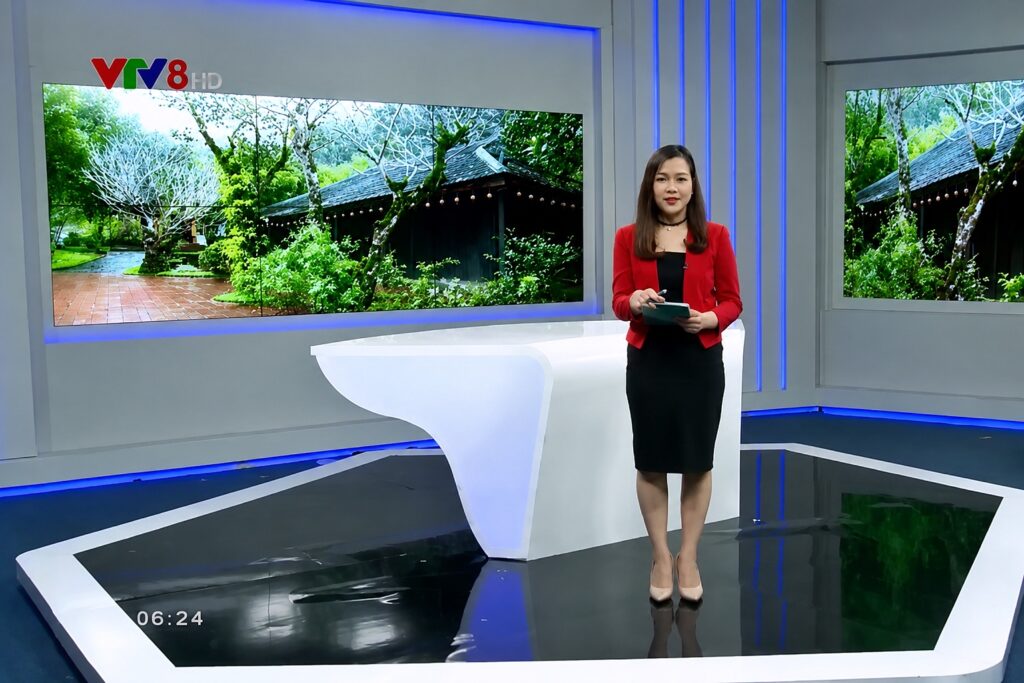
VTV8 | The Elegance of Hue Continues at Boi Tran Garden

VTV8 | The Elegance of Hue Continues at Boi Tran Garden

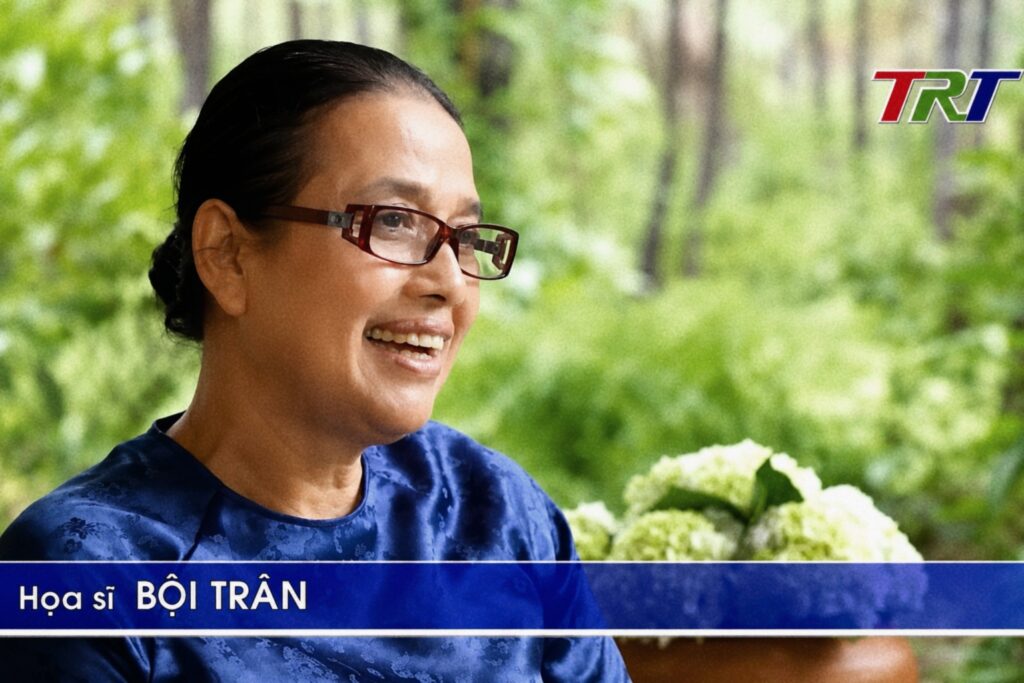
TRT

Boi Tran – Hue Elegance, or The Quiet Strength of Hue: Boi Tran and the Interior World of Beauty

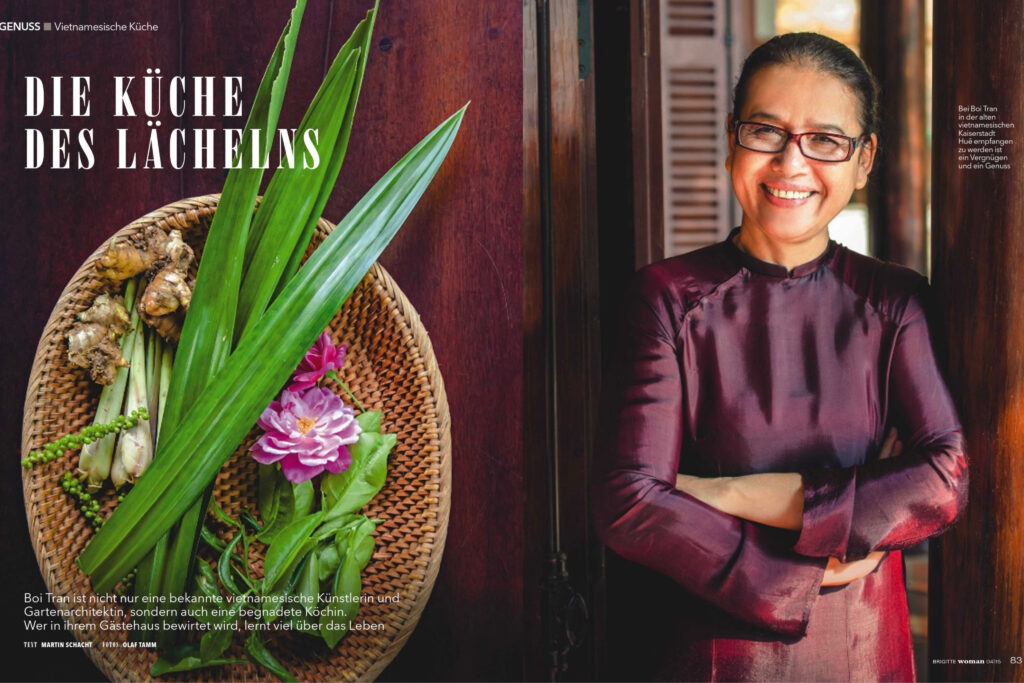
Brigitte Woman: The Kitchen of Smiles

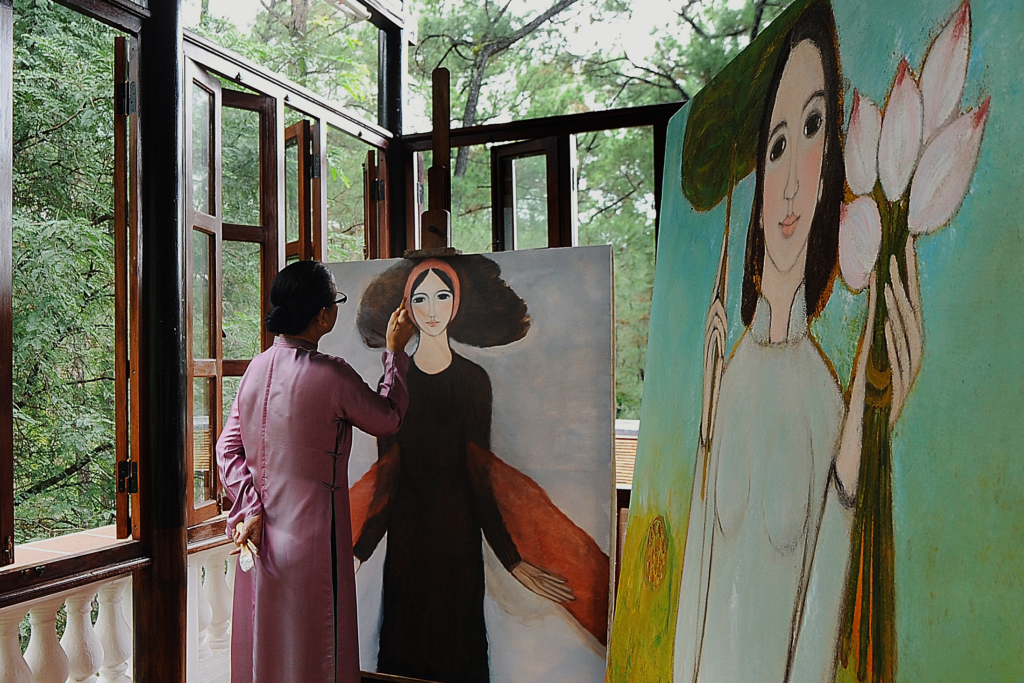
Painter Boi Tran depicting her oil painting in 2014

Best of Both Worlds: The Road Ahead Remains Open, The Painter of Poetic Hue

Hoang Vien Restaurant, Founded and Managed by Artist Boi Tran

DestinAsian Magazine: Hungry for Hue

Boi Tran and the Language of Taste | A Fork in Asia’s Road: Best Bites of an Occidental Glutton

Anthony Bourdain at Boi Tran Garden | CNN Parts Unknown: Vivacious in Vietnam

ZDF Journalist Peter Kunz and Painter Boi Tran

Peter Kunz and the Gentle Beauty of Boi Tran Garden: A Conversation of Hearts

Travel + Leisure: Vietnamese Food, The Ultimate Food Guide

madonna

Boi Tran’s ‘Madonna’, the First Time Presented and Phenomenally Hammered at Sotheby’s in 2008

Tran Ninh Ho's Handwriting to Boi Tran, 2005, "To love and esteem Artist Boi Tran and your family. Hanoi, Early Summer 2005."

Boi Tran’s Art Graces the Cover of Poet Tran Ninh Ho’s Poetry Publication

Boi Tran and Nguyen Trong Tao, 2017.

Youth, Flowers, and the Quiet Language of Boi Tran’s The Young Girl and the Flowers

‘I and The Call from Within’ Exhibition: Nguyen Trung on Boi Tran’s World of Grace and Art

The Rebirth of Ancient Houses: Architecture, Memory and the Return to Hue Or Boi Tran and a Return to Living Heritage

Small and Miniature Paintings by the Masters at Minh Chau Art Gallery

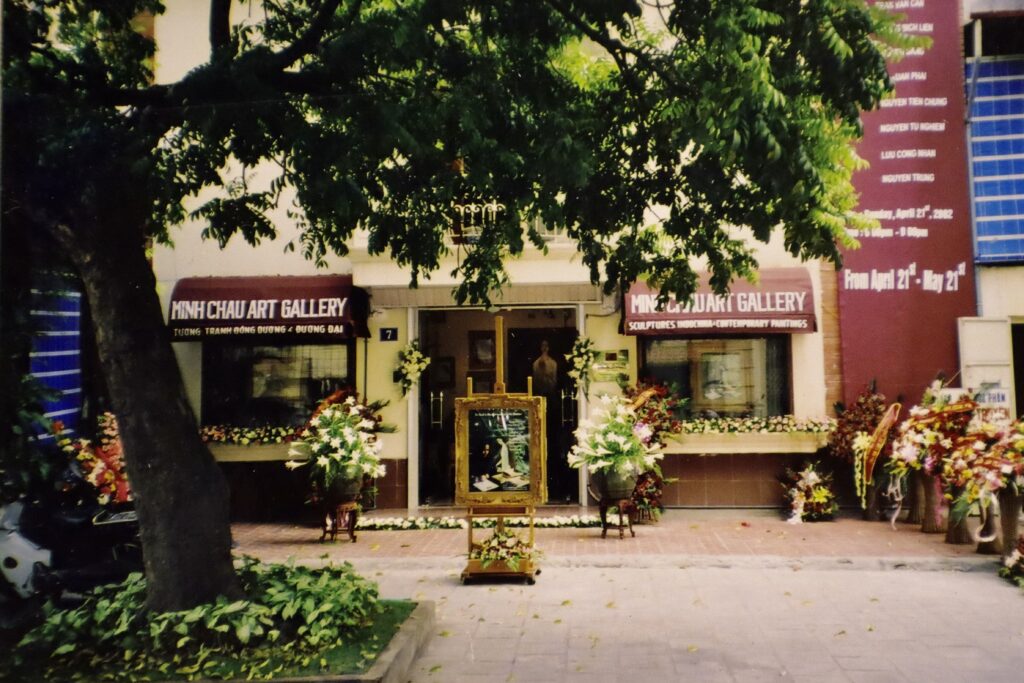
Minh Chau Art Gallery: A Quiet Keeper of Vietnamese Legacy

Hue to the World: Boi Tran Art Gallery, A Pioneer Recognised by Christie’s in 1999

Vinh Phoi

Vinh Phoi And Boi Tran Art Gallery: A Reference Letter, 1996, or the Simplest Form of Moral Authority and Trust in Art

Boi Tran and Buu Y, Boi Tran Art Gallery, Hue, 1995

A Prologue by Buu Y: Boi Tran Art Gallery and the First Form of Art in Hue