Boi Tran’s Art Graces the Cover of Poet Tran Ninh Ho’s Poetry Publication
Where silence becomes form and longing takes colour. Femme au Lotus (Lady with Lotus), Boi Tran’s luminous painting, graces the cover of For The One I Long For (Cho Người Tôi Thương Nhớ) by poet Tran Ninh Ho. In this rare meeting of brush and verse, two kindred spirits of Vietnamese art recall, quietly and tenderly, what love leaves behind.
Where Painting Meets Verse, Memory Takes Form
There are rare and luminous moments when two artistic souls, though working in different mediums, arrive at the same silence, the same longing, the same devotion to what cannot be fully spoken. Such a moment now quietly blossoms in Cho Người Tôi Thương Nhớ (For the One I Long For), a newly released collection of love poems by the esteemed poet Tran Ninh Ho, whose cover bears the delicate imprint of Boi Tran’s painting Femme au Lotus (Lady with Lotus).
This meeting of poetry and painting is not a matter of design, but of destiny.
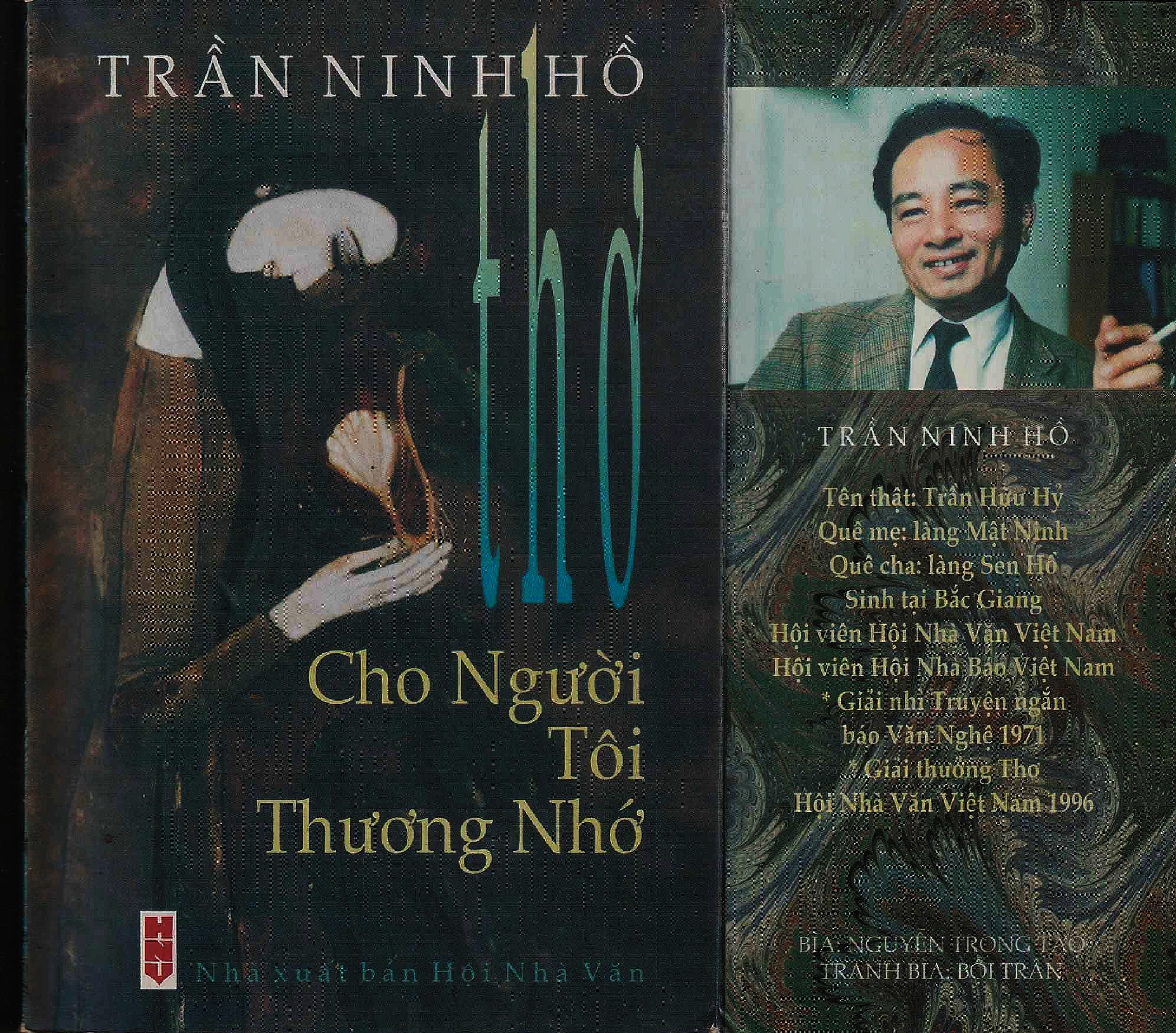
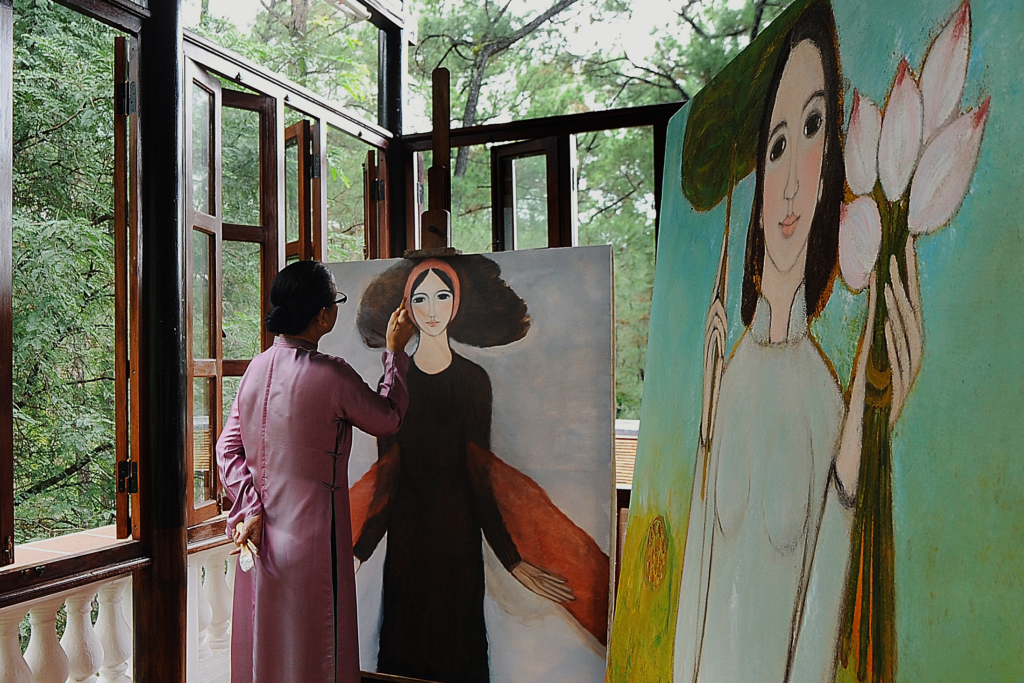
On the cover of Cho Người Tôi Thương Nhớ (For the One I Long For), a moving collection of love poems by poet Tran Ninh Ho, a woman bows her head in quiet reflection, cradling a lotus flower that glows faintly against the darkness. Her figure, painted with tenderness and restraint, is the work of Boi Tran.
In her Femme au Lotus, the figure is graceful, unguarded, and inward-looking. She is not posed but present. There is no performance, only remembrance. This same spirit echoes throughout Tran Ninh Ho’s poems, where love is rarely declared aloud, but always felt: love that aches, love that survives loss, love that lingers like light on a closing door.
Boi Tran’s painting was chosen not simply for its elegance but for its inner resonance. Her brush carries the same hush as Tran Ninh Ho’s verse, tender, restrained, imbued with reflection. It is the quiet that comes not from absence, but from a deep presence. The woman she paints does not need to smile; her silence is full of meaning. The lotus does not shout its bloom; it endures, luminous against the dusk.
Both artists are steeped in memory. Both give reverence to what is often overlooked: the still gesture, the half-lit face, the long pause between breaths. Their languages differ, one in line, one in brushstroke, but the sentiment is shared. For decades, Tran Ninh Ho has written with the clarity of a philosopher and the ache of a lover. And for just as long, Boi Tran has painted with the grace of someone who listens deeply to the quiet spaces between things, between the self and the beloved, between the living and the lost.
Tran Ninh Ho, one of Vietnam’s most respected literary voices, writes with a heart shaped by decades of love, war, and remembrance. In this volume, Cho Người Tôi Thương Nhớ, or For the One I Long For, his poems unfold like whispered letters never sent. They speak of what remains unsaid, what endures, what aches softly in the background of the everyday.
It is this very sensibility that Boi Tran captures through her art. Her women do not demand attention; they inhabit silence. Their gestures are simple, almost ceremonial. Her lotus, fragile yet unyielding, mirrors the spirit of the poems: a beauty that survives, a softness that holds.
Both artists share an affinity for grace in restraint. And so, when one meets the other on the cover of this book, it feels like a natural, almost inevitable union. Cho Người Tôi Thương Nhớ becomes more than a book of poems; it becomes a vessel of shared sensibilities, where brushstroke and verse hold each other in mutual regard.
Published by Nhà xuất bản Hội Nhà Văn (Writers' Association Publishing House), the volume also honors the lifelong literary journey of Tran Ninh Ho, born Trần Hữu Hỷ in Bắc Giang. His voice has long resonated with readers across generations, philosophical, intimate, and unmistakably human. The choice of cover, guided by Poet and Author Nguyen Trong Tao, further deepens this sense of intimacy.
To feature her painting on this book is not a coincidence; it is a conversation.
Cho Người Tôi Thương Nhớ is not only a literary offering, but it is a visual one. The cover, adorned with Boi Tran’s work, is its own kind of prelude. Before the reader meets the first line of verse, they are welcomed into a mood, a tone, a world. A world of dignified femininity. A world where longing is not weakness but depth. Where colour leans gently into word, and word into memory.

In this meeting of brush and poem, something quietly sacred takes shape. The beloved is never named. And yet, she is unmistakably present, in every line, every fold of silk, every shadow beneath a petal.
At Boi Tran Garden, we are honoured to celebrate this rare meeting of two inner worlds. May this book be held not only as a collection of poems but as a shared remembrance of beauty, of feeling, of the silent places where art begins.