

Boi Tran: The Woman Who Paints the Dream of Hué
Boi Tran’s practice extends beyond painting into the spatial and cultural reconstruction of Huế’s aesthetic consciousness. While her canvases are often associated with contemplative female figures and serene Buddhist imagery, her broader contribution lies in the translation of painterly sensibility into lived architecture. At Thien An Hill and Kim Son Hill, she created a garden that draws from the structural language of the Huế wooden house (nhà rường) tradition while rearticulating it within a contemporary context.
Her deliberate preference for natural materials, wood, brick, tile, and stone, constitutes not a nostalgic retreat but a critical position. In minimising the presence of steel, concrete, and glass, she proposes an alternative spatial ethic grounded in permeability, breathability, and environmental continuity. Architecture, in her philosophy, is not an object placed upon land but a form embedded within it.
Through these constructed environments, Boi Tran advances a cultural argument: that heritage persists not through replication of form, but through the sustained embodiment of spirit. Her work thus situates Huế not as a static memory, but as an evolving, living tradition.
Dr Phan Thanh Hai
Director, Department of Culture and Sports, Hue City, Vietnam
A heritage shaped by a woman who was once the muse of art and who, in time, became the art herself.
Some painters work with colour. Some work with memory. And then there are those who, like Boi Tran, paint with the very space they inhabit, where each roof, each pathway, each canopy of trees becomes a brushstroke, quietly and persistently restoring the spirit of Hue within contemporary life.

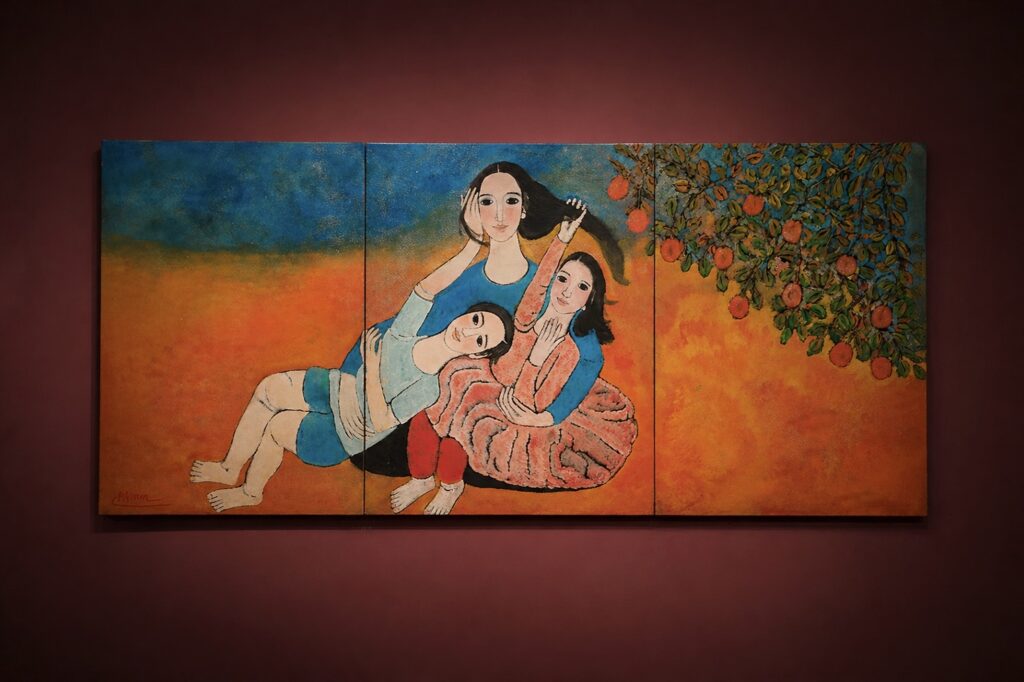
Boi Tran, Femmes au bord de l'étang aux lotus (Ladies by the Lotus Pond). 2019. Lacquer on panel (tetratych), 120 x 320 cm. (47 1/4 x 125 63/64 in.). Private Collection, Asia
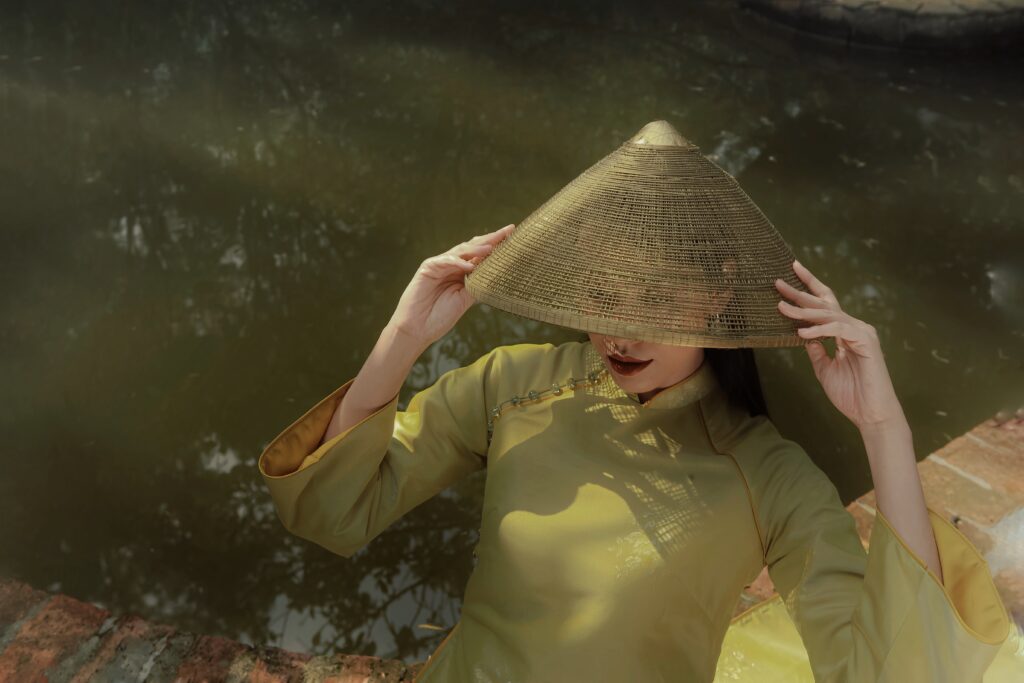
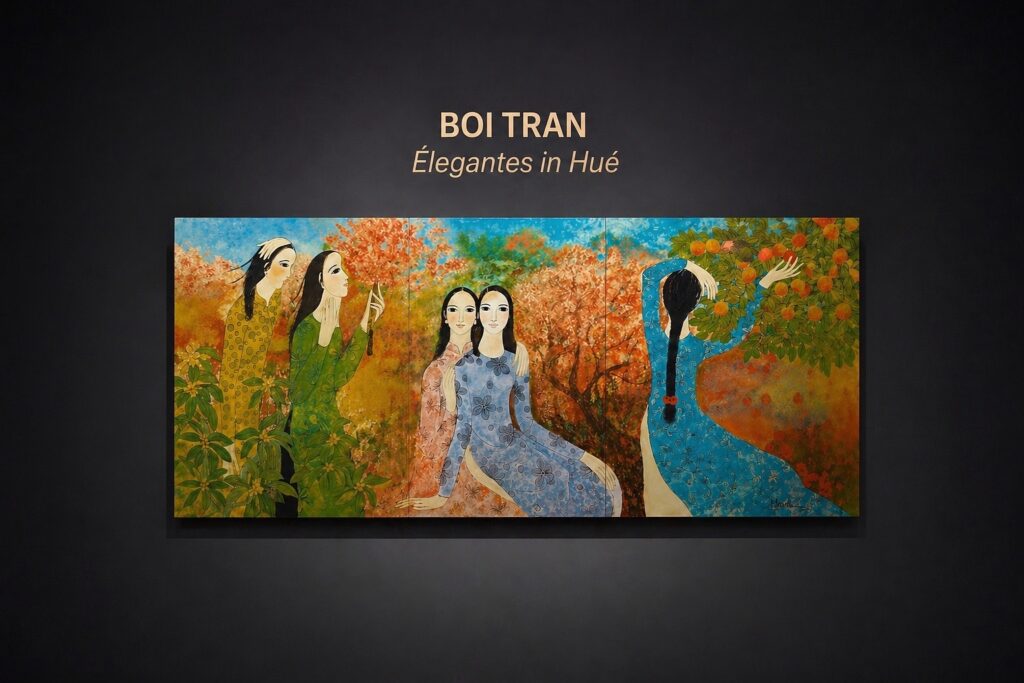
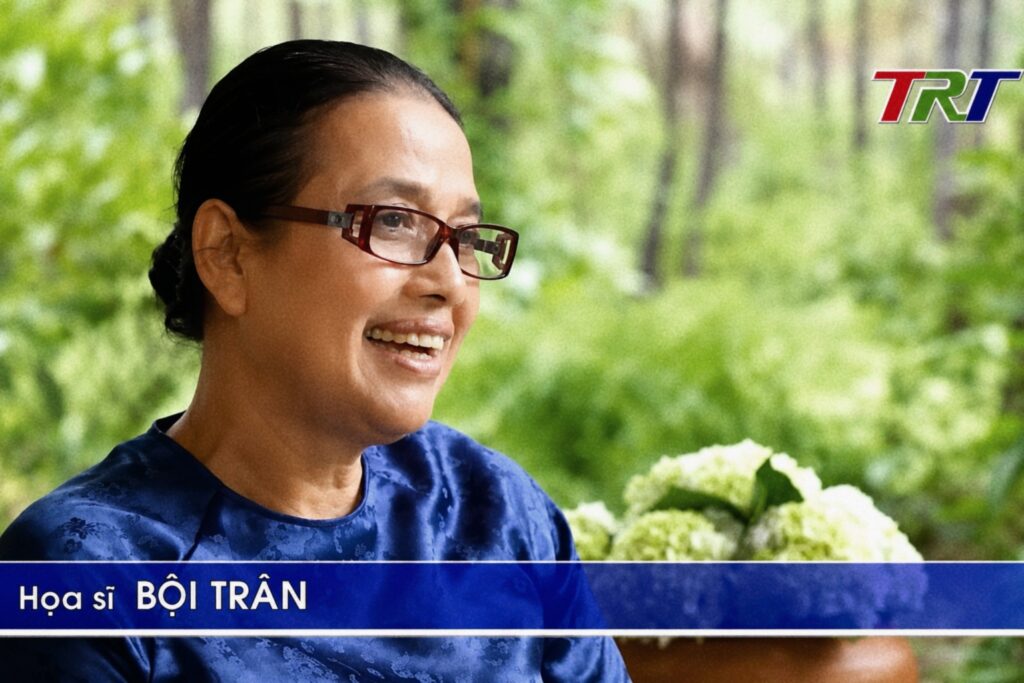
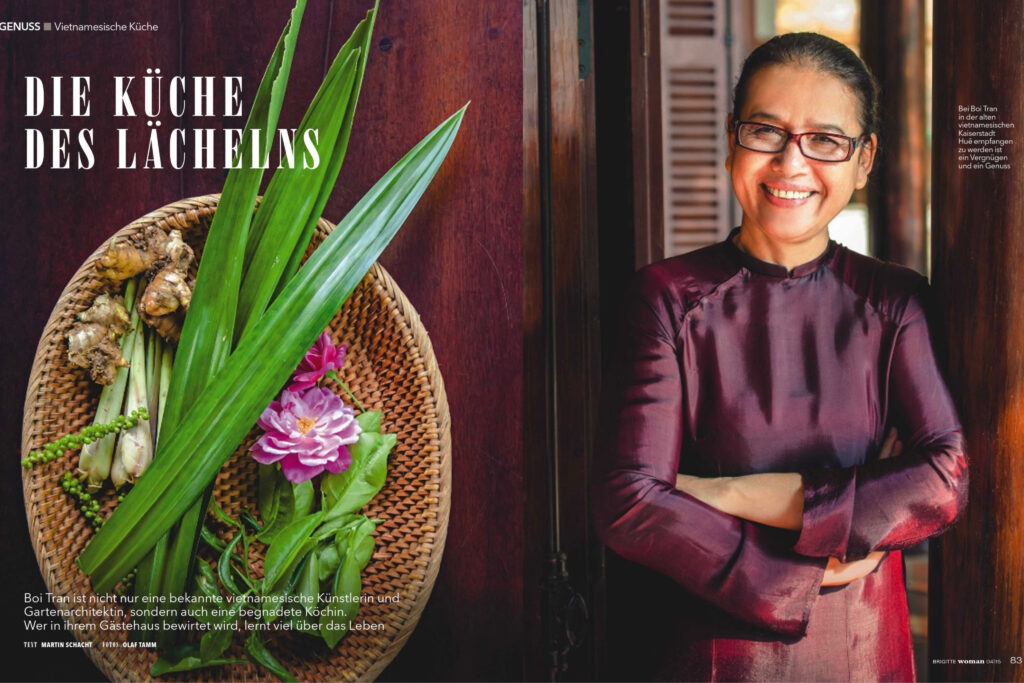
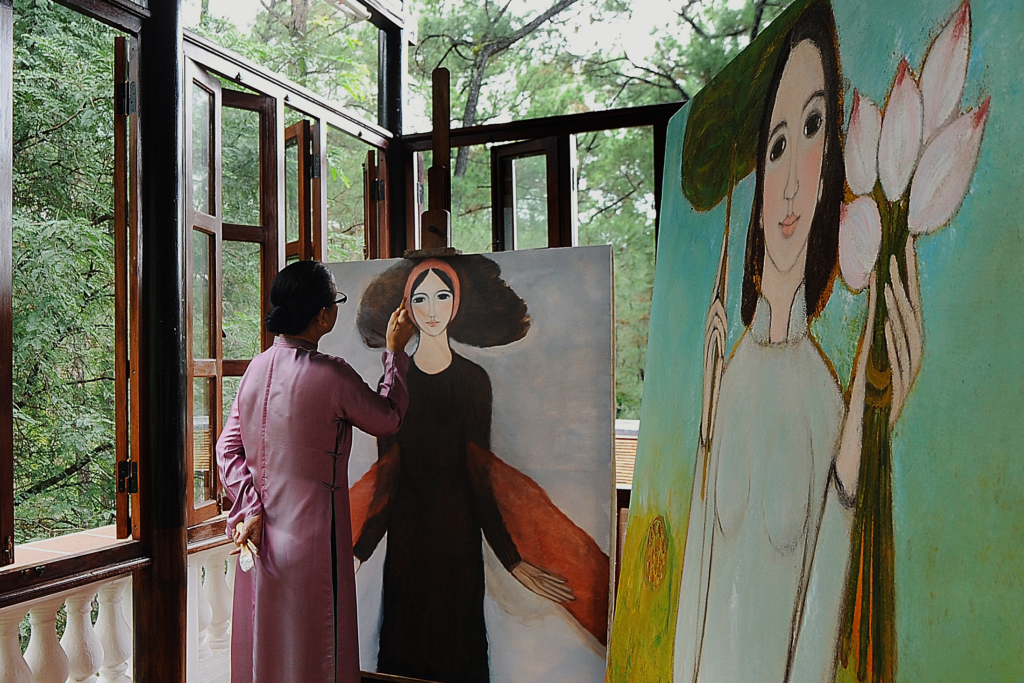
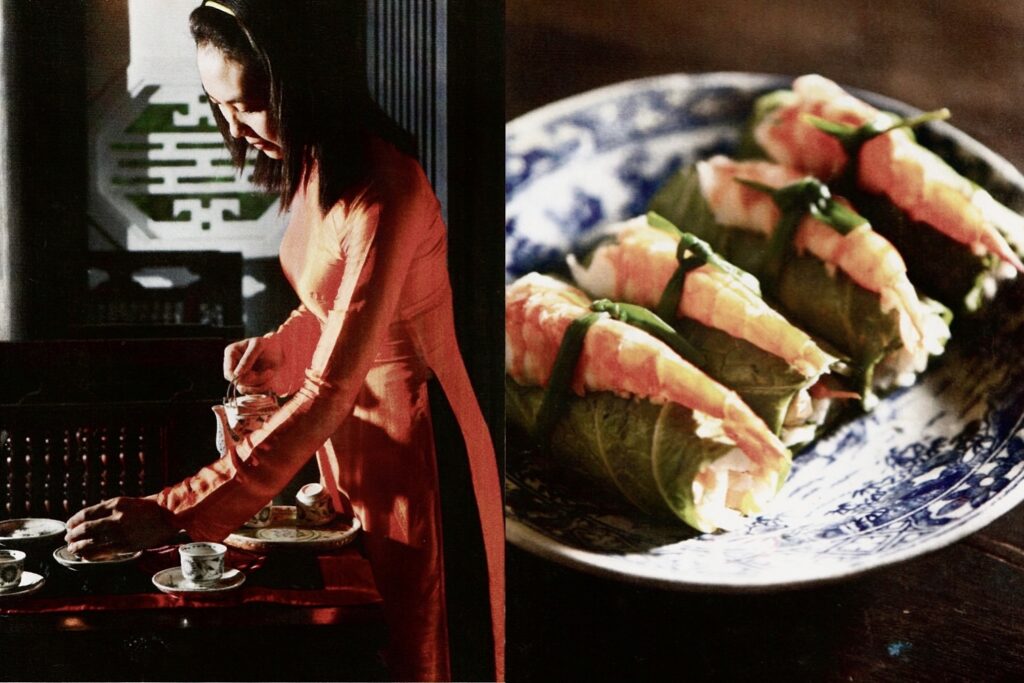
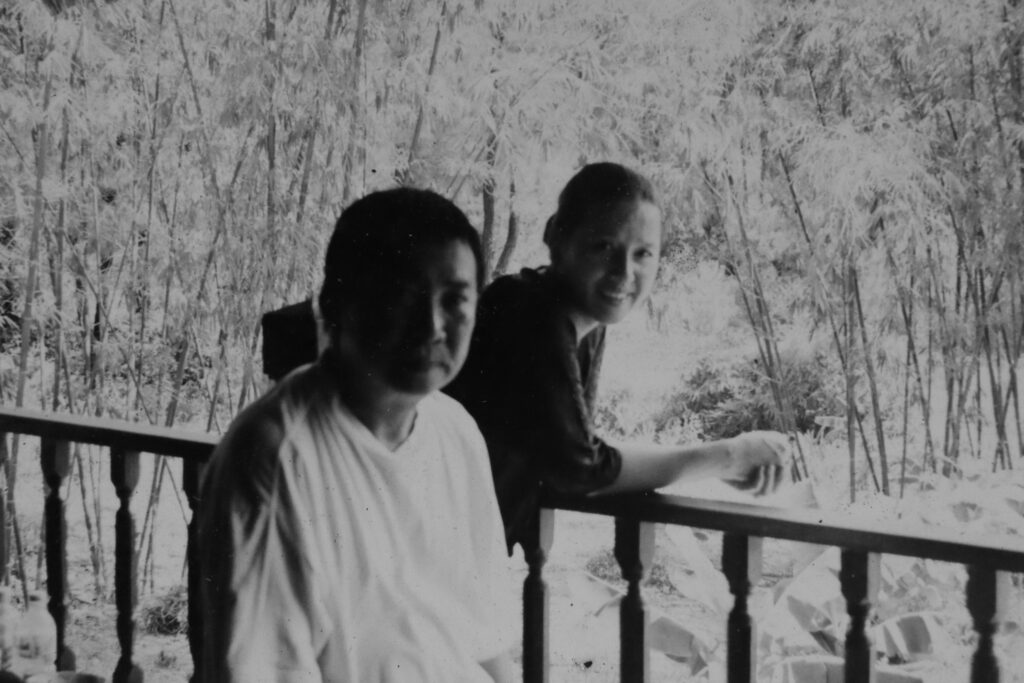
When one speaks of Boi Tran’s paintings, one recalls young women in áo dài, their eyes half-closed, or serene Buddhist visages. Yet in Hue, Boi Tran is also a legend of beauty. It is not a beauty that proclaims itself. It is refined, inward, and wistful, like a song by Trinh Cong Son. There was a time when she moved through the creative imagination of writers and musicians. Her presence appears, faint but unmistakable, in the poetry of Buu Y, in the prose of Hoang Phu Ngoc Tuong, in the music of Trinh Cong Son, and in portraits by renowned painters. It was a beauty not merely of features, but of presence, a presence deeply Huế: calm, delicate, yet sustained by quiet inner strength.
And yet, if we remain only with the paintings, with artistic memory alone, we may not reach the most essential dimension of her creative path. Boi Tran does not paint only on canvas. She paints with earth and timber, with foliage and light, shaping living spaces where one may slow down and listen, truly listen, to nature.
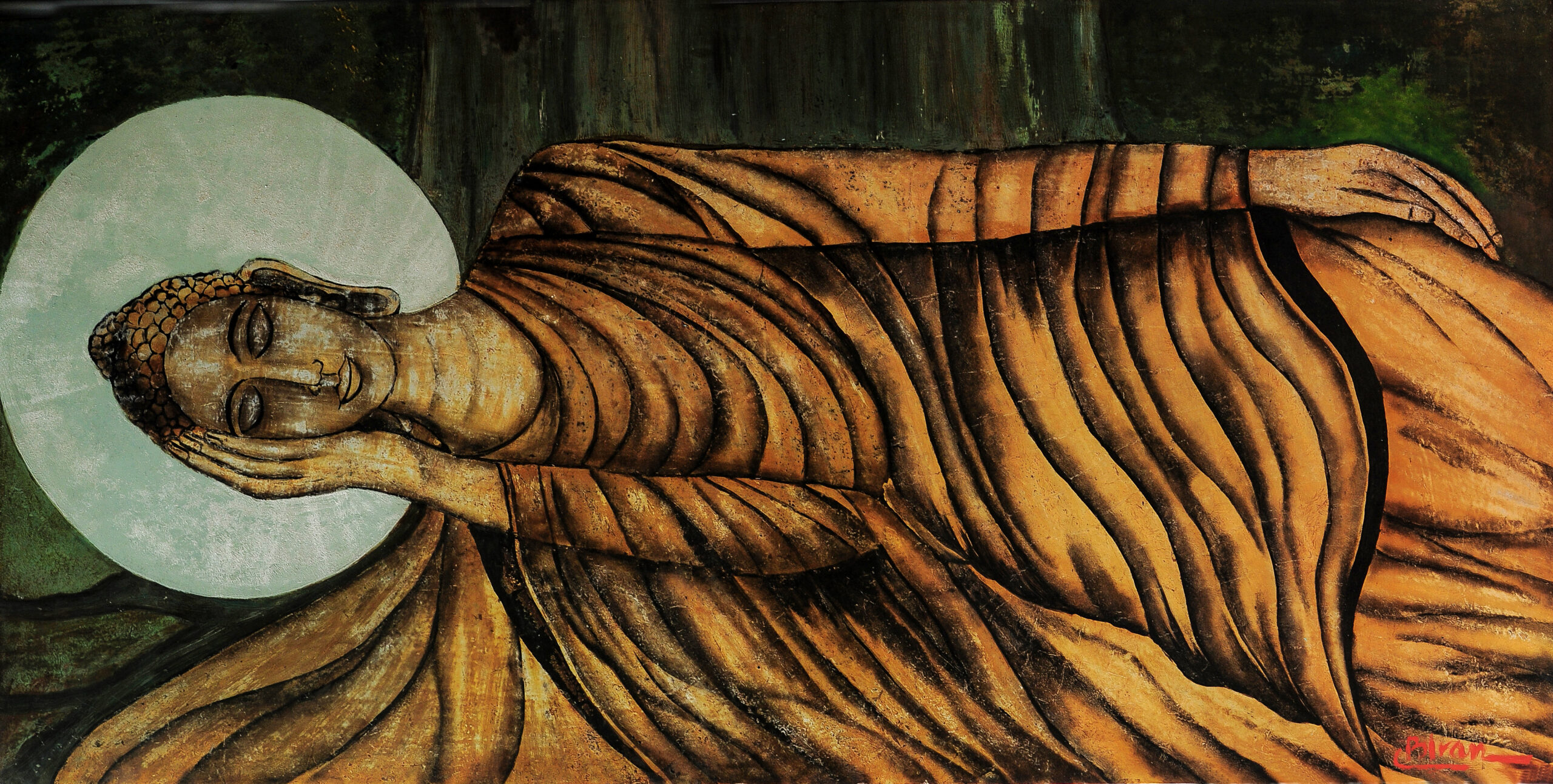
Boi Tran, Bouddha Couché (Reclining Buddha). 2016. Lacquer on panel, 80 x 160 cm. (31 1/2 x 62 63/64 in.). Collection of Boi Tran Garden.

Boi Tran, Hué en Fleurs (Hue in Bloom), 2023-2025. Oil on canvas, 140 x 250 cm. (55 1/8 x 98 3/8 in.). Collection of Boi Tran Garden.
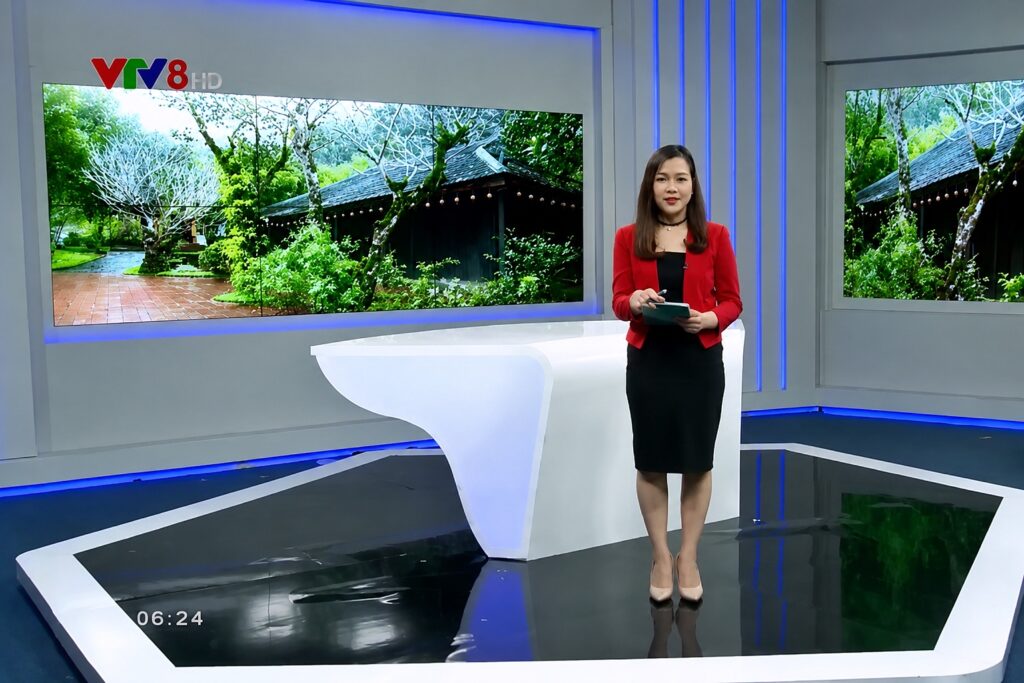
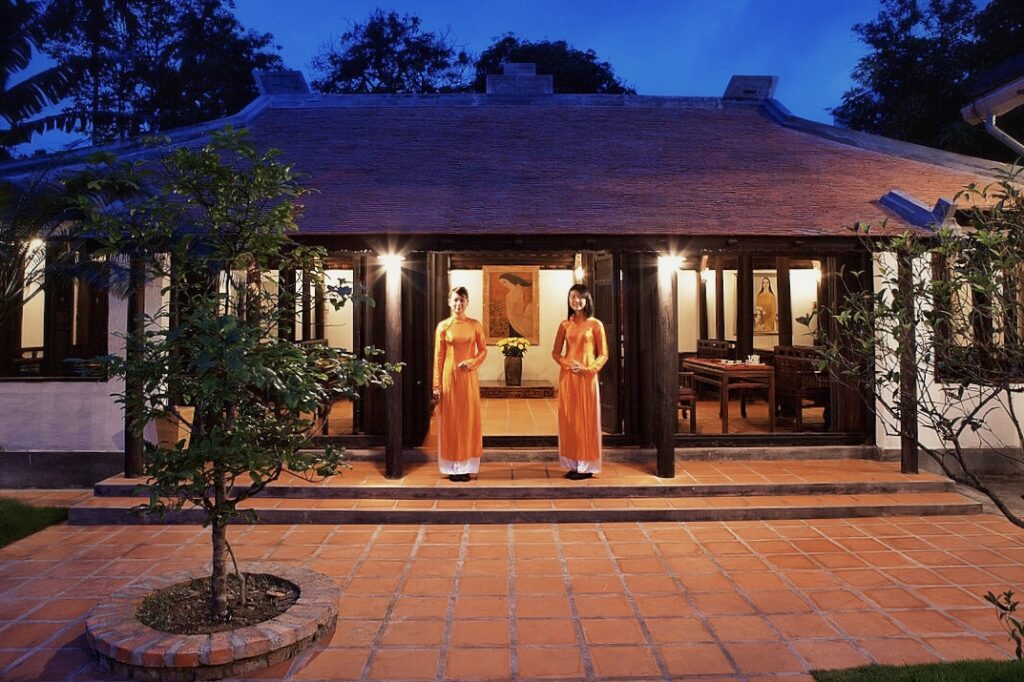
On Thien An Hill, where pine trees murmur through all four seasons, she created a garden house that seems less constructed than grown. There is no sense of architecture imposed upon the land. Everything is light, low, open, absorbed into the landscape.
What distinguishes Boi Tran’s architectural vision is her material choice. She turns almost exclusively to what belongs to the natural world: wood, brick, tile, stone, terracotta. Steel, concrete, and glass, the defining materials of modern urbanity, are nearly absent. This is not a rejection of the present, but a deliberate orientation toward return.
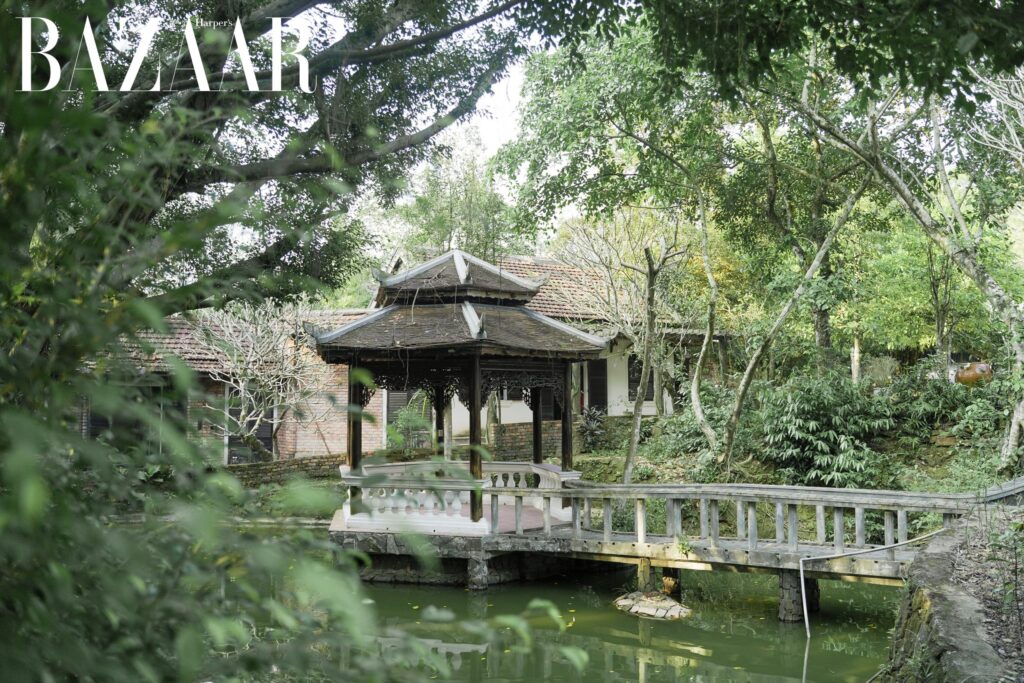
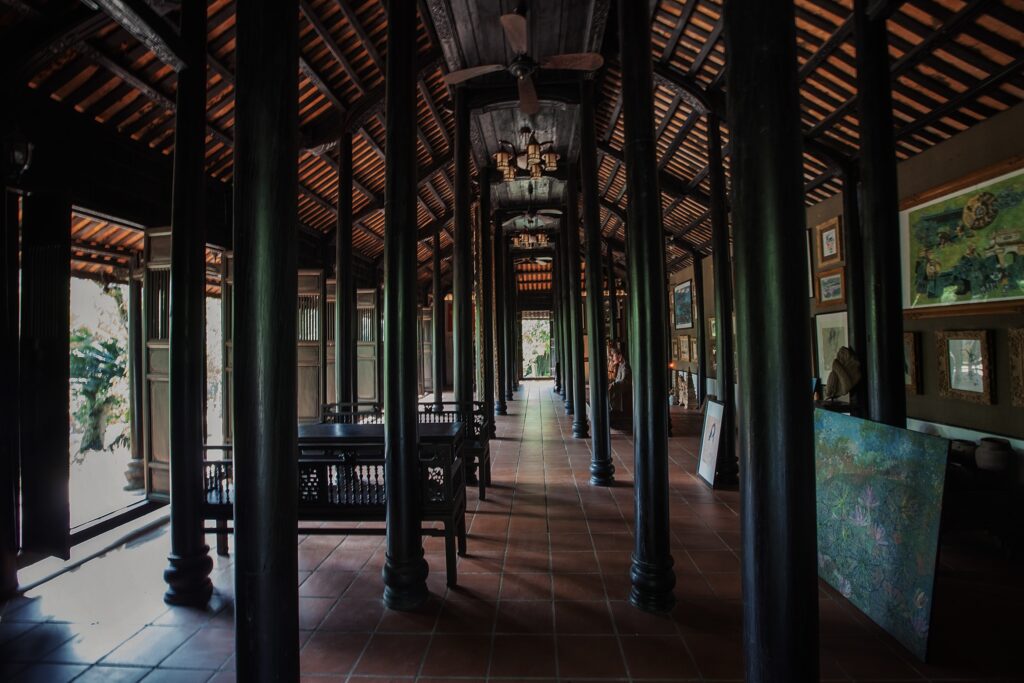
Old tiled roofs breathe beneath the sun and rain. Dark wooden columns bear the imprint of time. Brick walls remain unplastered so that moss may take hold. The space feels neither new nor old. It recalls the structural language of the Huế nhà rường tradition, yet is composed within a distinctly contemporary sensibility, one in which human life unfolds within nature, rather than apart from it.

Boi Tran Garden constitutes a form of living heritage. At sunset, a water lily lake lies still beneath a fading blue sky streaked with coral clouds. Trees and open lawn frame the quiet water, where light lingers softly in reflection.
If Thiên An was a prelude, Kim Sơn is the maturation of that vision.
The space at Kim Sơn is not a garden in the conventional sense. It is a lived realm. Modest dwellings rest beneath tree canopies. Brick paths traverse water and wind through greenery. Courtyards open toward an unbounded sky. The entire composition flows with quiet continuity.
Here, her philosophy becomes unmistakable: architecture is not meant for display, but for inwardness. A house does not stand above the land; it settles into it. A structure does not confront nature; it participates in it. Her near refusal of steel, concrete, and glass gives these spaces a distinct atmosphere, warm, supple, breathable. Light does not strike in harsh reflection, but filters gently through layers of natural matter. Air is not sealed behind cold surfaces; it moves freely through verandas, thresholds, and open intervals.
This is more than an aesthetic preference. It is a cultural proposition.

Boi Tran Garden, in itself, is a form of living heritage.
At a time when urbanisation increasingly hardens and encloses the spaces of living, Boi Tran Garden suggest another possibility: to live slowly, to live attentively, to live in harmony.
In them, one recognises the meeting of artist and space. The women in her paintings carry a profound inward stillness. The houses she creates carry the same quality. It is a stillness charged with energy, the kind that gently lowers one’s voice, slows one’s steps, and invites one to remain.
Huế has long been a city of gardens. Yet for the garden house to endure in modern life, it requires more than formal restoration; it requires an understanding of spirit. Bội Trân has embodied that understanding through her own life.

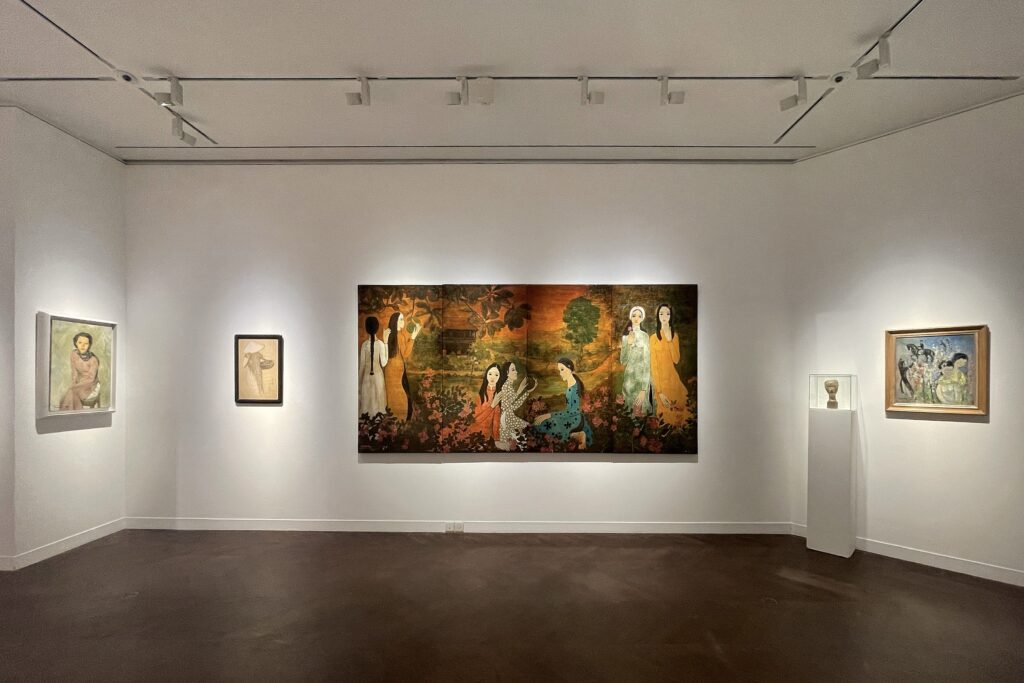
The art gallery of Boi Tran Garden.
She lives as she paints. She builds as she preserves, without proclamation, without noise, but with persistence and meticulous care, attentive to the smallest detail.
One spring afternoon at Kim Sơn, as light falls through leaves and touches the old tiled roofs, it becomes clear: if the beauty of a heritage city lies not only in monumental structures but also in spaces that sustain its spirit, then Bội Trân’s garden houses must be regarded as living heritage.
A heritage shaped by a woman once called a muse, and who, in time, became a work of art herself.
Within these spaces, Huế appears not as a memory concluded, but as a dream still unfolding, rendered in wood, in tile, in foliage, in light, and in a soul unmistakably Huế.
Gazing upon the garden, one finds reason to believe in the future.
The 5th day of Tết, Year of Bính Ngọ
Dr Phan Thanh Hải
Director, Department of Culture and Sports, Hue City, Vietnam