Youth, Flowers, and the Quiet Language of Boi Tran’s The Young Girl and the Flowers
Nguyen Trong Tao
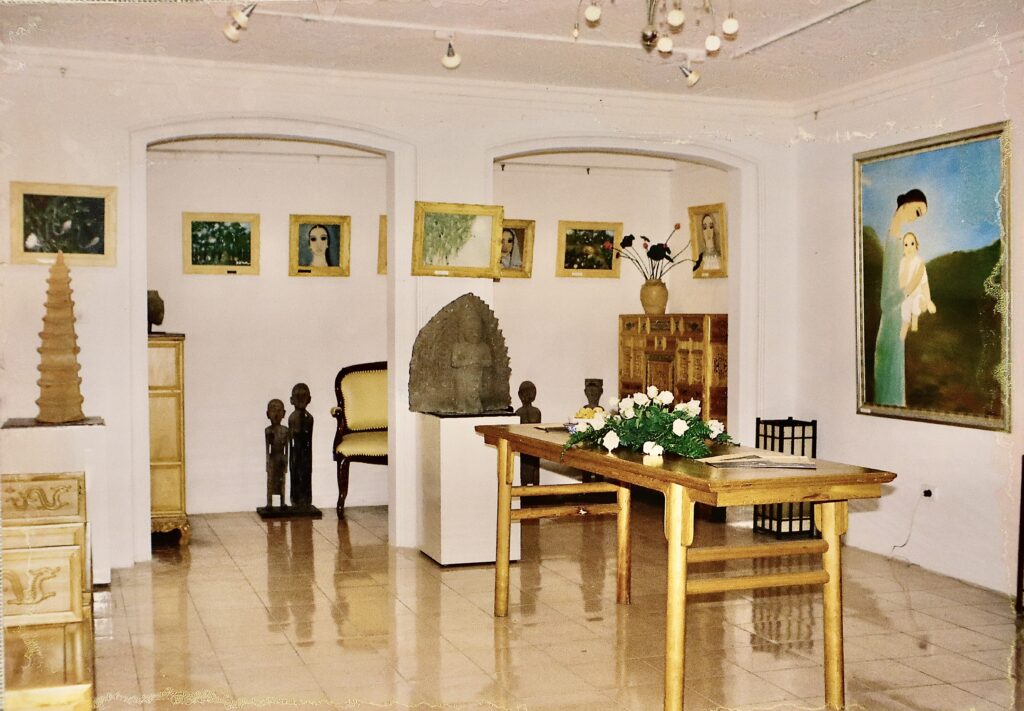
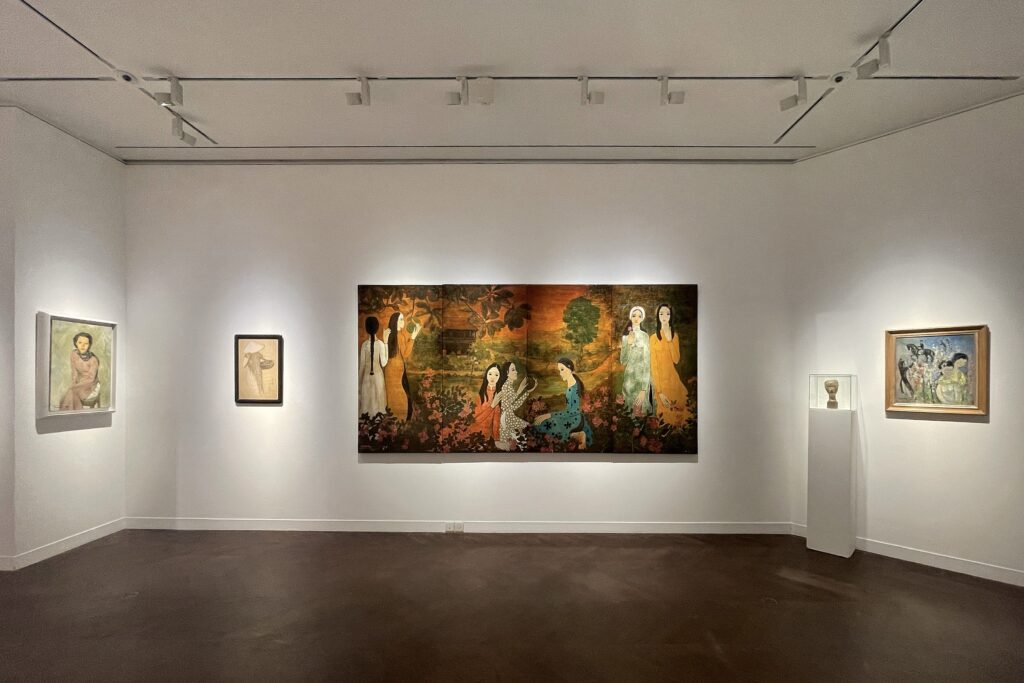
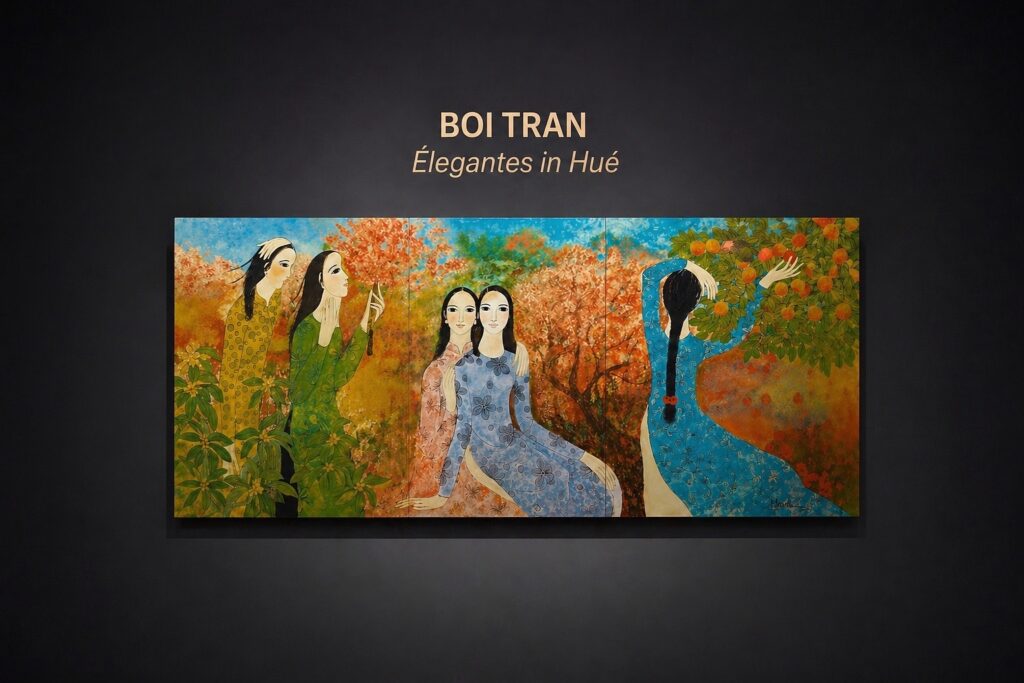
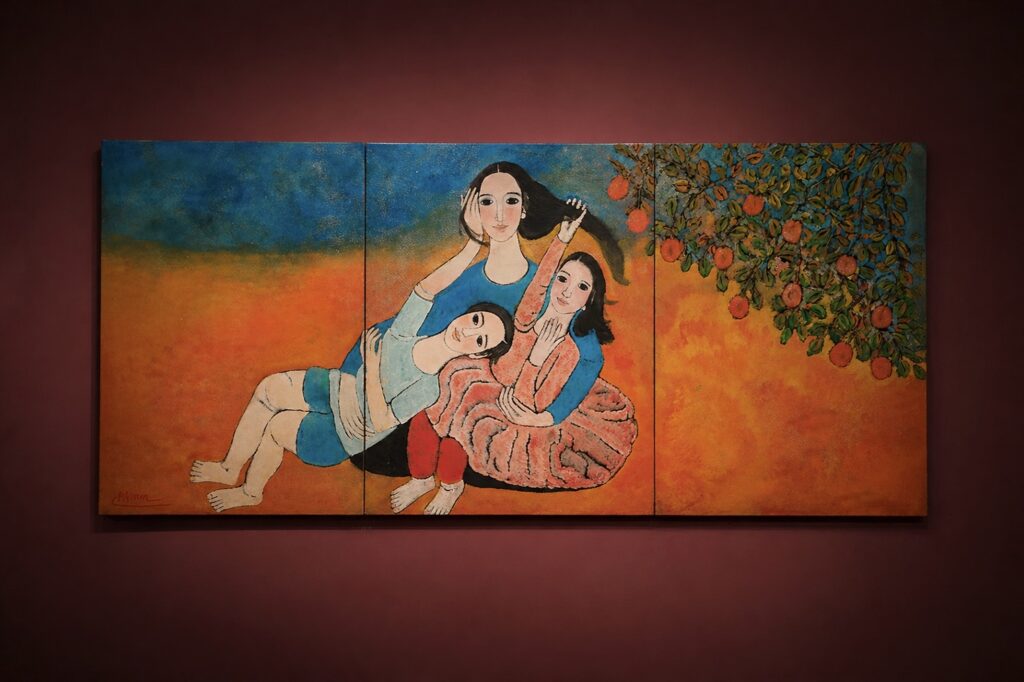
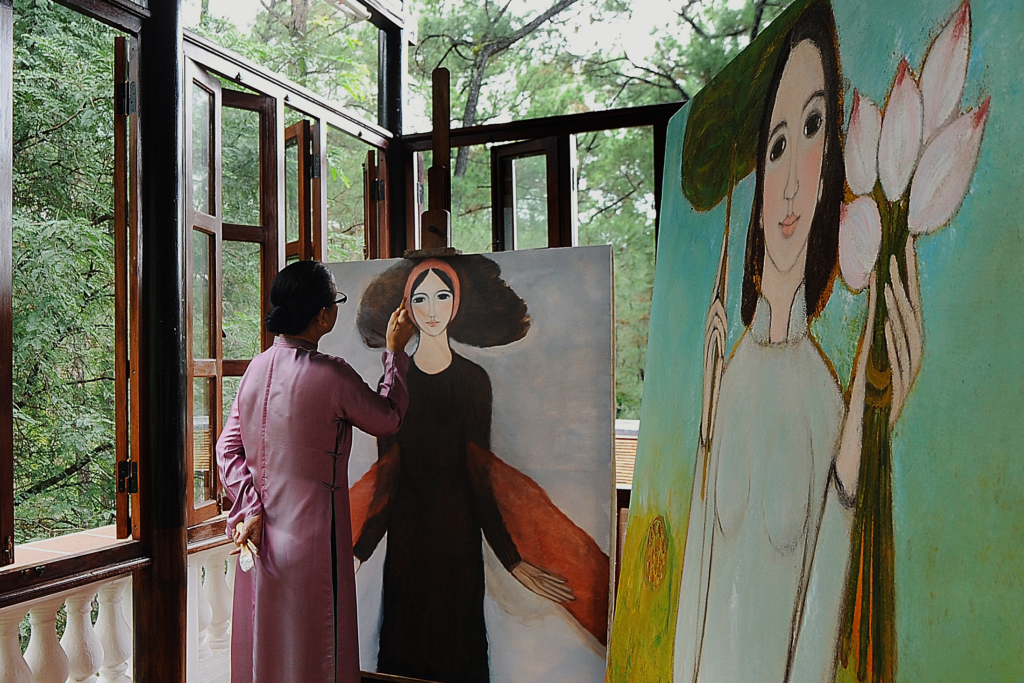
Boi Tran, Ladies and Flowers
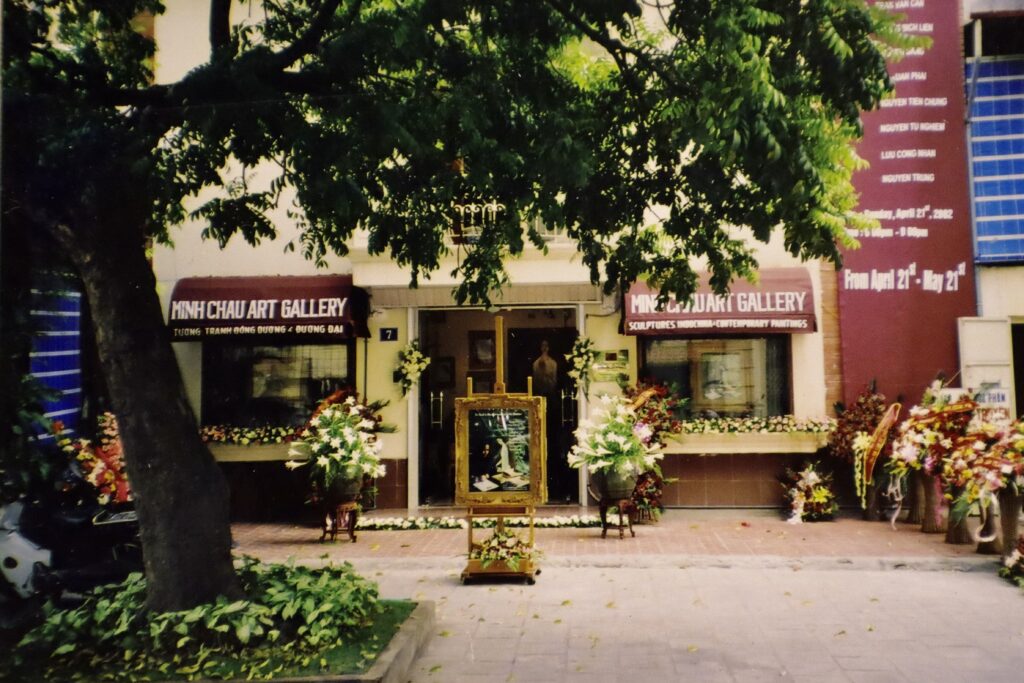
It was the waning days of the Year of the Monkey when I found myself once again at Minh Chau Gallery, tucked quietly at No. 7 Ly Dao Thanh, Hanoi. But this time, I wasn’t drawn there by the timeless allure of masterworks by Nguyen Phan Chanh, Bui Xuan Phai, Nguyen Tu Nghiem, or Nguyen Sang, whose canvases often grace these walls, nor simply to greet young Minh Chau, the gracious gallery owner and an old friend from Hue. I had come for something more tender: to witness the first unveiling of her mother’s paintings, freshly arrived from Hue, now breathing their quiet beauty before the discerning eyes of Hanoi’s art lovers.

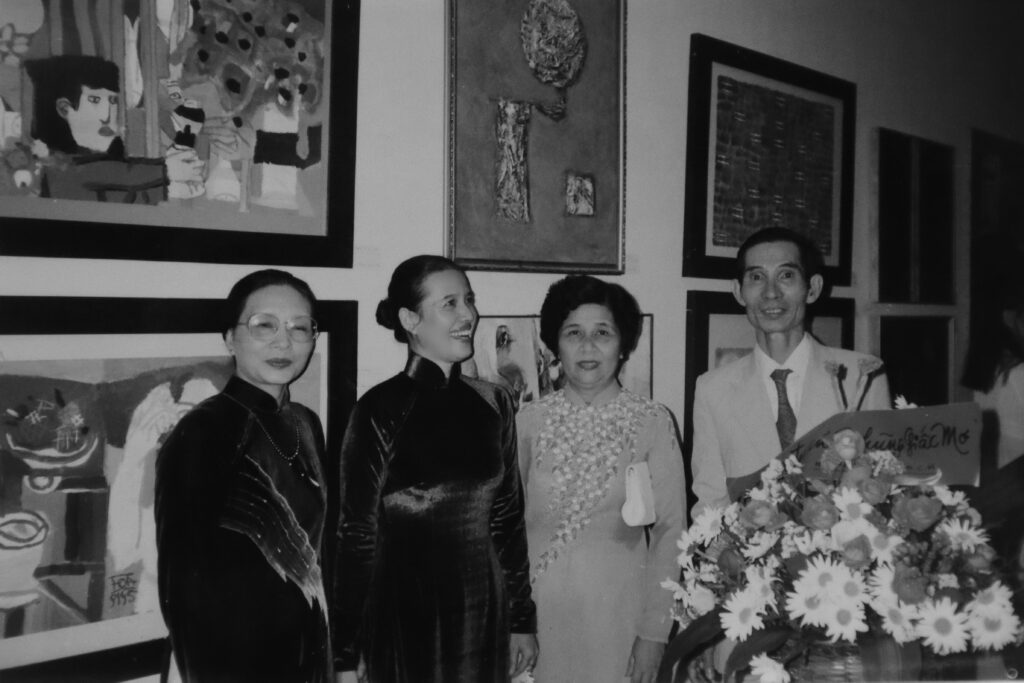
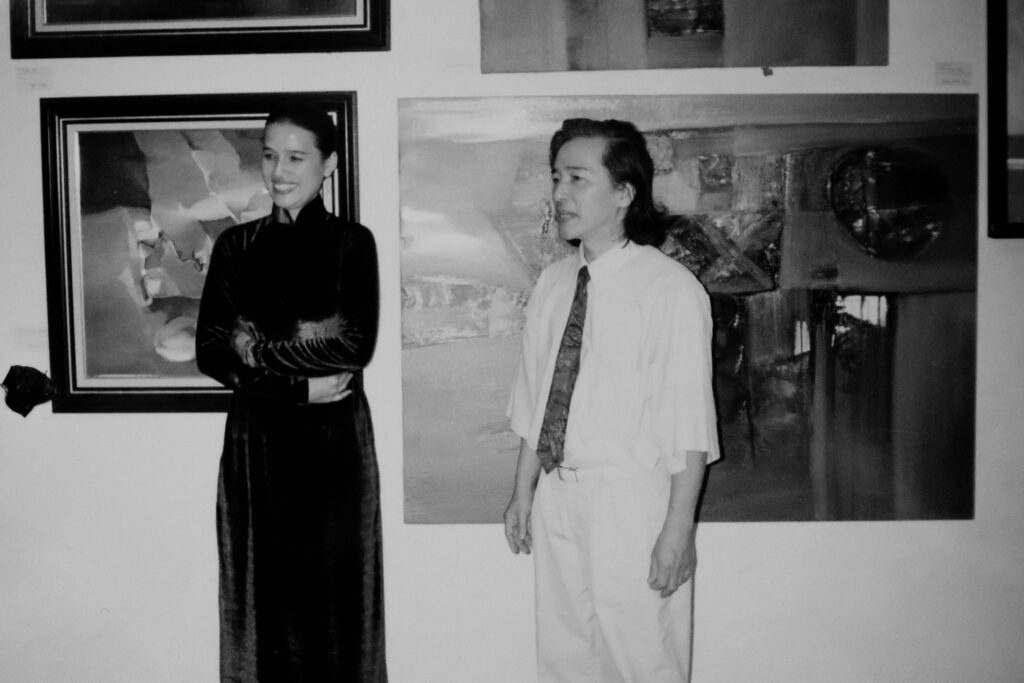
The congratulatory floral arrangements for the exhibition remained fresh. Visitors continued to arrive in numbers. People and foreigners alike looked at the paintings and at one another. Cameras and video recorders preserved their memories. Both floors of the gallery were filled with colour and form. The strongest impression left upon the viewer was that of young women and flowers.
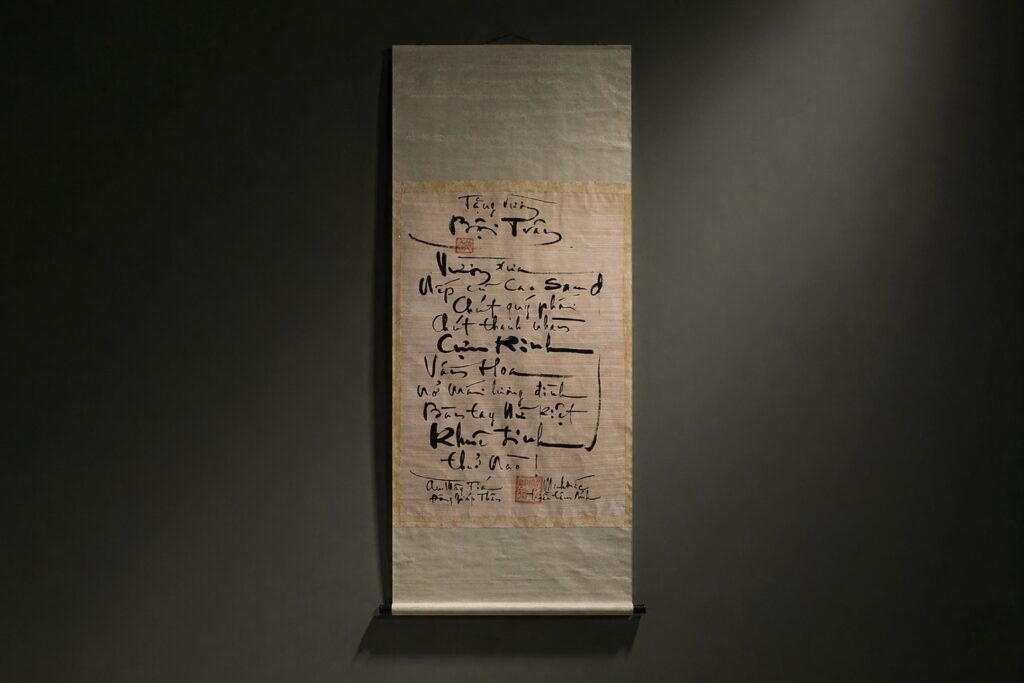
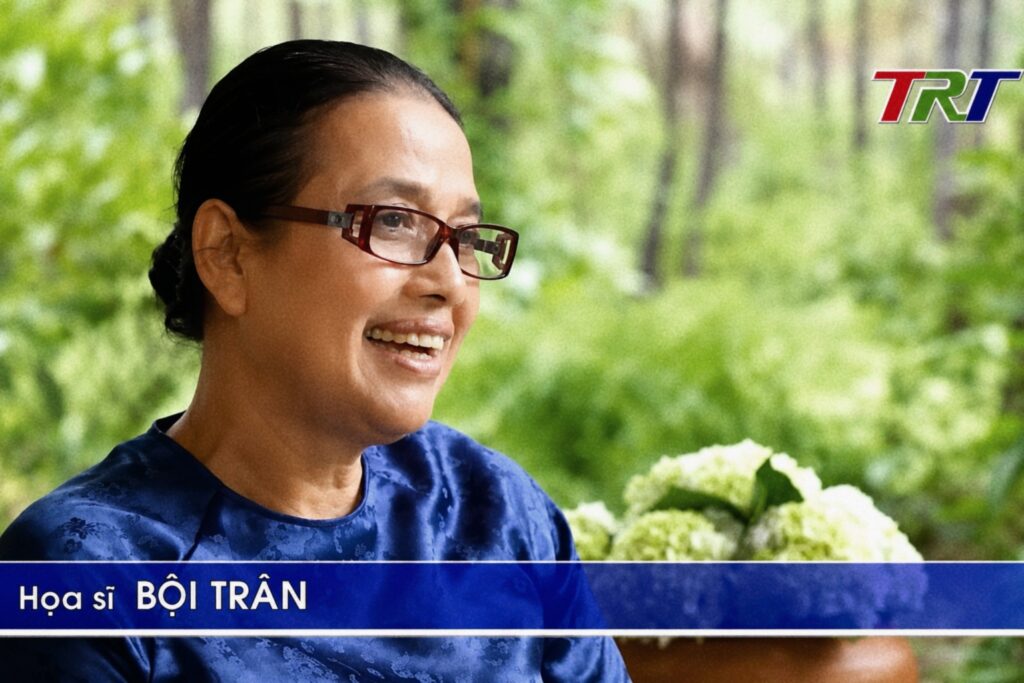
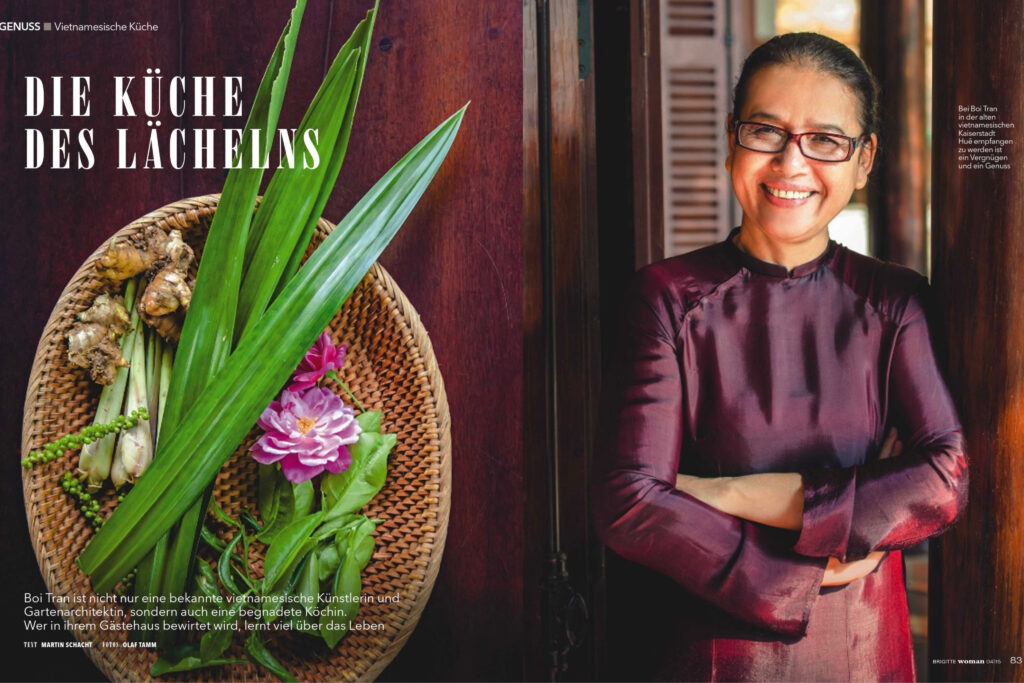
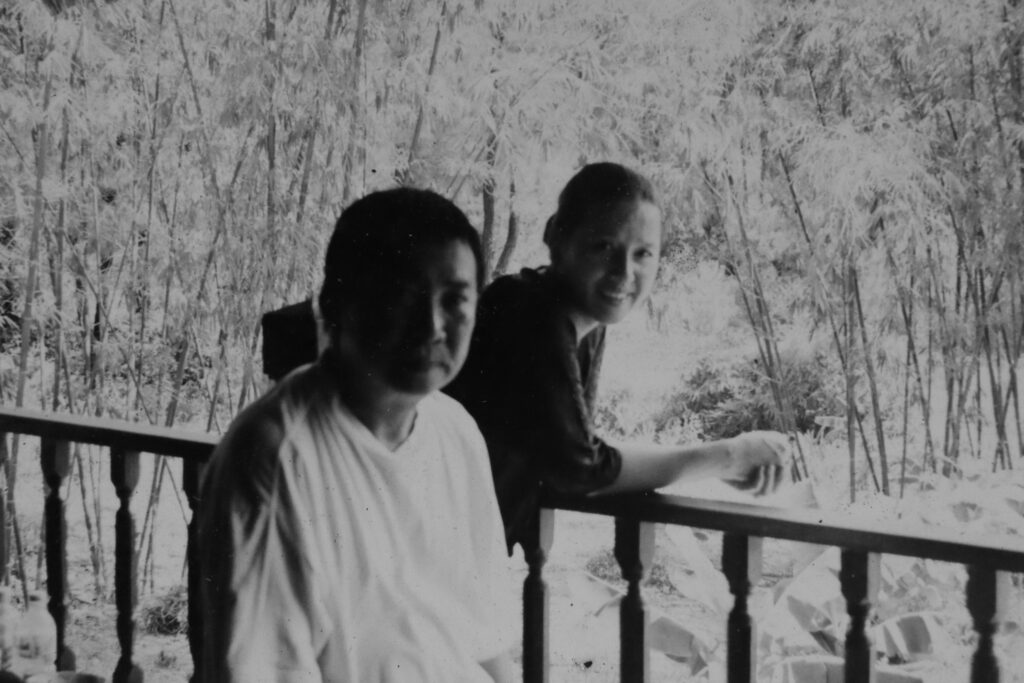
I had known the author of these paintings for quite some time, from when I was still in Huế. At that time, Bội Trân was among the few who had the courage to open one of the first private galleries, a large gallery located on the ground floor of the Morin Hotel by the poetic Perfume River. The opening of Bội Trân Gallery was attended by artists from the North, Central, and South, and the poet Nguyễn Khoa Điềm, then Minister of Culture and Information, cut the ribbon. I understood the respect of the Minister for this new event, for from it might open a market for painting in a city of tourism, one that carries within itself a world cultural heritage of palaces, pagodas, temples, and tombs under preservation. From that passion for painting, Bội Trân began to paint. Her first teachers were the painters Nguyễn Trung, Trương Bé, and Trịnh Công Sơn. These well-known figures painted alongside her, either at her residence or among the whispering pine hills by Thủy Tiên Lake. She painted them, and they painted her. They painted figures and landscapes. They painted in oil and in lacquer. Perhaps for this reason, some of Bội Trân’s early works bear traces of Nguyễn Trung’s manner? Yet upon closer viewing, one already perceives the emergence of a distinctly feminine sensibility in her paintings. And there is another curious thing: one cannot quite explain why her paintings draw the viewer back toward the melancholic and refined bearing of imperial Huế…
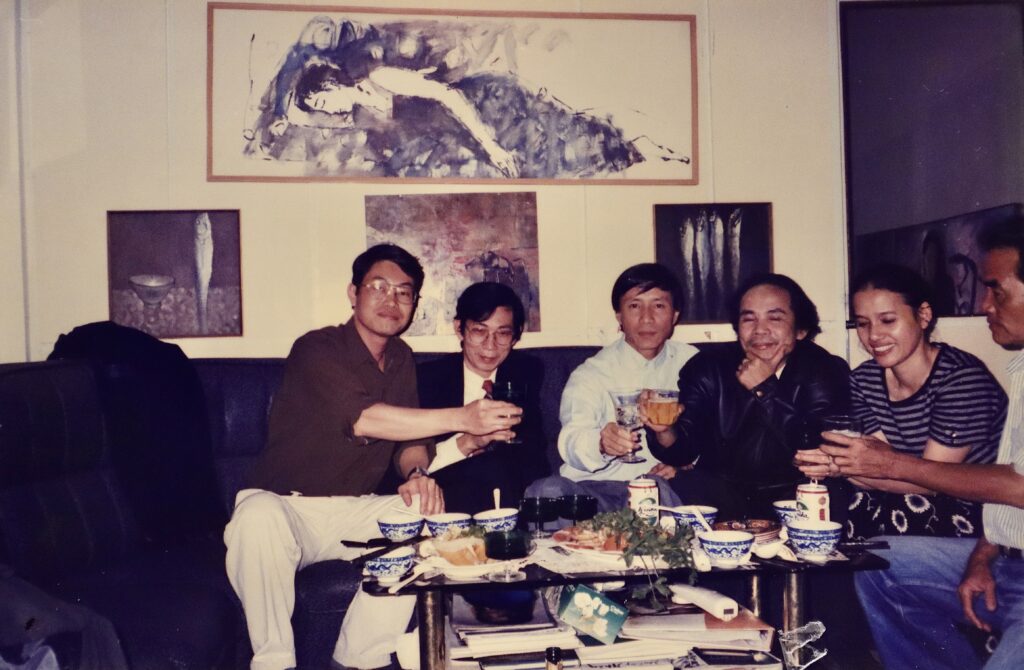
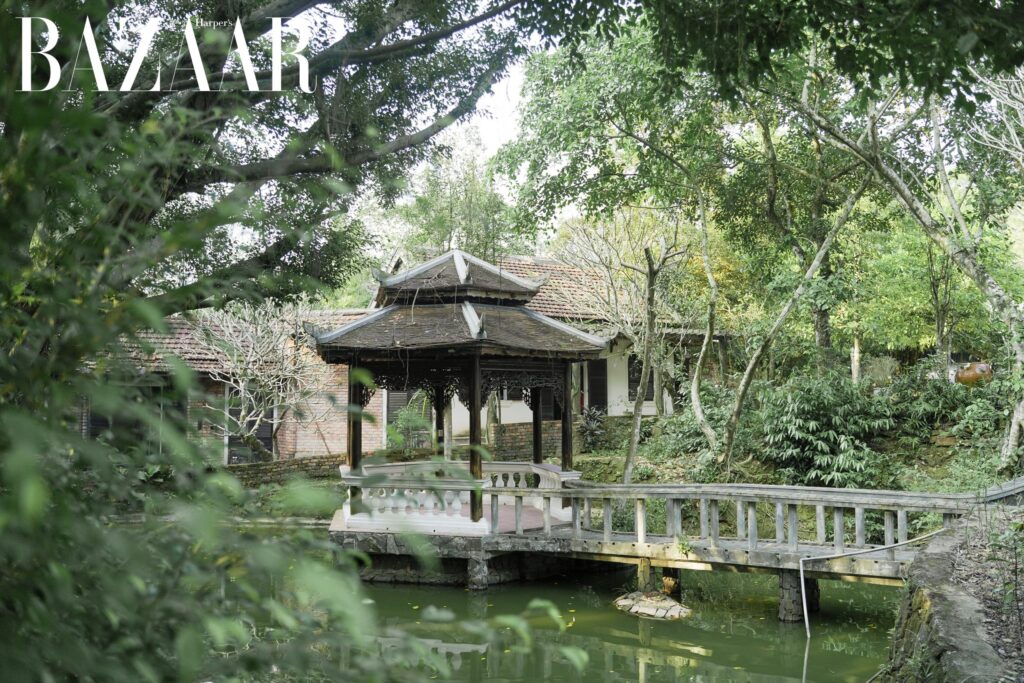
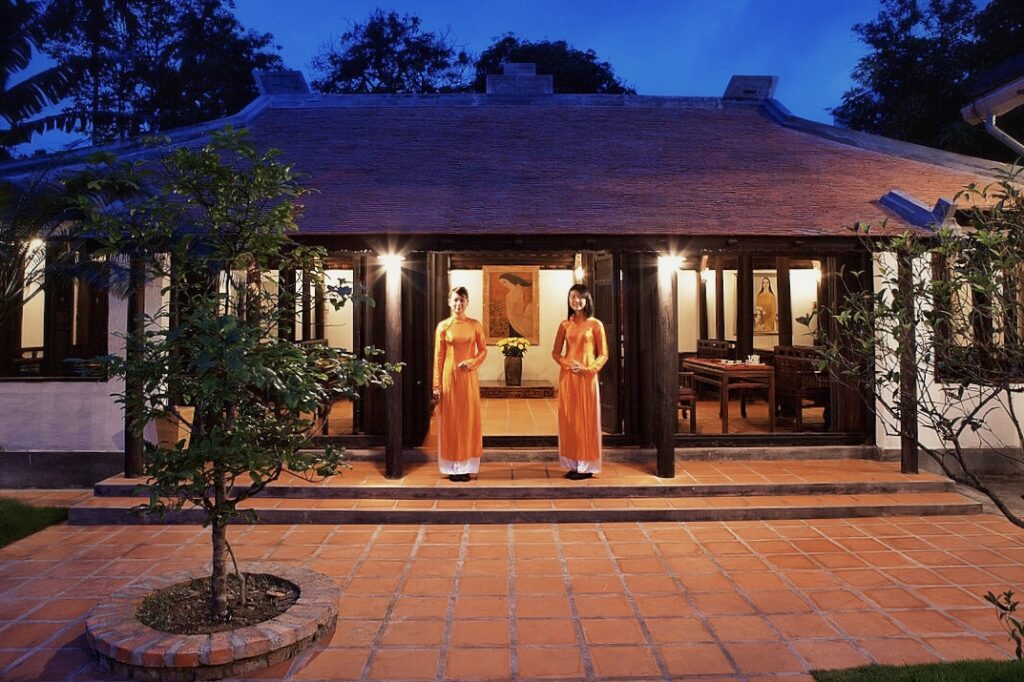
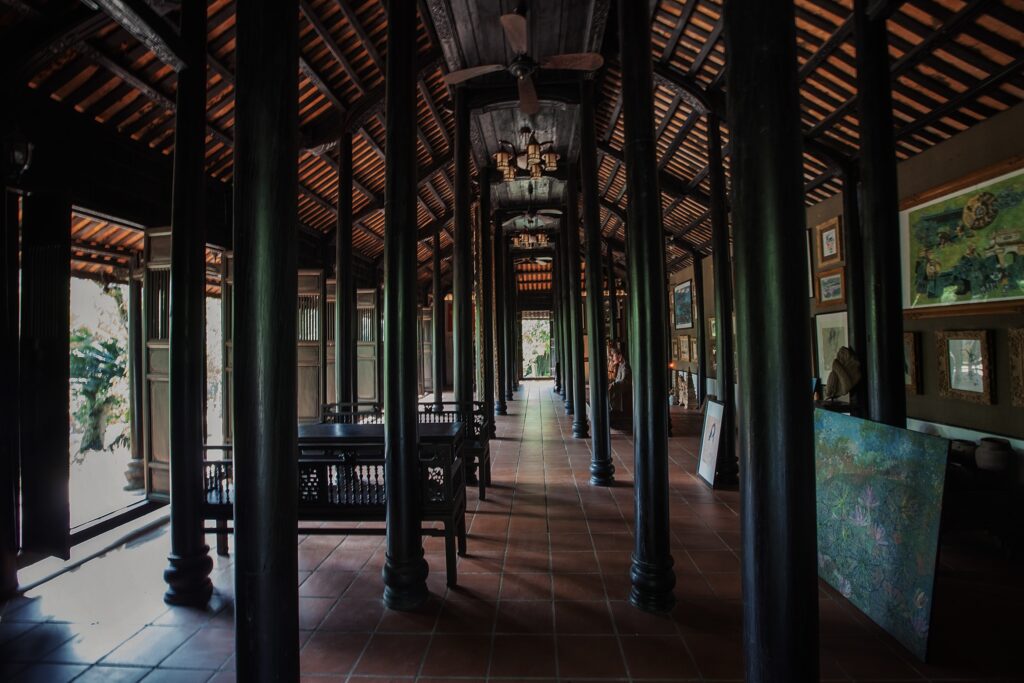
Bội Trân told me that she had never painted as much as in the past two years. I knew she was referring to a grief so immense that it could never be overcome. It was the sudden passing of her most beloved son. A son so handsome, so gentle, so full of dreams, in his fourth year at university in the United States, who died while attempting to save a friend across the Pacific Ocean. She devoted the entire traditional wooden house, made of jackfruit wood, the most beautiful in her garden on Thiên An Hill, as a place of worship for him, while she herself lived in a stilt house nearby. Around the house hung photographs of her son with family, with nature, and with friends. On the day of the memorial rites in Huế, Hanoi seemed to run out of white roses, for they had all been sent to Huế for the grieving mother. “In those days, had I not painted, I would have died,” she said, her voice still heavy with a grief of two years, one that could hardly be shared. I looked at the paintings. The young women, their eyes wide open gazing into distance, lowered toward epiphyllum blossoms, or closed in prayer, resembled her own eyes. Twelve lacquer paintings measuring 60 × 120 cm depicted young women; not one bore brilliant colour, though gold was present, all subdued like the mossed walls of the imperial citadel or the fossilised earth of Thiên An Hill. Only when the figure of a young boy appeared in her arms did brightness emerge upon that sombre ground, and in her paintings one reads a maternal love that must swallow its own tears.
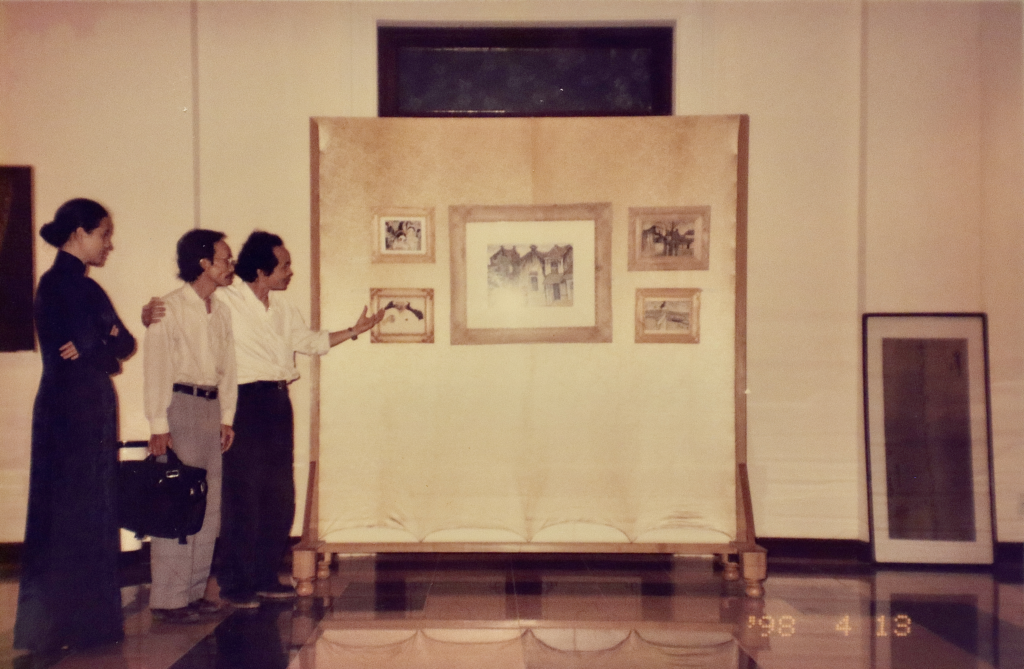
I was drawn to a painting titled Young Girl by the Rock, her chin resting upon her hands placed over her folded knees, her eyes wide open, gazing into the indefinite. A composition quite distinct from the other portraits of young women in the gallery. I was told that this was a portrait of her daughter Minh Châu, seated by a cove in the United States, waiting as others searched for the body of her brother beneath the sea. Such accumulations of feeling had been transferred into the brush. Dozens of paintings of flowers were born in this way. The epiphyllum and the lotus are the two flowers Bội Trân cherishes most. She paints as if to preserve each fleeting moment of their brief blossoming and fading. It is as if she wishes to hold each instant of beauty, to rescue beauty itself. I looked at the lotus in her paintings and saw transformations of a strange kind. At times, the lotus appears like candles lit upon a night lake; at others, gathered into bundles like burning incense… There is something sacred entrusted within these flowers.
“An artist paints not to speak, but to be silent.” The art critic Thái Bá Vân once said this, and added: “What we read in a work of art lies in the submerged part of the iceberg that Hemingway once awoke.” I agreed with him as I looked at Bội Trân’s paintings, yet there are forms of beauty that strike directly at human intuition from the outset. The first thing I perceived in her paintings was Beauty. A clarity of colour, and an innocence of form. A beauty born of instinct, appearing before technique and experience. It is a capacity without which one cannot become an artist.
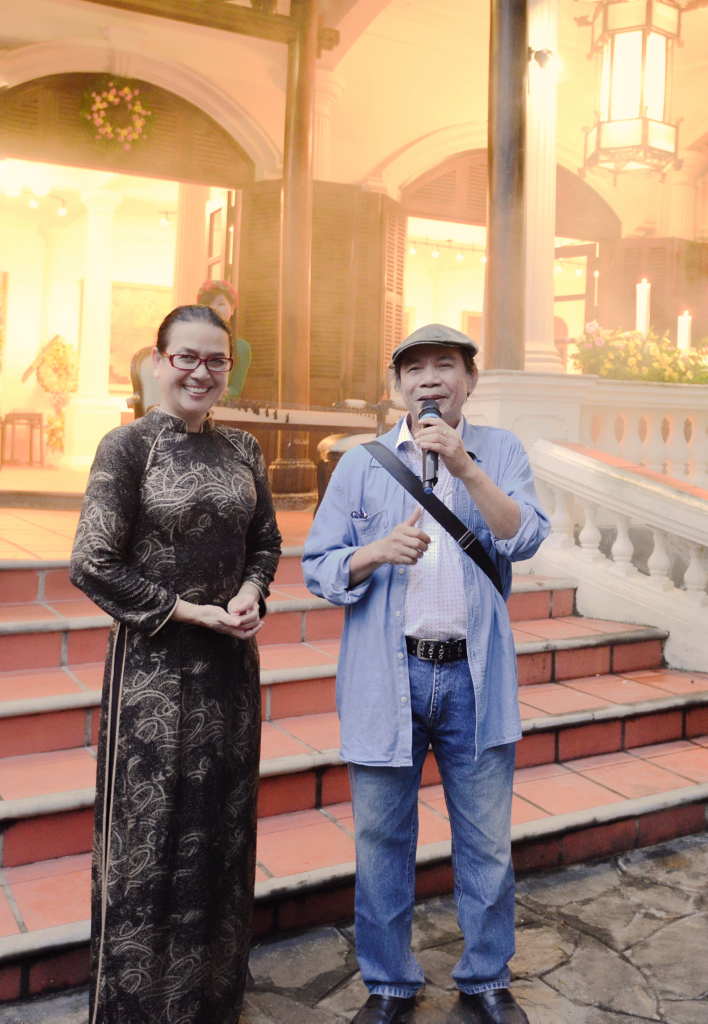
In an earlier essay, I once called Bội Trân a “Talent-Woman of Huế,” at a time when she had not yet exhibited her paintings. She is one who has surpassed circumstance to exist as a notable presence within the former imperial capital. Born in the Year of the Rooster, 1957, she came to Huế to study, married, and raised her children alone; alone she opened galleries in Huế and Hanoi; alone she built a cultural garden on Thiên An Hill; alone she established a handicraft enterprise; and even organised a rural fair for Christmas. And now, without formal academic training in painting, she nonetheless presents a gallery of confidence in the cultural capital. Though only mother and daughter remain, one in Huế, one in Hanoi, she still dreams that in a few years her garden in Huế will become a destination for visitors, with cultural services, artistic production, exhibitions, and symposia.
I asked: “You do so much, do you never feel tired?”
She smiled gently: “It is simply my nature… I have grown accustomed to finding joy in weariness.”
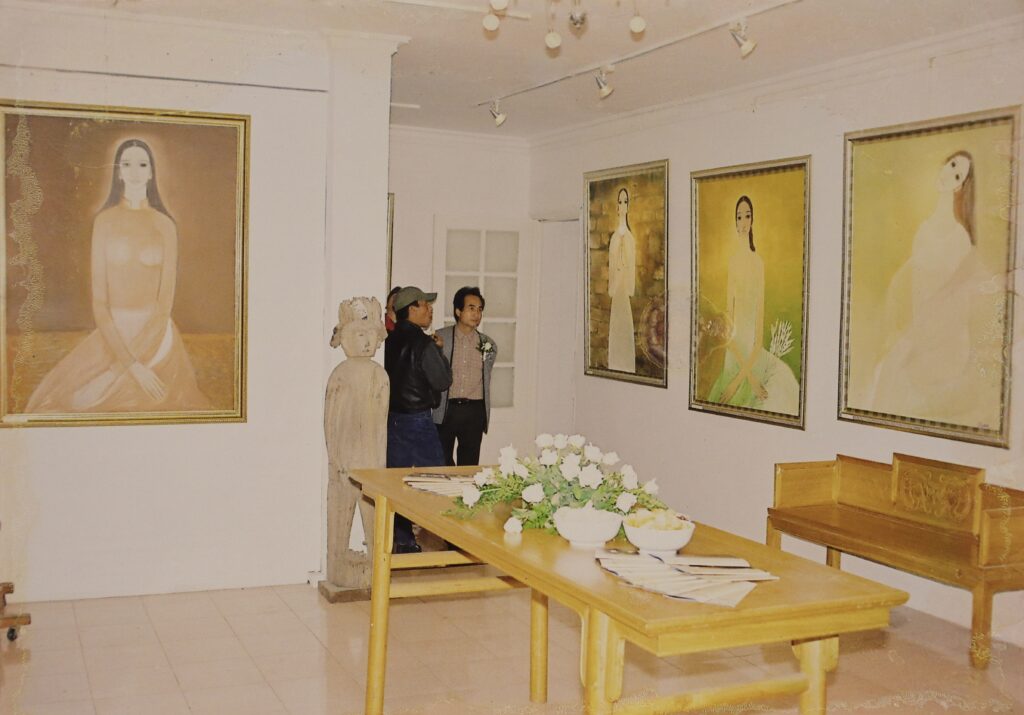
I looked once more at the paintings of young women and flowers, and realised that Bội Trân was right: through creative labour, one finds one’s own joy.
Hanoi, 30 December 2004
Perfume River Journal, No. 192, Published in February 2005