
Diplomatic and Cultural Exchange, or the Practice of Diplomacy as a Lived Experience
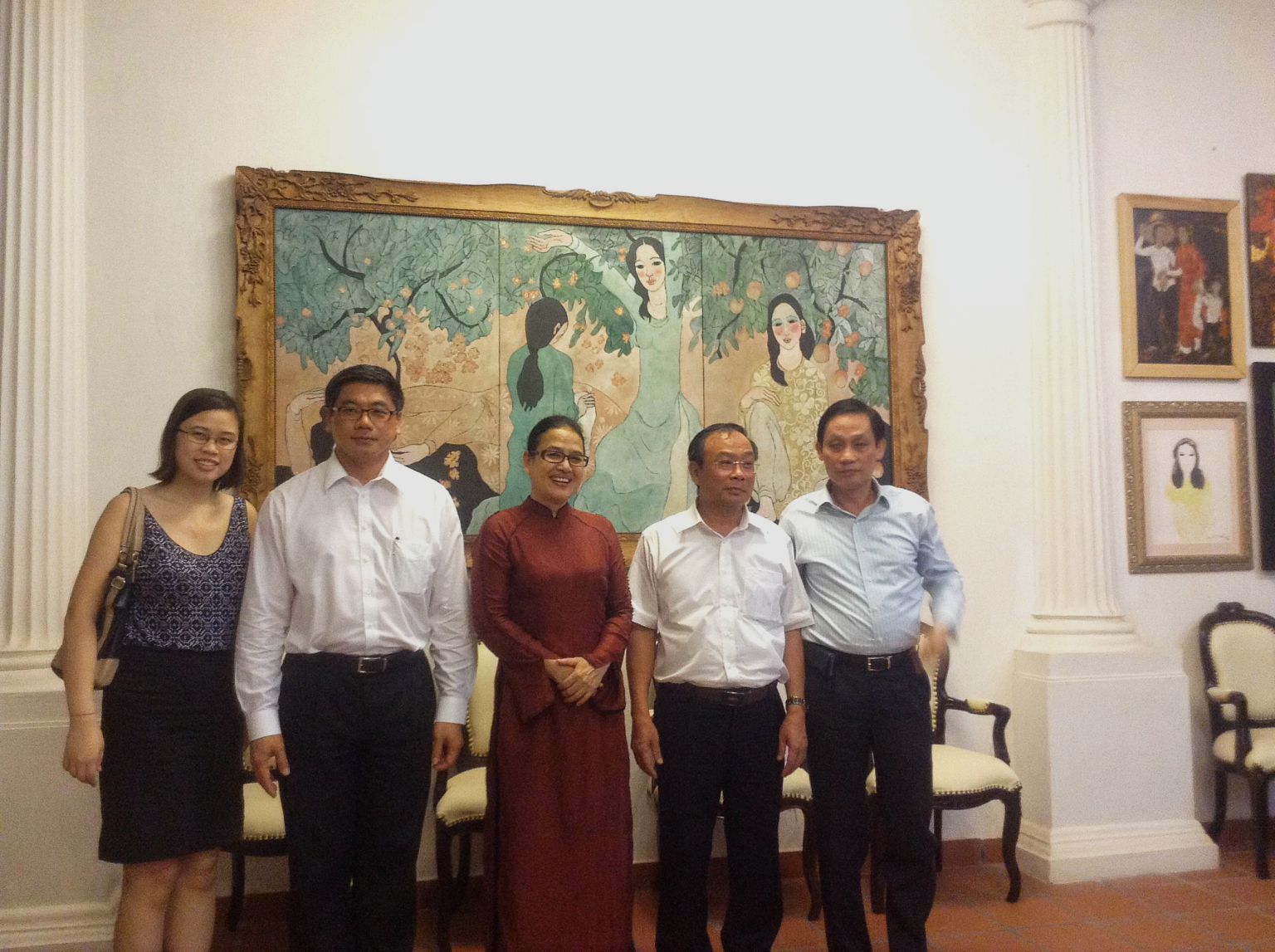
Boi Tran Garden is privileged to welcome a cultural exchange between the Vietnamese and Singaporean delegations, unfolding not as a formal event, but as a moment of shared presence. The occasion brought together H.E. Le Hoai Trung, Member of the Politburo of the Communist Party of Vietnam, Secretary of the Party Committee, Minister of Foreign Affairs of the Socialist Republic of Vietnam, Member of the National Defence and Security Council, and Member of the National Assembly (16th legislature); Mr Ng Teck Hean, Deputy Secretary (Asia-Pacific), Ministry of Foreign Affairs of Singapore and Ambassador of Singapore to the Socialist Republic of Vietnam; Mr Nguyen Van Cao, Chairman of the Thua Thien Hue Provincial People’s Committee; and painter Boi Tran, whose convergence reflected a meeting point between diplomacy and cultural stewardship.
Diplomacy is not confined to formal frameworks. It is also shaped, often more enduringly, within environments where culture, memory, and human presence converge. It is in such conditions that dialogue acquires depth, and relations extend beyond their immediate articulation.
Such a moment unfolded at Boi Tran Garden in Huế, where a cultural exchange between the Vietnamese and Singaporean delegations took place not as a ceremonial occasion, but as a lived experience of shared presence.
The meeting brought together H.E. Lê Hoài Trung, Member of the Politburo of the Communist Party of Vietnam, Secretary of the Party Committee, Minister of Foreign Affairs of the Socialist Republic of Vietnam, Member of the National Defence and Security Council, and Member of the National Assembly (16th legislature); Mr Ng Teck Hean, Deputy Secretary (Asia-Pacific), Ministry of Foreign Affairs of Singapore, Ambassador of Singapore to the Socialist Republic of Vietnam; Mr Nguyễn Văn Cao, former Chairman of the Thua Thien Hue Provincial People’s Committee; and painter Bội Trân.
Their titles define their roles. Their convergence suggests something more enduring, a continuity shaped not only by institutions, but by a shared engagement with cultural and human values.
Huế offers a particular ground for such encounters. It is not a city that displays history. It absorbs it. Time does not recede here; it settles into atmosphere.
At Boi Tran Garden, this condition is neither reconstructed nor preserved as form. It is extended as experience. The architecture, grounded in the wooden traditions of the imperial house, does not assert itself. It receives. The garden does not function as scenery, but as duration, where time is held rather than measured.
It was within this environment that the exchange unfolded.
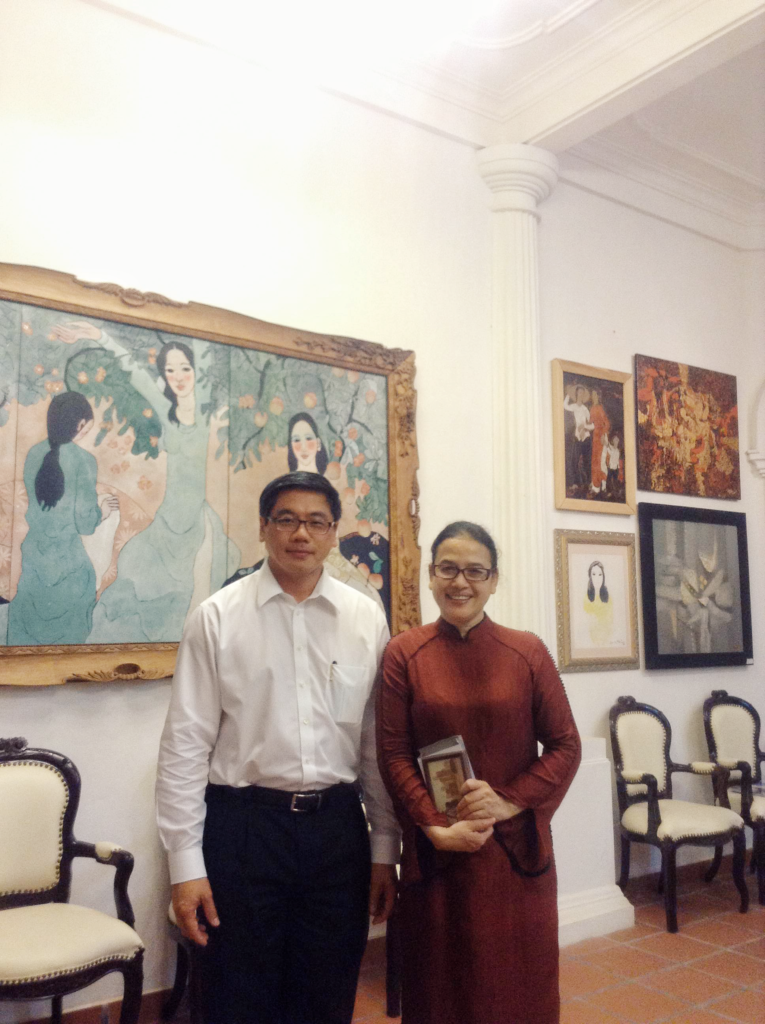
There was no formal beginning. Conversation emerged gradually, shaped by the space itself. Matters of regional engagement, policy alignment, and bilateral cooperation were present, yet they did not dominate. They coexisted with reflections on art, on memory, and on the capacity of culture to carry meanings that exceed formal articulation.
In this sense, diplomacy was not displaced. It was rendered perceptible in another register.
Mr Ng Teck Hean, whose career has been closely aligned with regional diplomacy and long-term engagement, embodies this continuity. His presence in Huế reflects not an isolated visit, but an ongoing relationship between Singapore and Vietnam, shaped through sustained dialogue and mutual understanding.
Diplomatic relations are not episodic. They accumulate.
Within the setting of Boi Tran Garden, this accumulation found expression not through formal address, but through attentiveness, through the act of receiving, and of being received.
Painter Boi Tran, as both host and creator of the space, extends her artistic practice beyond painting into architecture, landscape, and the structuring of lived experience. Hospitality here is not an addition. It is integral. The meal, the spatial composition, and the sequence of encounter form a coherent whole, shaped by an artistic sensibility rooted in cultural continuity.
To enter such a space is not to observe culture. It is to inhabit it.
It is in this context that Mr Ng Teck Hean’s remarks acquire their full meaning. He observed:
“This is the finest cuisine, the most exquisite art gallery with a phenomenal collection, and the most artistic architectural garden in Vietnam.”
This statement may be read not only as appreciation, but as recognition. It identifies a place where disciplines do not stand apart, where art, architecture, and hospitality form a continuous field.
It is within such continuities that diplomacy assumes a more enduring form, less visible, yet more lasting.
Formal agreements define relationships. Encounters such as this give them depth.
They remain.