
Luu Cong Nhan, 1991 Or A Gifted Publication And The Continuity Of Memory
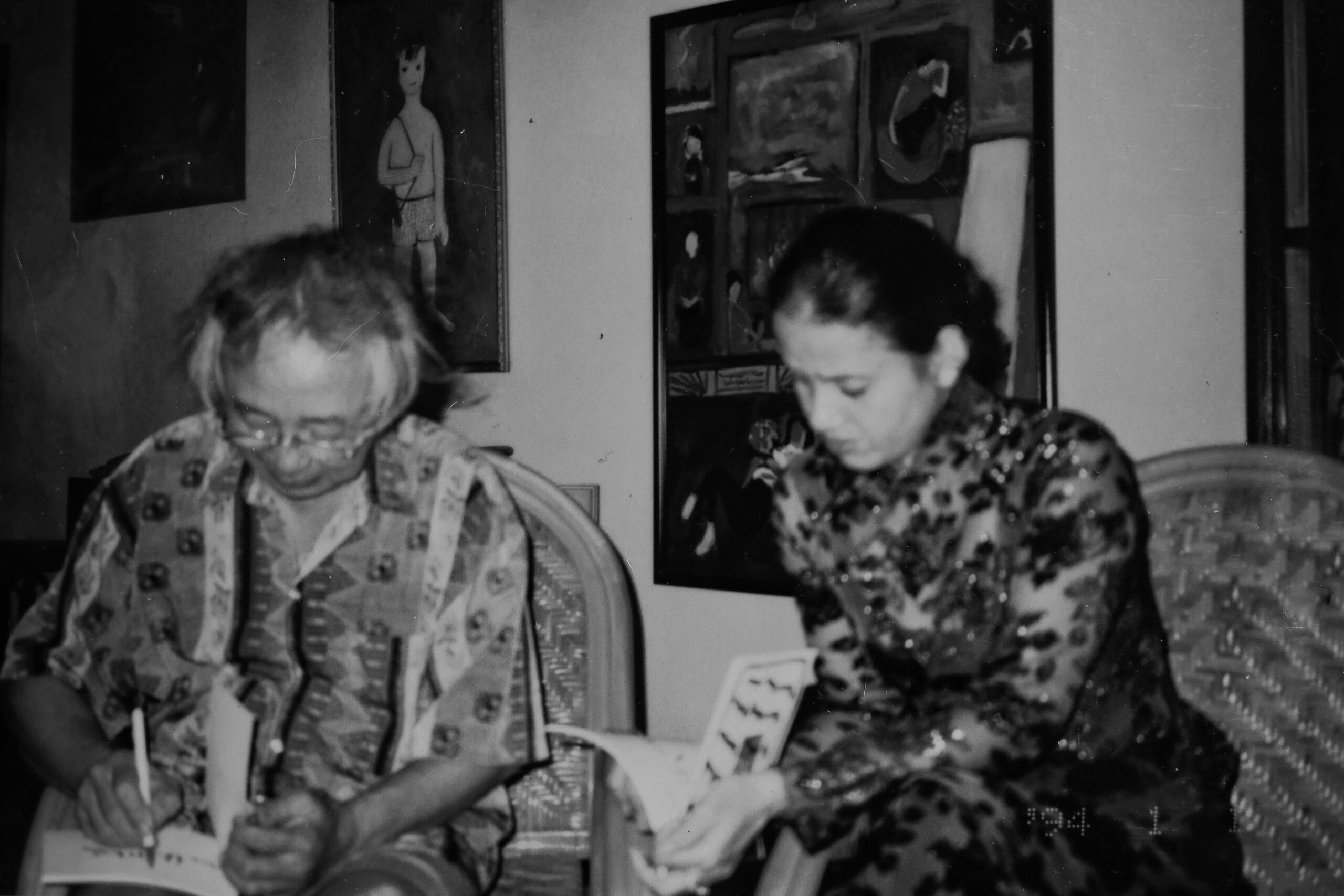
A 1991 publication inscribed by Luu Cong Nhan and gifted to Boi Tran around 1991 reflects a direct and enduring relationship between artists. Within the Boi Tran Collection and Boi Tran Art Gallery, such works form part of artistic connections, where memory and exchange continue to be sustained.
Luu Cong Nhan stands among the most distinctive figures of modern Vietnamese painting. Born in Vinh Phu province, he entered the Fine Arts College of Vietnam during the years of resistance between 1950 and 1953, a period in which artistic practice was inseparable from lived experience.
Recognised for his versatility, Luu Cong Nhan moved fluidly between oil, gouache, and ink, adapting his painterly language to each medium with immediacy. His work does not conform to a single stylistic identity, but unfolds through variation, shaped by material, subject, and observation.
Yet beyond these formal qualities lies another dimension, less visible but essential.
That of friendship.
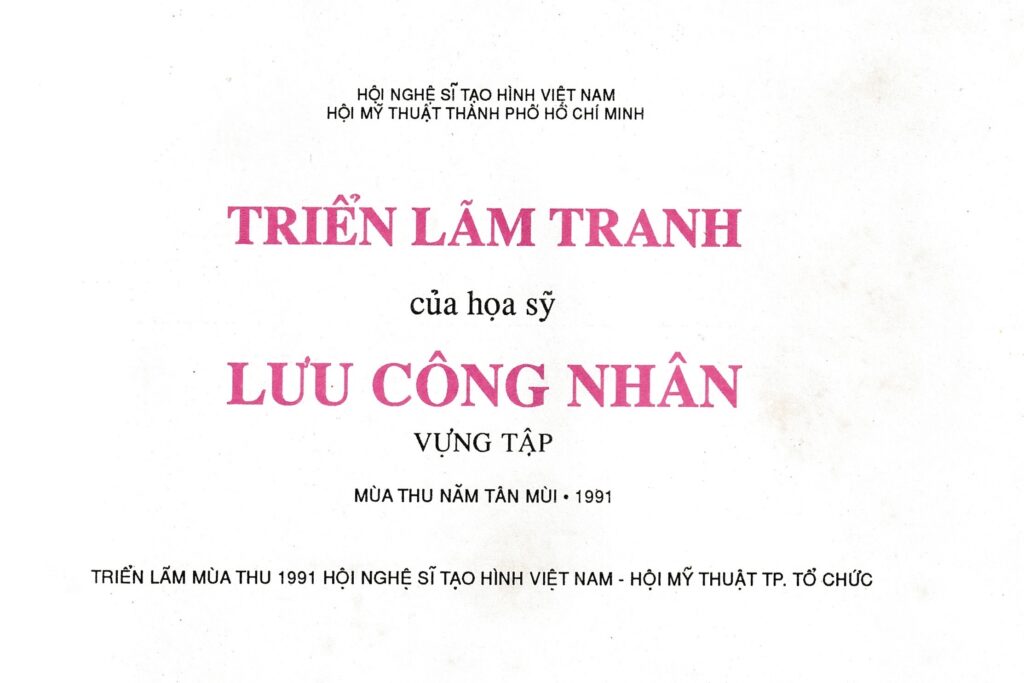

In 1991, on the occasion of a solo exhibition organised by the Vietnam Fine Arts Association, Luu Cong Nhan published a body of work that reflects a mature stage of his practice. Within this publication appears a handwritten inscription: “Dearly gifted to Ms Boi Tran and Chau, a fond memory.”
This inscription does not function merely as a dedication. It marks a relationship between artists, grounded in recognition, familiarity, and trust.
Around 1991, the publication was entrusted to Boi Tran and Minh Chau, situating this gesture within a broader connection of artistic exchange that extended beyond formal exhibition contexts.
At Boi Tran Art Gallery, established in Hue, such relationships were not incidental. They formed the foundation of its activity.
From its early years, the gallery operated not only as a place of presentation, but as a point of encounter for artists, collectors, and intellectuals. It fostered direct exchanges, often grounded in personal connection rather than institutional mediation.
Within this context, Luu Cong Nhan’s presence at the gallery in the early 1990s reflects a continuity of dialogue between artists of different generations, united by a shared commitment to artistic practice.
The inscription itself remains modest.
A “fond memory.”
Yet its significance extends beyond its brevity.
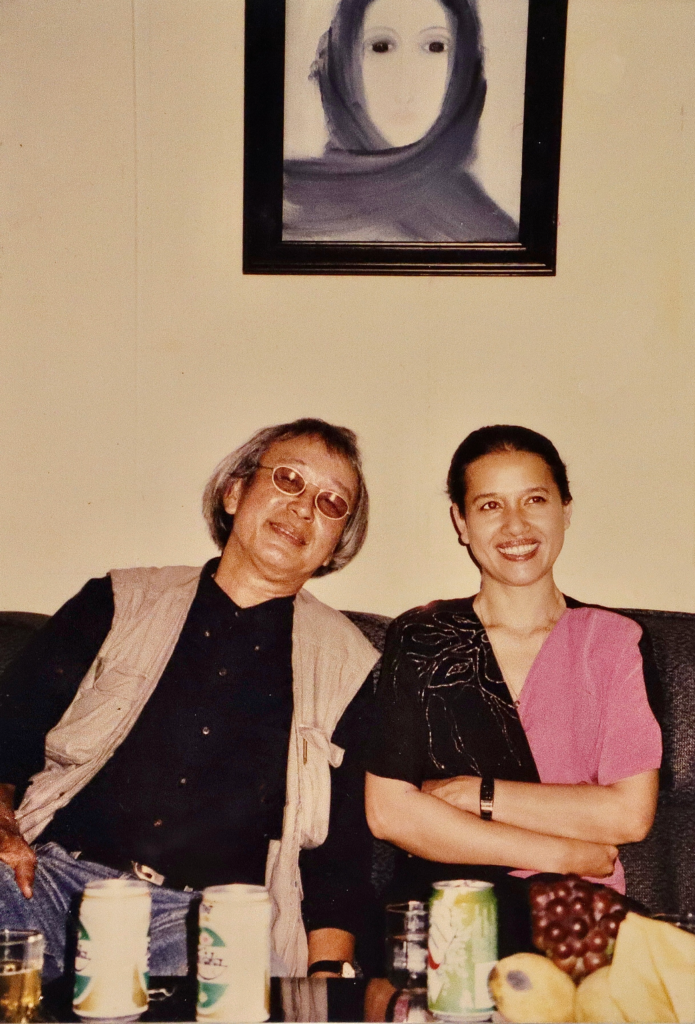
Today, preserved within Boi Tran Garden and Boi Tran Art Gallery, the publication forms part of a larger body of works and documents that testify to these sustained relationships.
Here, the role of Boi Tran Garden is not limited to preservation. It operates as a site in which artistic histories are continuously reactivated through proximity, dialogue, and lived experience.
In this sense, the work is not isolated.
It remains within a network.
What is preserved is not only an object, but a connection.
A connection between artists, carried forward through time.