
Mai Van Hien, 1998, Or A Letter At The Crossroads Of Generations And The Formation Of A Private Art Centre
Mai Van Hien, a key figure of modern Vietnamese art, addressed a handwritten letter in 1998 to Boi Tran Art Gallery on the occasion of its opening. Modest in tone, he offered his wishes while referring to himself with humility. Today, within Boi Tran Garden, the letter stands as an early recognition of a space that would come to connect generations of Vietnamese artists.
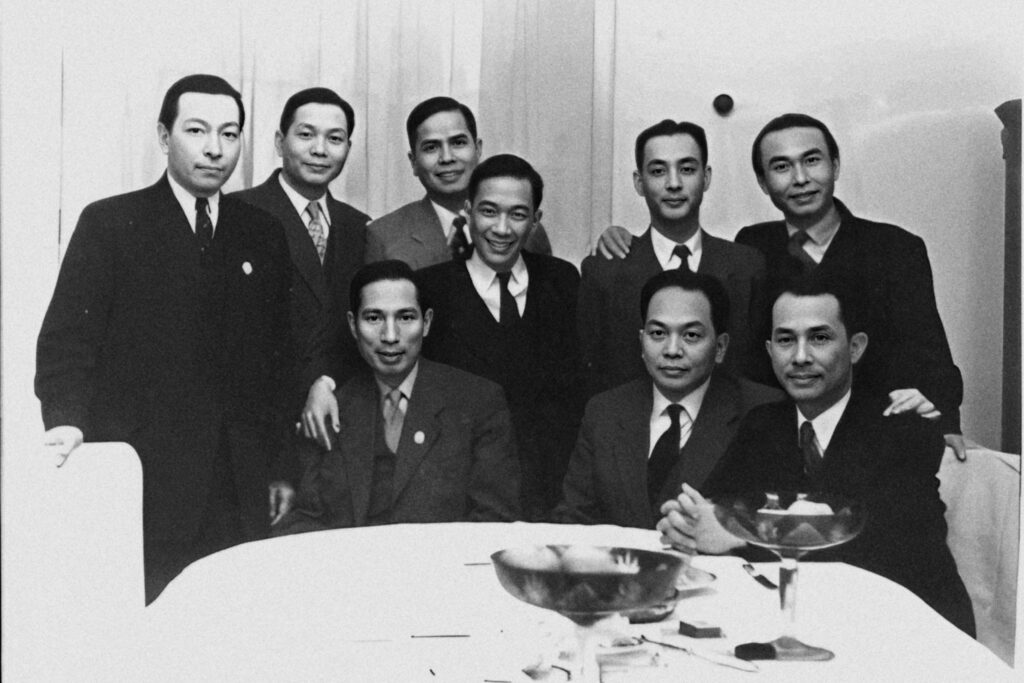
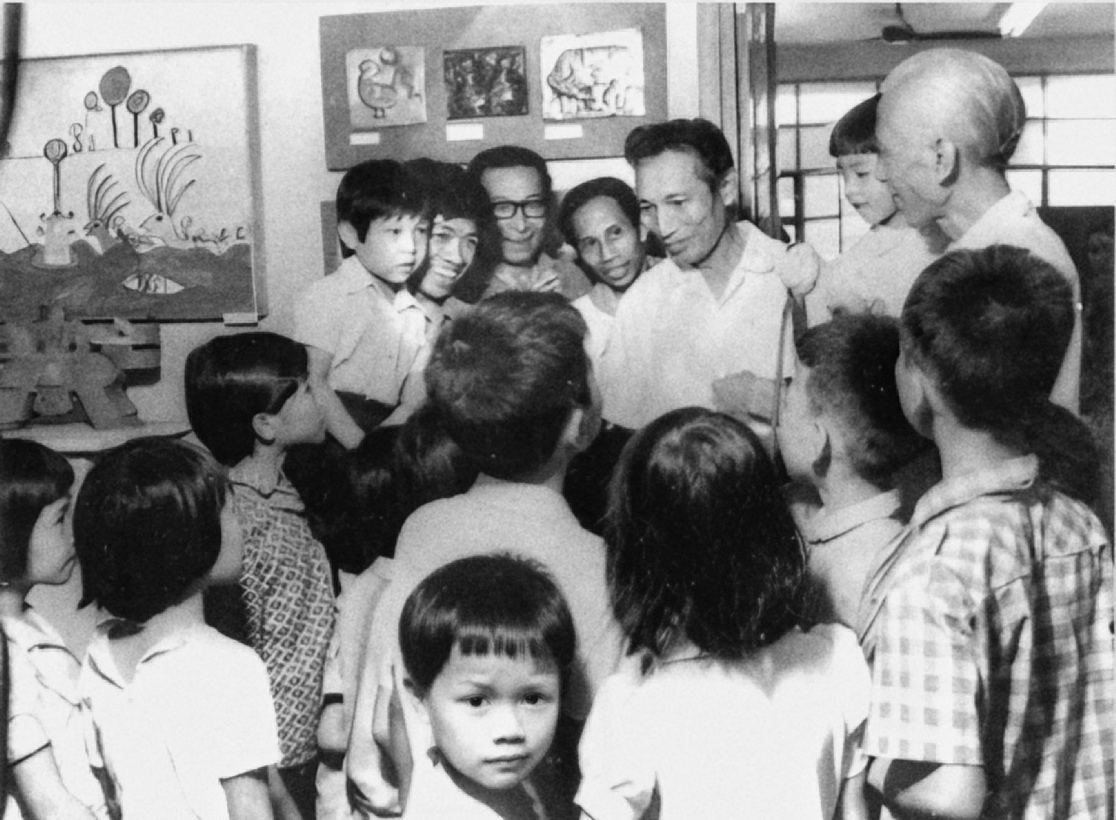
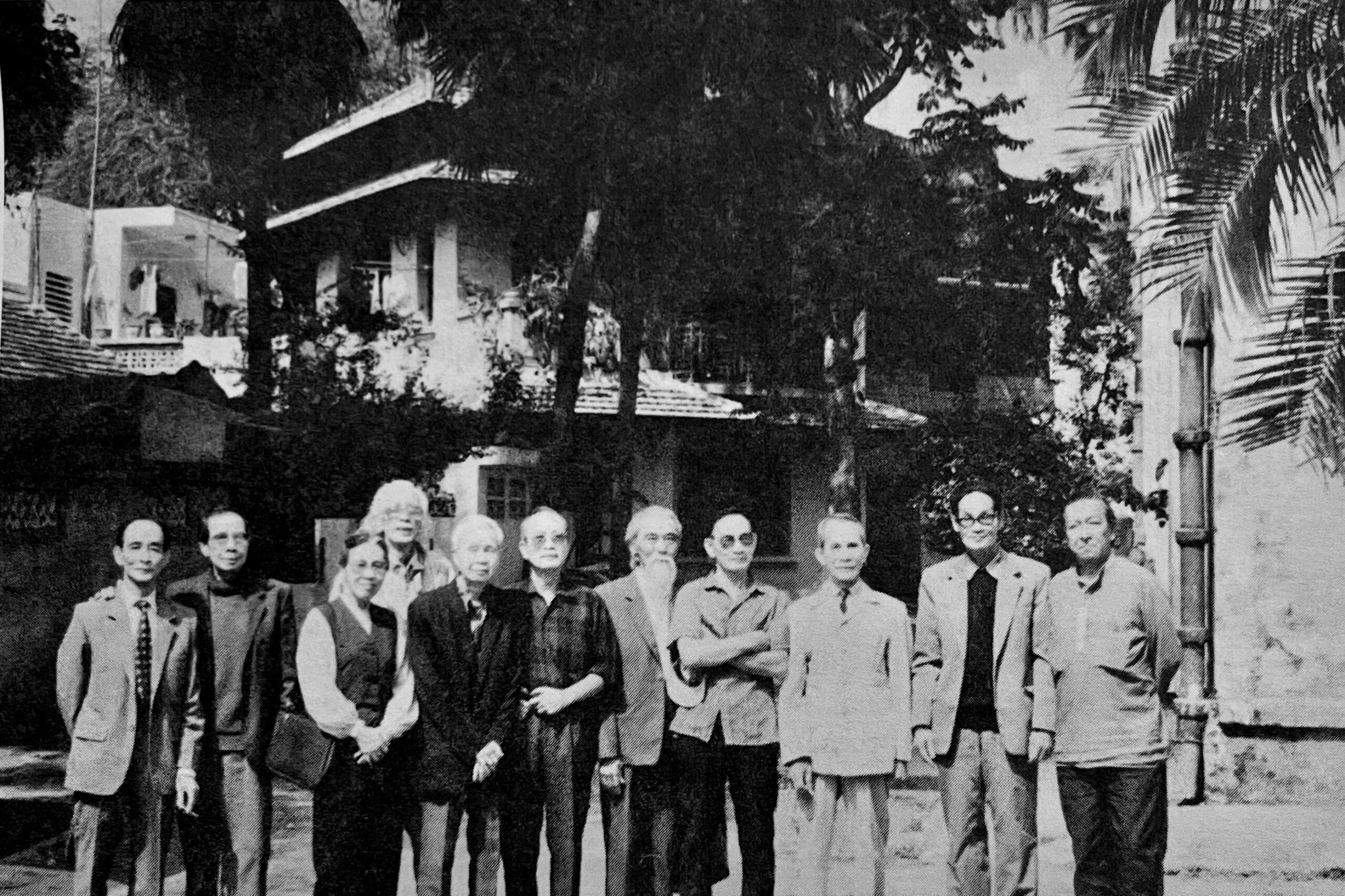
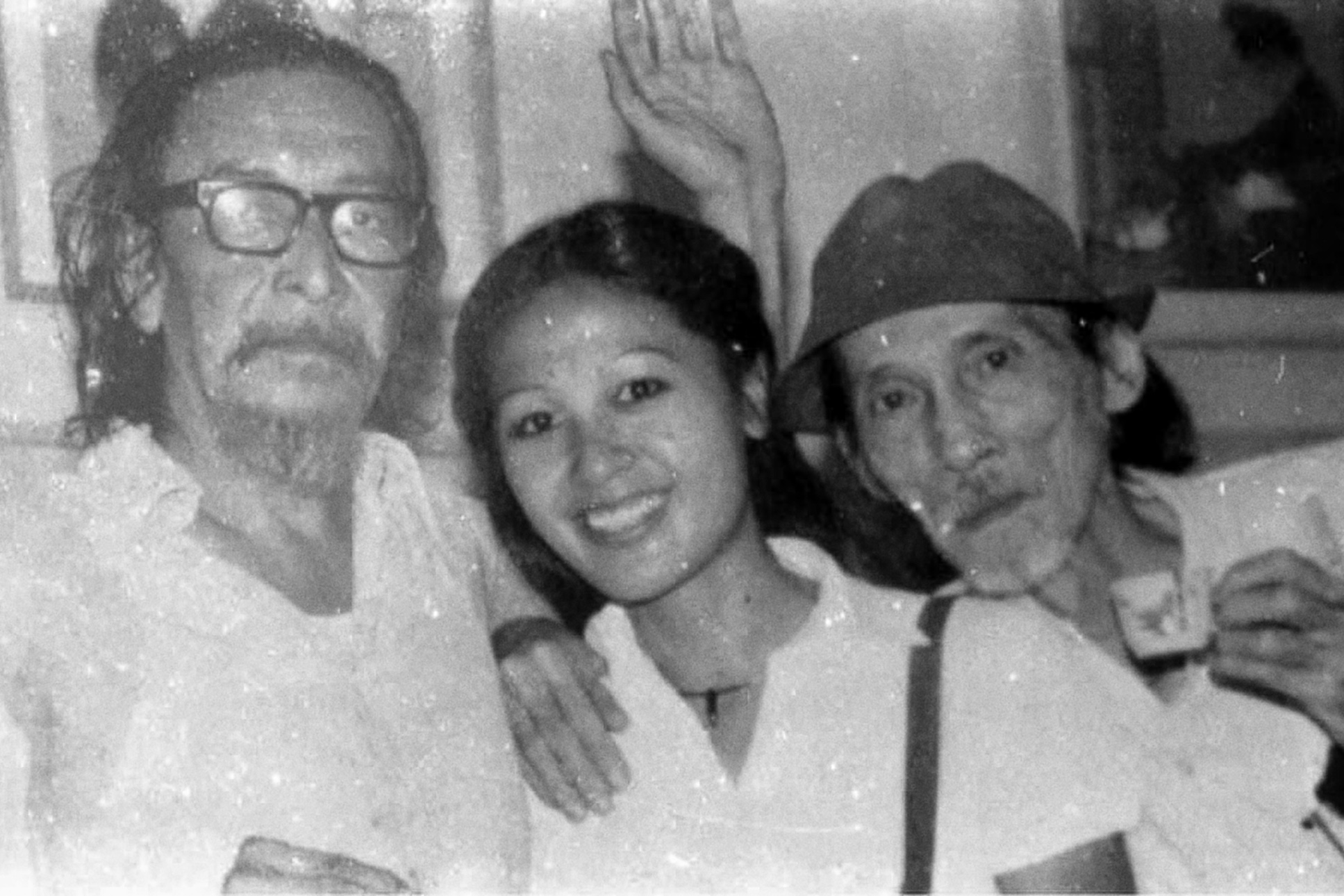
Mai Van Hien belongs to a generation that shaped the foundations of modern Vietnamese art. Born in My Tho, Tien Giang, he was trained at the École des Beaux-Arts de l’Indochine during its final years (Class XVII, 1943–1945), a period that produced many of the defining figures of twentieth-century Vietnamese painting.
His artistic trajectory was closely aligned with the historical transformations of the country. In the immediate post-1945 period, alongside artists such as Nguyen Do Cung, Nguyen Sang, and Nguyen Van Khanh, Mai Van Hien was entrusted with the creation of the first banknote issued by the government of Vietnam under the direction of Finance Minister Pham Van Dong. This moment situates his work at the intersection of art and nation-building, where the image assumes both symbolic and functional roles.
Yet beyond these widely recognised contributions, there exist quieter documents that reveal another dimension of the artist.
A letter.
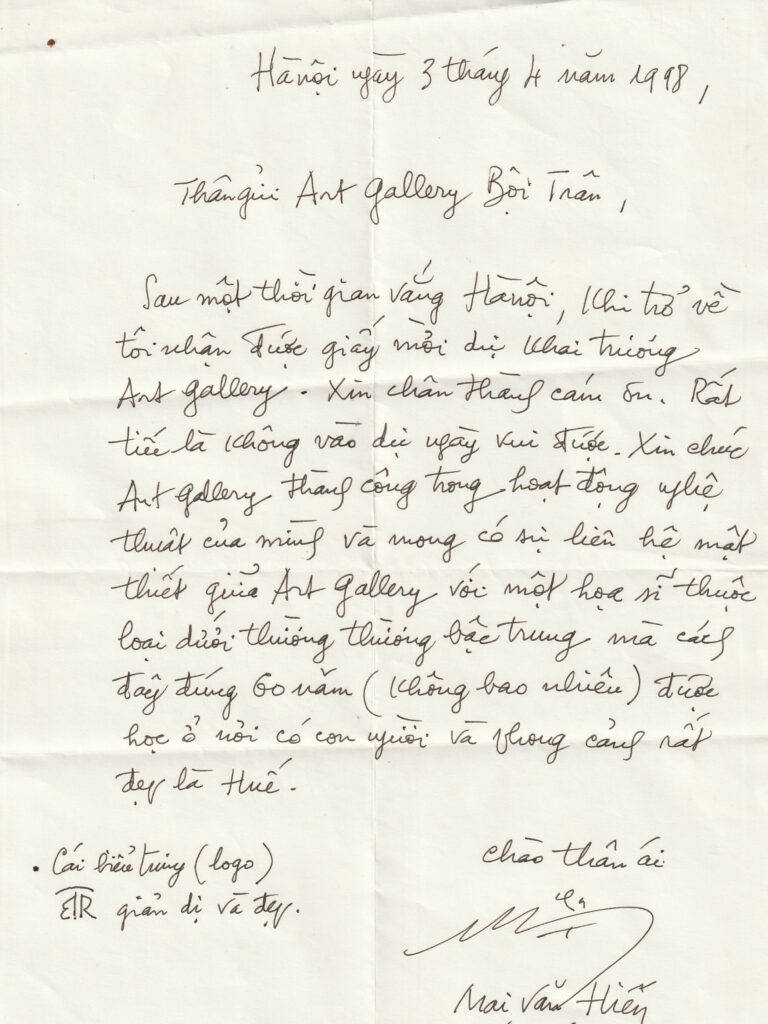
Dated 3 April 1998, written in Hanoi, Mai Van Hien addressed a handwritten letter to Boi Tran Art Gallery on the occasion of its opening.
Having been away from Hanoi, he writes that he received the invitation upon his return. He expresses his sincere appreciation, followed by a regret at not being able to attend the event. He then offers his wishes for the success and prosperity of the gallery, while expressing a desire for continued connection.
The tone is measured, direct, and notably modest.
He refers to himself as “a humbled, semi-skilled and below average painter,” a self-description that stands in contrast to his historical position. This gesture of self-effacement is not incidental. It reflects a generational ethos, one shaped by discipline, collective experience, and an understanding of artistic practice as a form of commitment rather than assertion.
Within the letter, a return to Hue appears.
He recalls that sixty years earlier, he had been trained in a place defined by “exquisite scenery and graceful people.” This recollection does not function as nostalgia alone. It situates Hue as a formative environment, one that contributed to the shaping of artistic perception.
At the conclusion of the letter, he writes simply:
“The logo, simple yet elegant.”
This brief remark carries a particular clarity. It recognises, in distilled form, the identity of a space that, at that moment, was only beginning to take shape.
In 1998, Boi Tran Art Gallery did not yet hold the position it would later come to occupy. It existed as a newly established space, emerging within a context where artistic exchange was still largely dependent on personal connections rather than formal institutions.
And yet, this letter indicates that its presence had already been perceived.
Over time, that presence would develop into continuity.
Within Boi Tran Garden and Boi Tran Art Gallery, a sustained network of relationships has been formed, connecting artists across generations.
From those trained at the École des Beaux-Arts de l’Indochine, to artists shaped by the post-war period, to contemporary practitioners, the space has functioned as a point of encounter, where works, ideas, and experiences are exchanged not only through exhibition, but through presence.
In this context, the letter of Mai Van Hien is not an isolated document. It is part of a continuum.
It reflects a moment in which one generation recognises the emergence of another space, one that would later become embedded within the broader landscape of Vietnamese art.
The letter does not assert significance. It does not define history. It marks something quieter.
A recognition, a connection, and the beginning of continuity.