

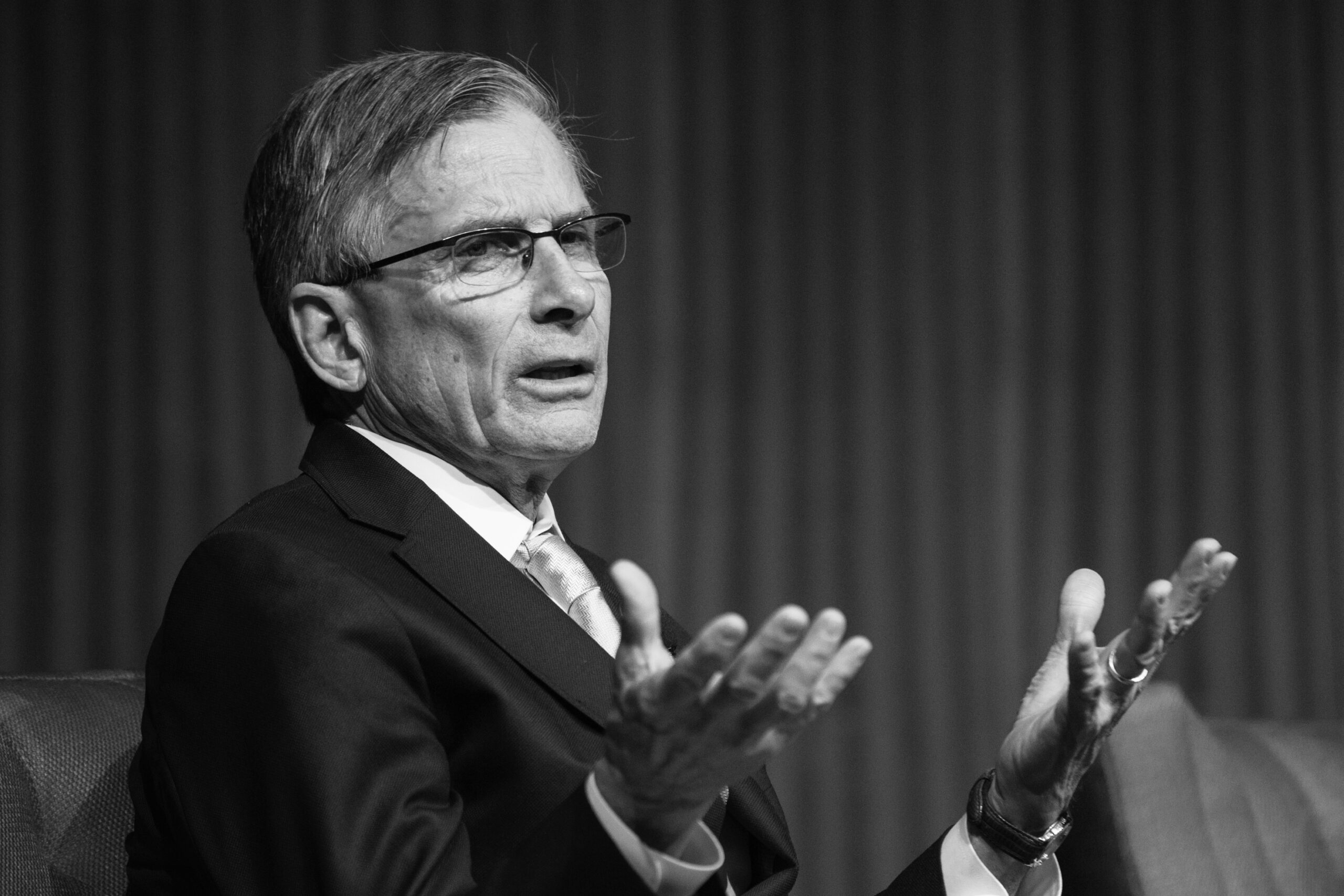
When Conversation Refused To End: Mr William Drea Adams, 10th Chair Of The National Endowment For The Humanities, Mr Joe Boulos, And An Evening At Boi Tran Garden
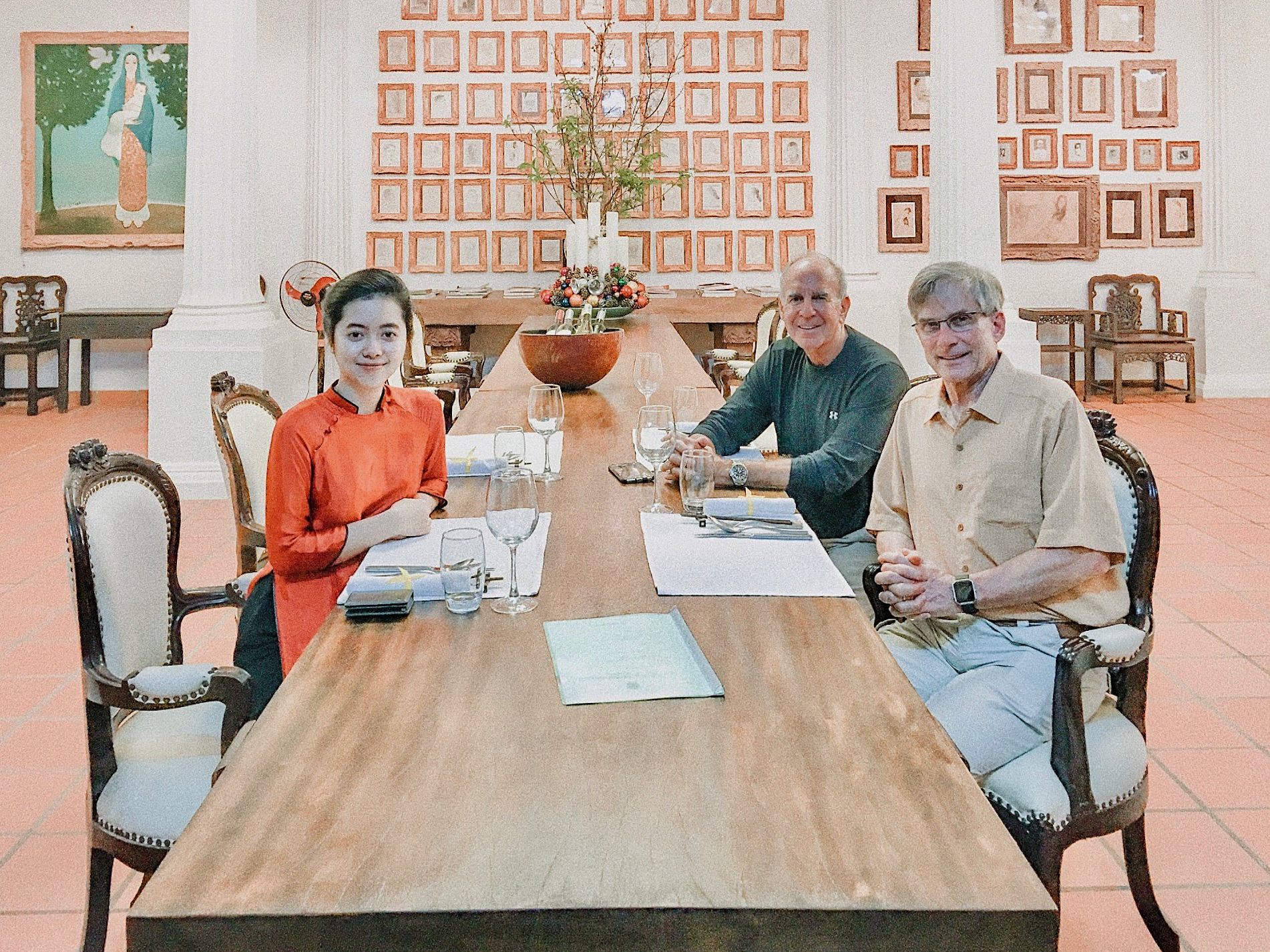
On 16 March 2017, Boi Tran Garden welcomed two distinguished American guests: William Drea “Bro” Adams, then Chair of the National Endowment for the Humanities, and entrepreneur-philanthropist Joe Boulos. What began as dinner became one of those rare evenings when thought, memory, hospitality and shared curiosity extended naturally beyond the table. Later, Adams would write simply: “It will certainly be one of the highlights of our trip.”
The conversation had already begun before anyone sat down.
At Boi Tran Garden on Thiên An Hill, guests often arrive through the long rhythm of trees, filtered light, and the quiet rearrangement of pace that Hue still offers to those willing to notice it. On the evening of 16 March 2017, that transition was especially visible. William Drea Adams and Joe Boulos entered not as ceremonial visitors, but as men alert to place, attentive to detail, and prepared to remain present.
Dinner was served in the cultivated domestic world that defines Boi Tran Garden: neither restaurant nor museum in any ordinary sense, but a living house of art, architecture, memory and exchange. Paintings inhabited the walls not as decoration but as witnesses. The garden beyond held the evening air. Conversation moved easily between courses, then beyond courses altogether.
William Drea “Bro” Adams brought with him a life devoted to learning and public culture. An American educator and advocate for the humanities, he served as the tenth Chair of the National Endowment for the Humanities from 2014 to 2017. Earlier, he was the 14th President of Bucknell University from 1995 to 2000, and the 19th President of Colby College from 2000 to 2014. His academic path had included appointments at the University of North Carolina at Chapel Hill, Santa Clara University, Stanford University and Wesleyan University. His doctoral work, Digging in the same place: an essay in the political and social philosophy of Maurice Merleau-Ponty (1982), already suggested a mind drawn to depth rather than display.
Such biographies matter less as honours than as evidence of long habits of attention. Adams spoke with the measured ease of one accustomed to institutions, yet interested above all in persons. In a city like Hue, where knowledge has often survived through households as much as through formal academies, this sensibility found its counterpart.
Joe Boulos brought another kind of experience: enterprise disciplined by civic responsibility. Founder of Boulos Brokerage, Asset Management and Boulos Development in 1975, he oversaw the strategic direction of a major real estate portfolio and, over his career, developed more than two and a half million square feet of commercial property in the Greater Portland area. Yet numbers alone do not explain the man.
Mr Boulos had served a tour of duty in Vietnam from 1968 to 1973 as a United States Marine Corps pilot. He later flew commercially in Laos, Africa and South America. His life in business ran parallel to deep commitments in education, veterans’ causes, museum leadership and philanthropy. He was a former Chairman of the Board of Trustees of Colby College, a former board member of the Portland Museum of Art, and a benefactor whose generosity created more than 310 college scholarships for Maine veterans through a landmark donation with his wife Cheryl.
When such a guest returns to Vietnam decades after wartime service, the moment carries its own quiet gravity. No announcement is needed. Presence is enough.
That evening, Thuc Doan / Bem joined the table as host and interlocutor, and the discussion lengthened in the most natural way possible: because no one wished to interrupt it. Matters of education, memory, public life, architecture, travel, Vietnam, America, and the uses of culture moved in and out of one another without strain. This is the best form of conversation: not debate, not performance, but shared enlargement.
Boi Tran Garden has long offered precisely this condition. Those who know it understand that hospitality here is never limited to cuisine, however refined the table may be. It includes the arrangement of atmosphere, the dignity of pace, the placing of art near thought, and the old Hue instinct that guests should leave carrying something inwardly clarified.
Two days later, Adams wrote to Thuc Doan / Bem:
“Thank you for the lovely dinner and the honour of spending time in the home and art gallery of Madame Boi Tran. It was a very memorable evening and we are very grateful. It will certainly be one of the highlights of our trip.”
There is elegance in understatement. Great evenings are often confirmed not in the room itself, but afterwards, when a thoughtful guest chooses to remember them plainly.
Many official visits are recorded by titles and schedules. Others endure because the conversation refused to end. The evening of 16 March 2017 belongs to the latter kind.