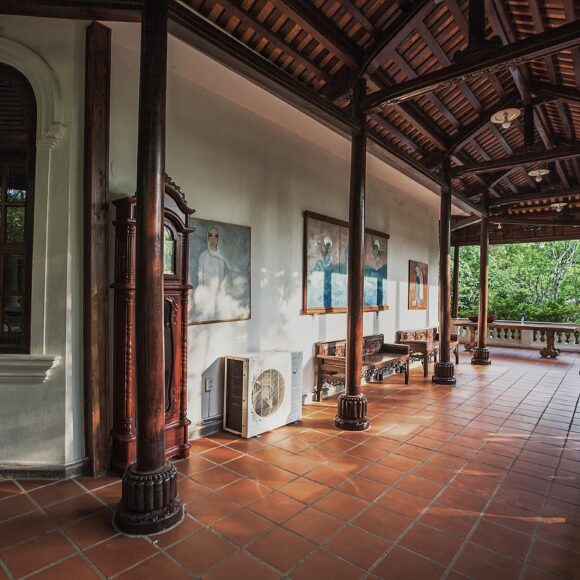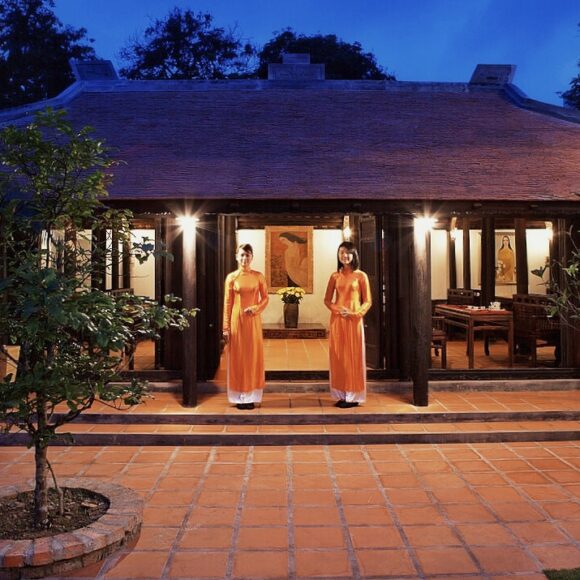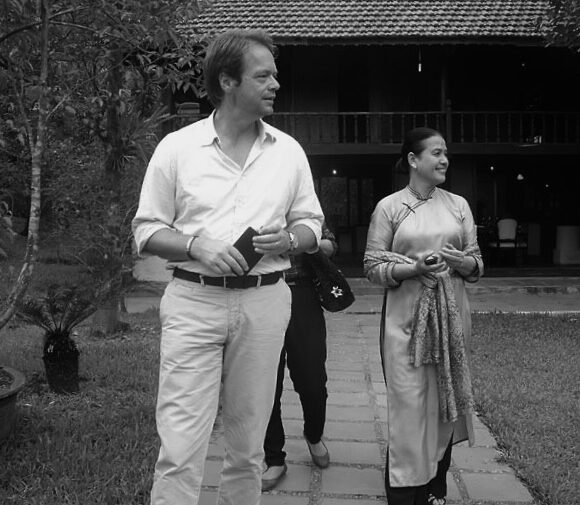
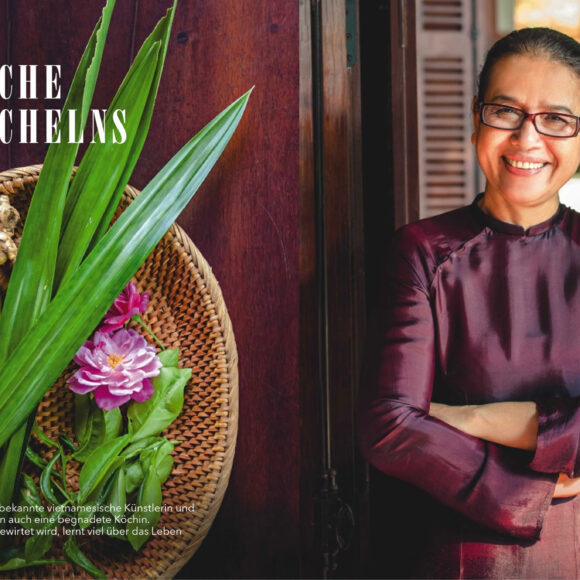
Boi Tran is not only a distinguished Vietnamese artist and garden architect, but also a gifted cook. To be received by her in the former imperial city of Hue is both a pleasure and a discovery. Within a secluded garden of lotus ponds and wooden architecture, everything has been shaped by her own hand. Here, cooking becomes more than craft; it is an extension of life, rooted in the refined traditions of Hue and guided by balance, precision, and memory. What emerges is not simply a meal, but a quiet harmony, where art, space, and gesture come together as one.
Category: <span>Stories</span>
A Diplomatic Encounter: Where Culture Becomes A Language Of State or The Quiet Authority of Culture
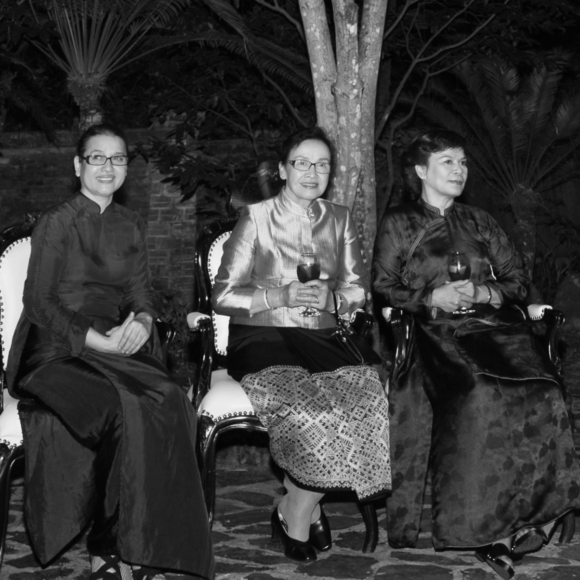
Formally requested by Vietnam First Lady Mai Thi Hanh, Boi Tran Garden was privileged to host a cultural exchange meeting combined with Hue royal refined music and Hue fine dining on the official first foreign visit to Vietnam of Laos First Lady Naly Sisoulith.
Best of Both Worlds: The Road Ahead Remains Open, The Painter of Poetic Hue
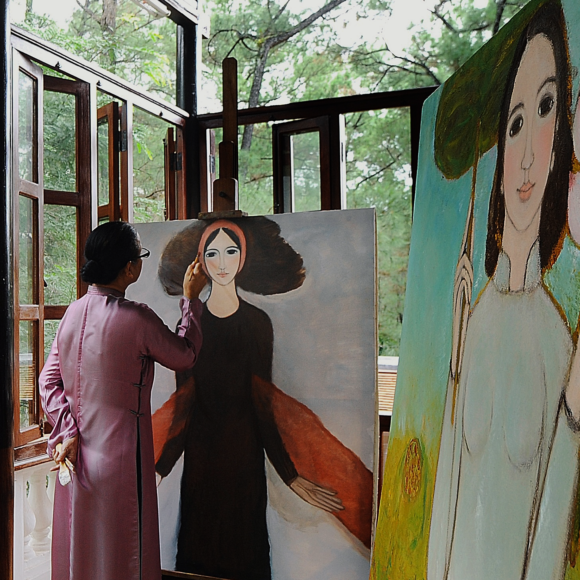
The path of art is vast and endless. It always urges us to work and create without rest. For painter Boi Tran, when holding a brush, a palette knife, or a pen, all can become works of art. And this garden is also a work that she cherishes. It has no boundary between surrealism and realism. And that is exactly the artistic path that she has chosen.
Cao Trong Thiem, A Letter Of 2013, Or The Moment When An Institution Pauses Before A Lived Space
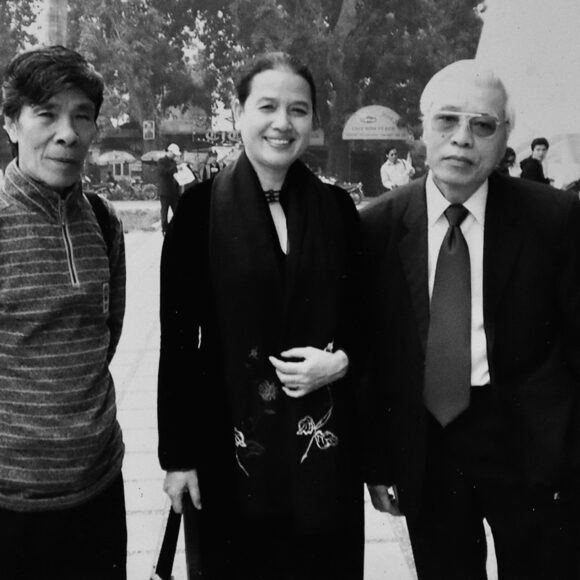
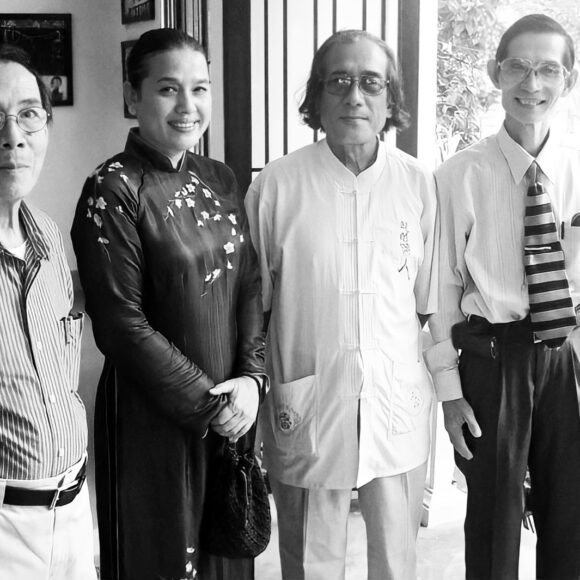
On 14 November 2013 in Hue, a letter was left for Boi Tran, signed by Cao Trong Thiem. He did not come alone. Alongside him were Phan Van Tien, Vi Kien Thanh, and Le Van Suu; figures who, each in their own capacity, embody the institutional structure of Vietnamese art.
Yet what was left behind was not a statement of authority, but a gesture. Not institutional, but human.
The Grace of Memory: Boi Tran Through Vinh Tuong’s Letter
Remembering an evening on Thien An Hill, Emeritus Professor Vinh Tuong writes of an encounter where hospitality and art became indistinguishable. In the quiet presence of Boi Tran’s paintings, meaning did not declare itself, but emerged slowly, through silence and attention. What remained was not simply admiration, but a memory shaped by feeling as much as by form.
DestinAsian Magazine: Hungry for Hue
Many of the old culinary traditions live on, and today, Hue cuisine is held to be Vietnam’s most delicious and diverse. A visit to Ancient Hue, a home restaurant and gallery of an eccentric, elegant artist and chef Boi Tran, gives visitors an inkling of what a royal banquet and a meal crafted.
Boi Tran and the Language of Taste | A Fork in Asia’s Road: Best Bites of an Occidental Glutton
Writing on Hue, John Krich pauses in Boi Tran’s garden, where the light disappears before the first course. What emerges in its place is not darkness, but a different clarity, one in which the meal is no longer seen, but recognised.
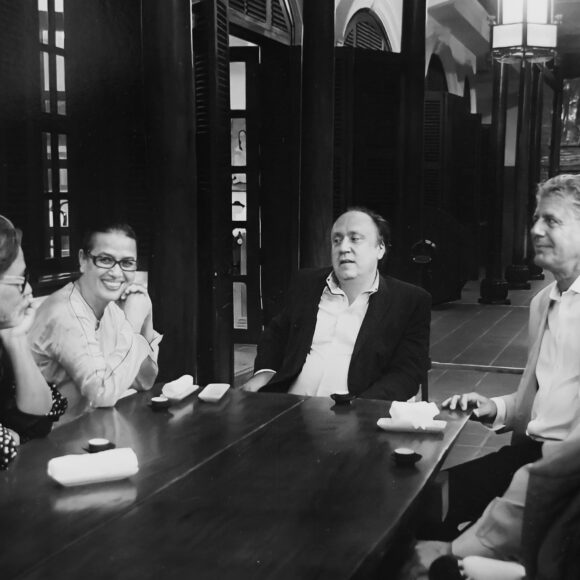
Anthony Bourdain at Boi Tran Garden | CNN Parts Unknown: Vivacious in Vietnam
There are places where history is told, and others where it is quietly kept. Hue belongs to the latter. When Anthony Bourdain came to film for his show Parts Unknown aired on CNN, what emerged was not a story of food, but of memory made tangible. At Boi Tran Garden, a meal unfolds alongside architecture, ritual and the residue of time. Flavours do not seek intensity, but balance; gestures do not display, but endure. In such a place, taste becomes a language through which the past continues to live.
Boi Tran Through the Eyes of Vietnamese Painters: A Poem by Dinh Cuong
Boi Tran is not described because she does not need to be. She remains, not as image, but as presence, not as subject, but as the place to which feeling returns.
Peter Kunz and the Gentle Beauty of Boi Tran Garden: A Conversation of Hearts
Boi Tran Garden is proud to document a brief footage by ZDF German Television Broadcaster, featuring the gracefulness of Boi Tran's art, cuisine and architecture at Boi Tran Garden