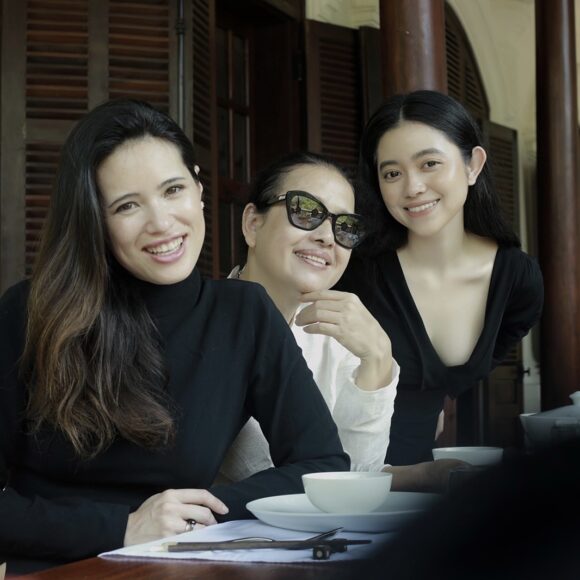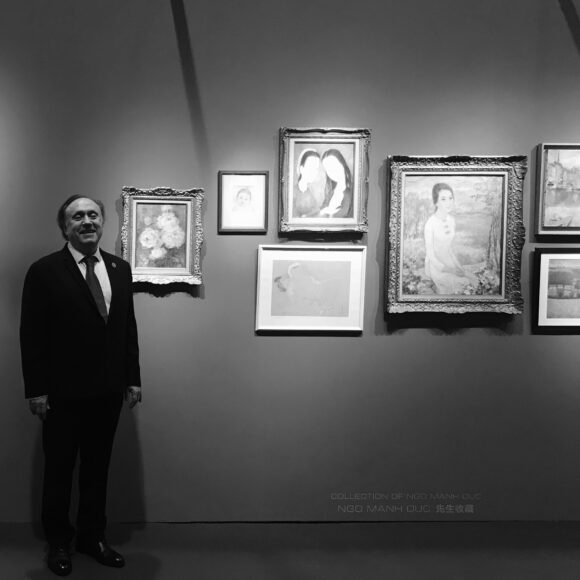

In Huế, where memory rarely separates form from ritual, a meal at Boi Tran Garden does not present itself as dining alone. It unfolds as a continuity, where painting, architecture, and cuisine converge within a single lived environment. Observed through the words of KF Seetoh, what emerges is not simply an experience of taste, but a moment in which cultural knowledge is transmitted through gesture, space, and time.
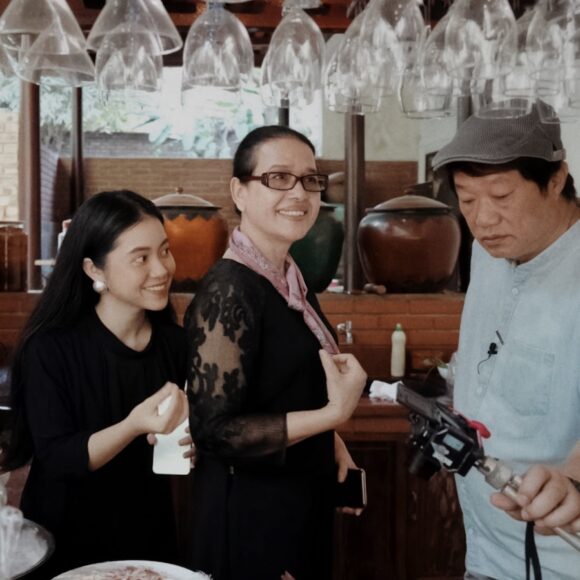
Author: Dinh Thuc Doan Tran (Dinh Thuc Doan Tran)
Anne-Solenne Hatte’s “La Cuisine De Bà”, or “Tasting Vietnam” at Boi Tran Garden
Some returns do not follow roads, nor do they answer to maps. They arrive through memory, through the hand that prepares, through flavours carried across time. In Huế, the visit of Anne-Solenne Hatte to Boi Tran Garden became such a return, where questions of origin, feminine inheritance, and Vietnamese cuisine were gathered within a house where culture continues to breathe.
“Incubating Culture In Vietnam And Hue’s Rebirth As Vietnam’s Centre Of Art And Heritage” Hosted by Harvard Kennedy School, Fulbright University Vietnam, and Boi Tran Garden, or The Confidence of Institutions
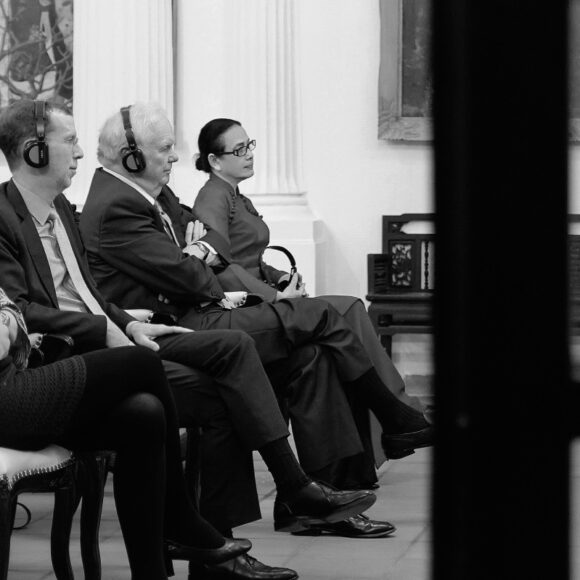
When respected institutions choose a private cultural house as the setting for serious conversation, the gesture carries meaning of its own. On 18 January 2020, Harvard Kennedy School and Fulbright University Vietnam joined Boi Tran Garden in Hue for an evening that affirmed both the international credibility of the gathering and the singular cultural standing of the host venue.
What Can Be Known of a Life? Truong Be, the Absolute, and a Recognition of Boi Tran
Truong Be is a great artist for the obvious reason that he is a true man who has been able to embody the history of his country even though he refrains from doing so. Behind his candid and alluring smile and beyond his stalwart posture, a strong character is revealed. Some people view this solid appearance as something almost akin to a threat.
Ravenel, Vietnamese Modern Art, or the Architecture Of Elegance and the Discipline of Beauty in Boi Tran
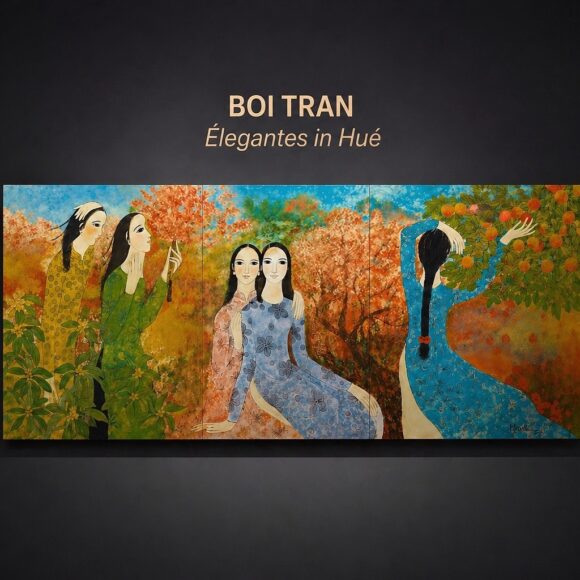
Boi Tran is one of the few outstanding Vietnamese female artists. Her style is influenced by her teacher, Trung Nguyen. She also worked as Nguyen's model, serving as a source of creative inspiration for the artist. Boi Tran's Elegant in Hue trilogy is presented in a classical European triptych form. They depict a group of beautiful goddesses strolling, sitting and dancing in a glorious garden. The composition of the piece is extraordinary and spectacular.
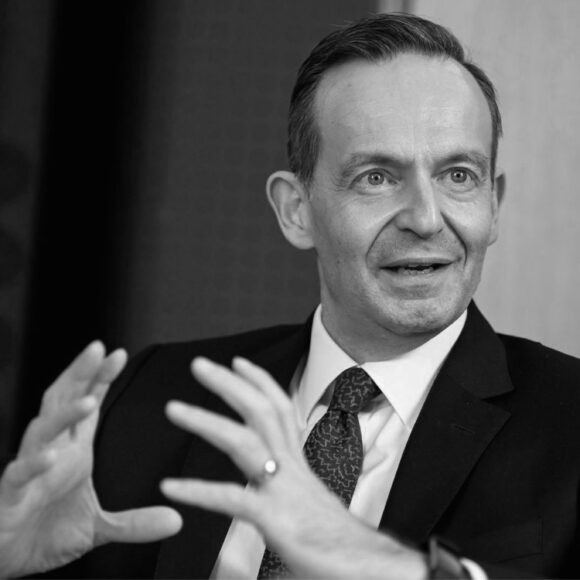
A Letter by Dr Volker Wissing, General Secretary, German Minister of Digital Affairs and Transport, or The Civility Of Memory
Written on 10 December 2018 after an evening at Boi Tran Garden, Dr. Volker Wissing’s letter belongs to the tone: a brief official correspondence that preserves, with uncommon clarity, how art and hospitality may linger in diplomatic memory.
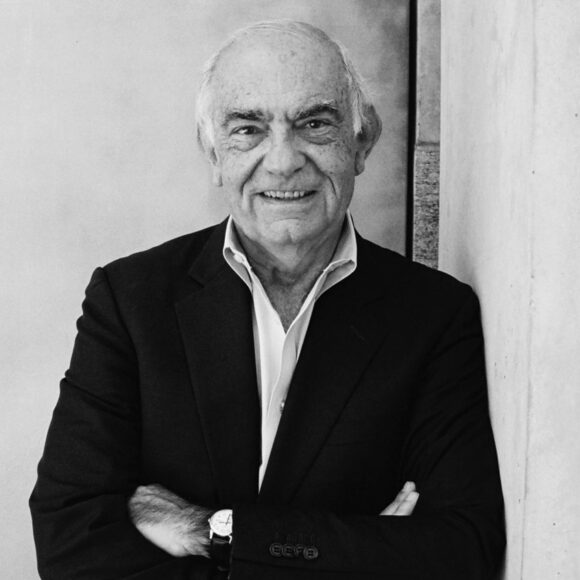
“A Perfect Evening of Companionship” with Skirball Cultural Centre Founding President and CEO Uri D Herscher at Boi Tran Garden, or Where Hearts Spoke Naturally
Some evenings are remembered for refinement. Others for conversation. A rare few endure because those present felt, however briefly, entirely understood. The visit of Dr. Uri D. Herscher to Boi Tran Garden in March 2018 belongs to that quieter category.
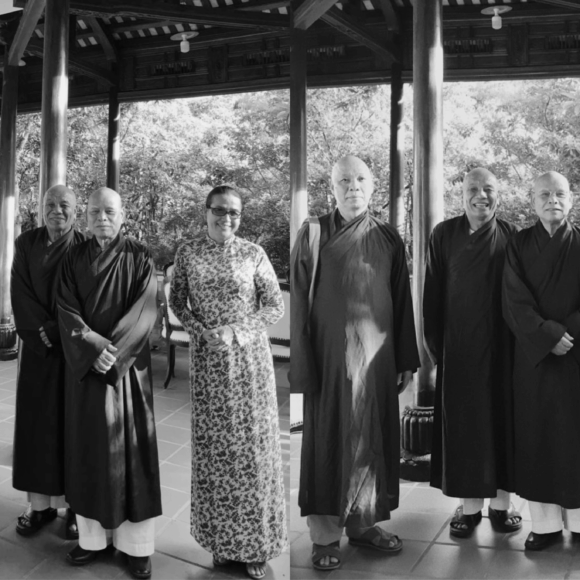
An Offering of Silence: The Zen Inscription to Boi Tran
There are moments that do not announce themselves, and yet remain. One such moment unfolded quietly at Boi Tran Garden, where a small gathering of Buddhist masters paused within its stillness. Nothing had been arranged; nothing needed to be. In that shared quiet, a poem was offered, not as tribute, but as recognition, a reflection on how a life, shaped by time and experience, comes to rest in grace.
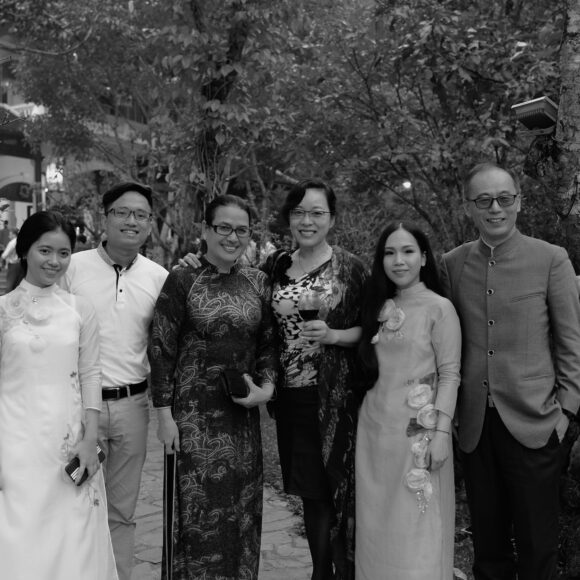
Shanghai Pujiang Southeast Asia Culture and Art Exchange Center President Zhang Zhi Yong Celebrates Boi Tran’s Solo Exhibition: Le Rêve Qui Veille
In October 2017, Mr Zhang Zhi Yong, President of the Shanghai Pujiang Southeast Asia Culture and Art Exchange Center, and Mrs Zhang Jing came to Boi Tran Garden to celebrate Boi Tran’s solo exhibition Le Rêve Qui Veille (The Watchful Dream). Their visit reflected a larger conversation between Hue, Shanghai, and the growing international regard for Vietnamese art.
Text by Christie’s Senior Expert Jean-François Hubert on Boi Tran’s Work at Her Solo Exhibition ‘Le Rêve Qui Veille’, 2017
There is no place without a history. There is no history without a place. There are places without measure, and histories beyond all time. Elegant moments and secret places. Patches of eternity and jolted thoughts. To verify this, one must know Boi Tran.