What Can Be Known of a Life? Truong Be, the Absolute, and a Recognition of Boi Tran
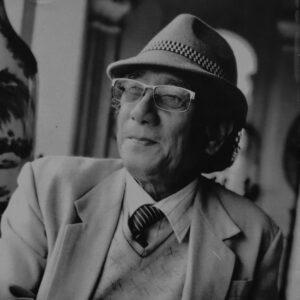
Truong Be is a great artist for the obvious reason that he is a true man who has been able to embody the history of his country even though he refrains from doing so. Behind his candid and alluring smile and beyond his stalwart posture, a strong character is revealed. Some people view this solid appearance as something almost akin to a threat.
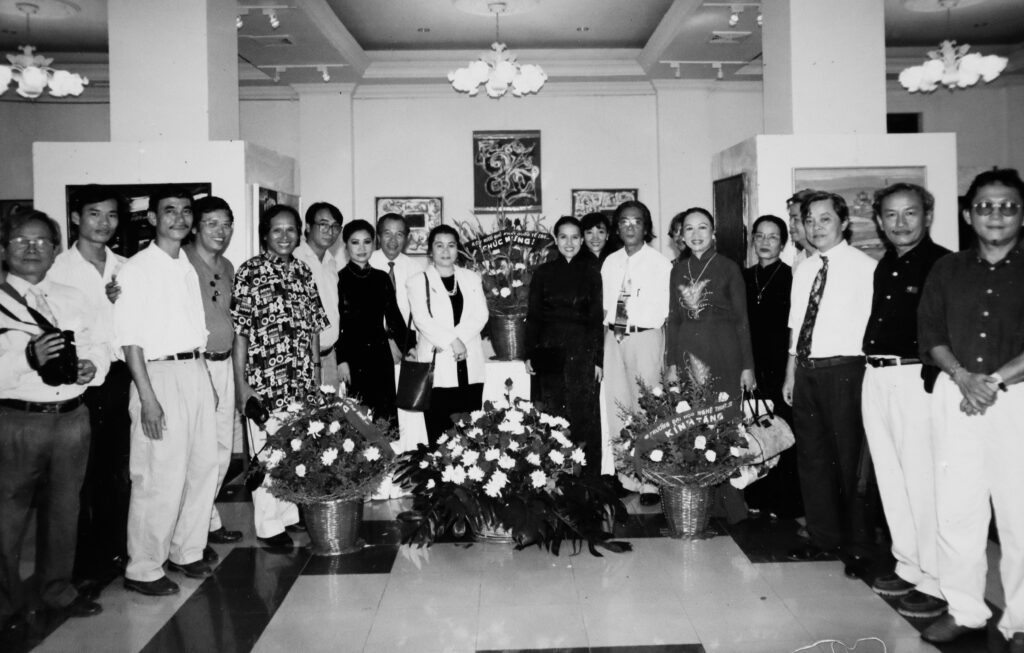
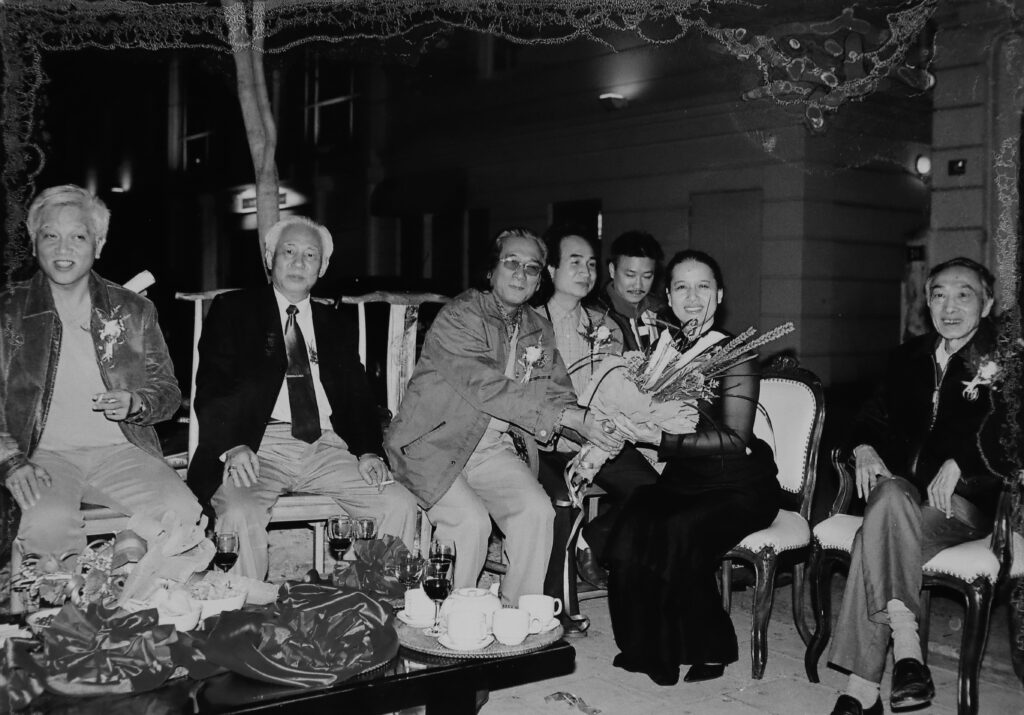
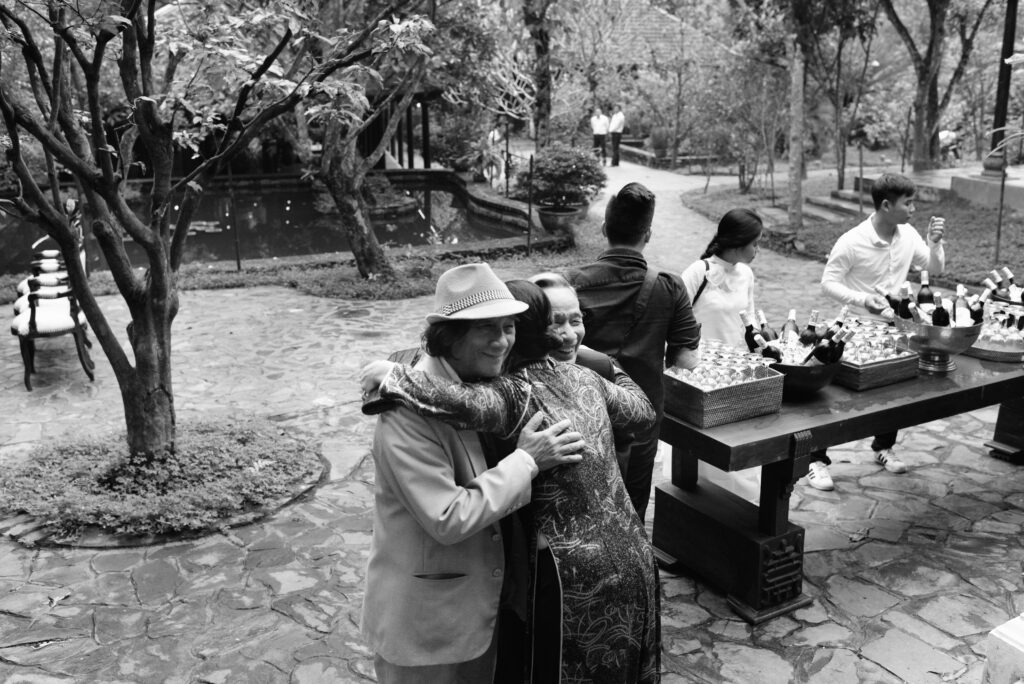
What can be known of a person, of a life? The question, once asked, already withdraws from any answer. What we know, perhaps, is only what we have always known of life itself, which is to say, almost nothing. And yet, the artist offers something else, not knowledge, but a way of seeing. Not an explanation, but a position from which the world may be held, if only for a moment.
It is within this condition that Truong Be must be approached.
He does not narrate history, nor does he seek to represent it. And still, history is present in him, not as subject, but as substance. It resides in the density of his surfaces, in the tension of his forms, in a language that does not describe the world, but absorbs it.
Behind a candid smile and a posture that some have read as austere, there emerges a character of unusual force. Not asserted, but evident. Not constructed, but lived. For some, this solidity may appear almost as a form of resistance. Yet it is precisely this condition that anchors his work.
In lacquer, Truong Be reaches a point that has often been placed alongside Nguyen Gia Tri, not through imitation, but through equivalence. A language carried to its limit, where image begins to dissolve into something more elusive.
What he proposes is not a painting that explains, but a painting that demands. A language without words, yet filled with resonance. A vision without image, yet saturated with colour.
His work does not seek to reconstruct the world. It does not stabilise it. Instead, it takes upon itself the instability of existence, its impermanence, its refusal to remain fixed. What might have been lament becomes, in his hands, something closer to affirmation. Not resolution, but transformation.
This movement is not without paradox. The more his work reaches toward the absolute, the more it returns to restraint. The more it expands outward, the more it gathers inward. It is the position of a solitary man, but not an isolated one, a mind that has learned to stand within its own intensity.
It is within this condition, and only within it, that his gesture toward Boi Tran can be understood.
Truong Be did not write to elevate. He did not write to define. He wrote to recognise.
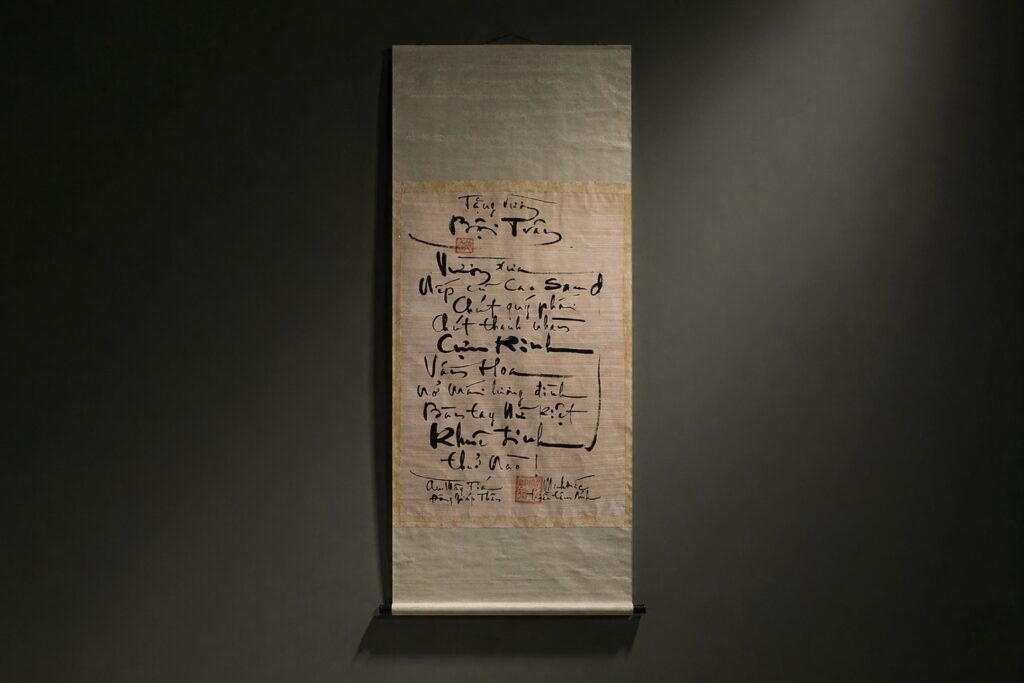
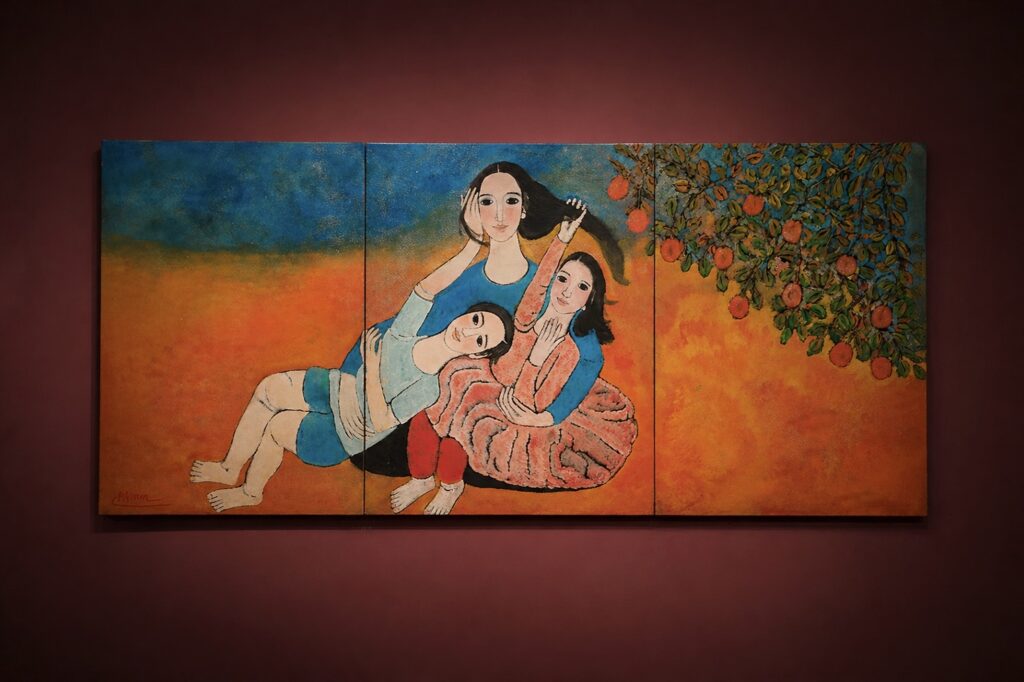
His handwritten notes, simple in form, direct in address, carry no rhetoric. “Gift to Artist Boi Tran.” “Gift to Artist Boi Tran and family.” There is no elaboration, no interpretation, no attempt to position.
And yet, precisely in this absence, something exact is established.
A recognition that does not depend on comparison.
A recognition that does not require justification.
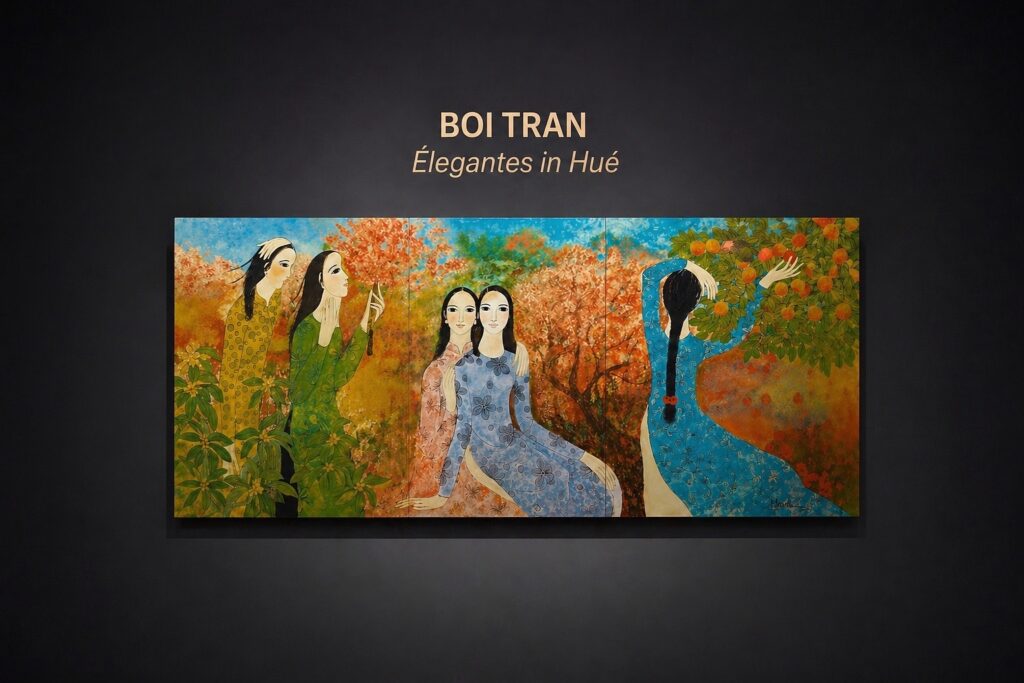
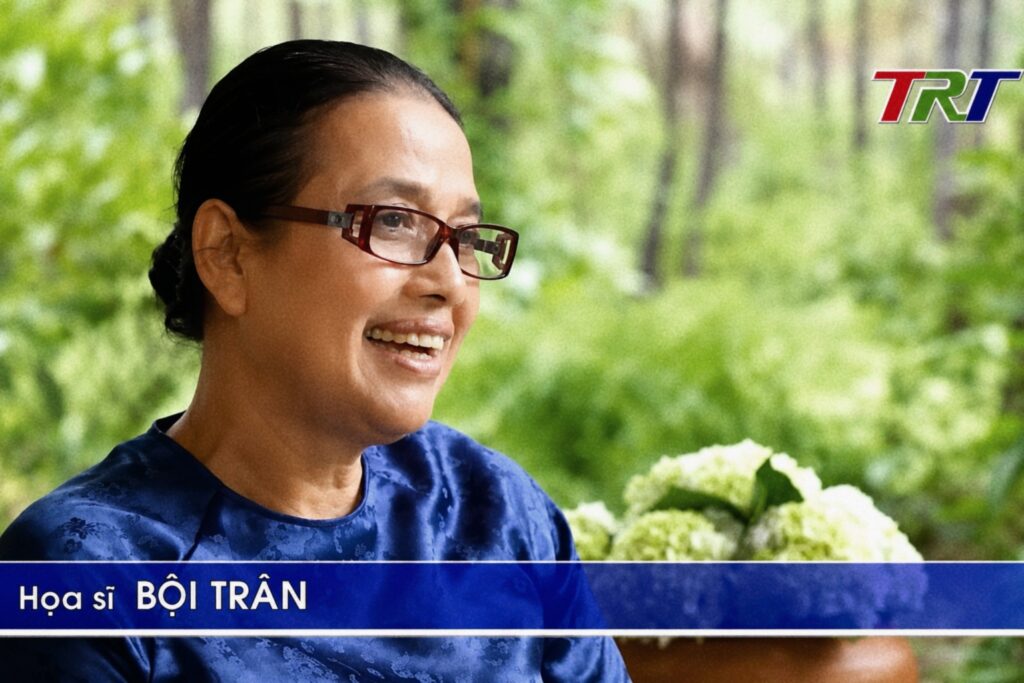
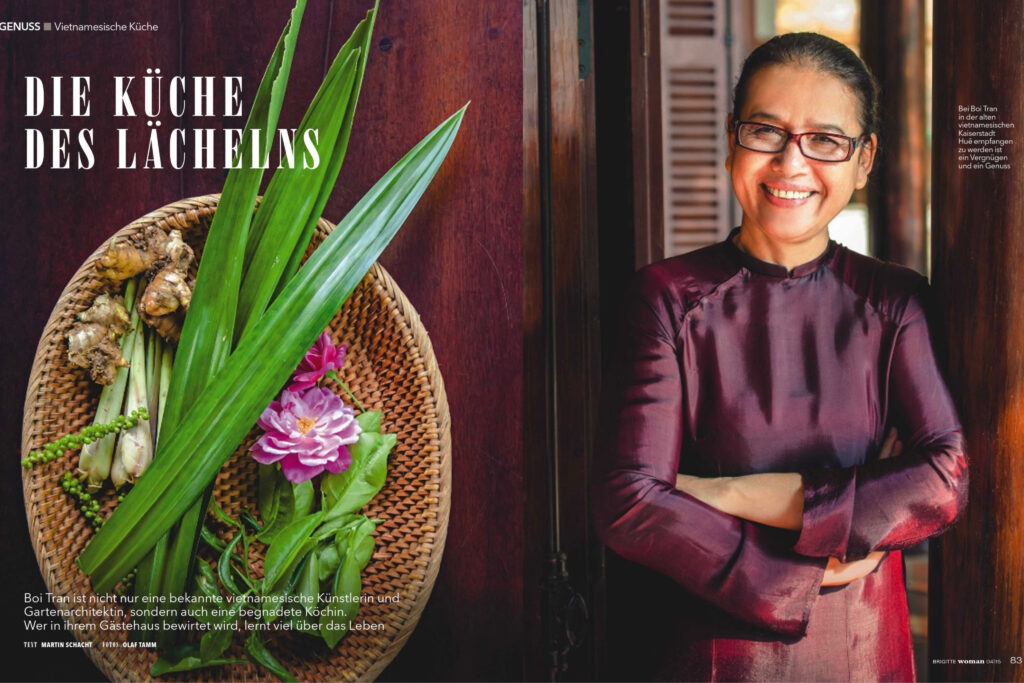
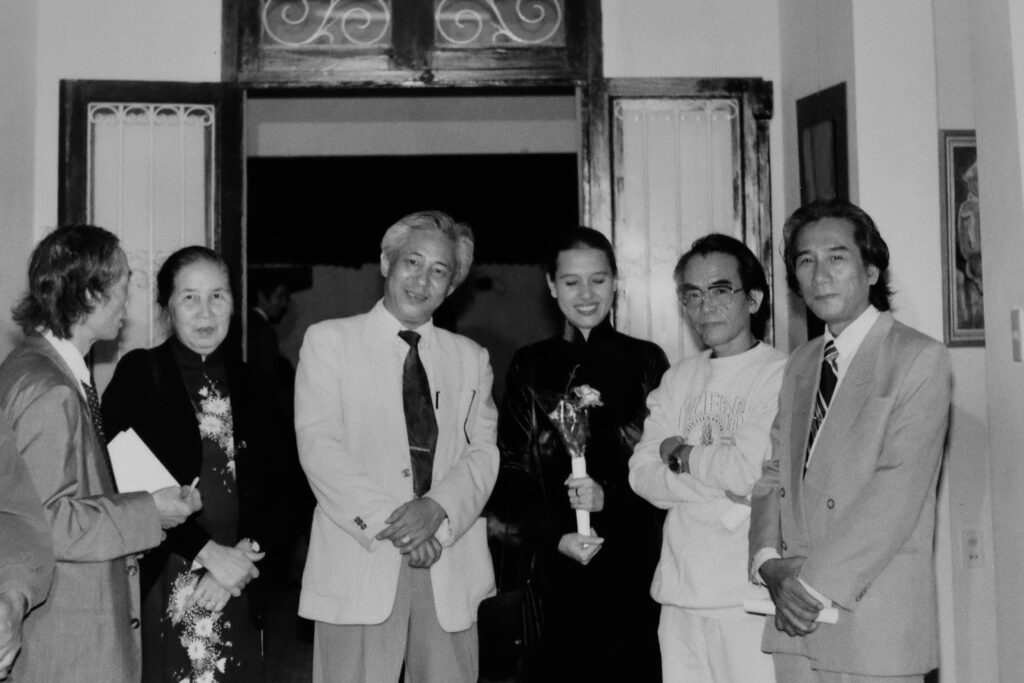
Boi Tran does not appear here as a subject of admiration, nor as a figure to be explained. She appears as a fellow painter, one whose presence is already understood within the same field of experience.
If Truong Be dismantles the structure of the world in order to bear it, Boi Tran sustains a continuity within it, not by opposing its instability, but by holding a space in which art may remain, not as object alone, but as lived condition.
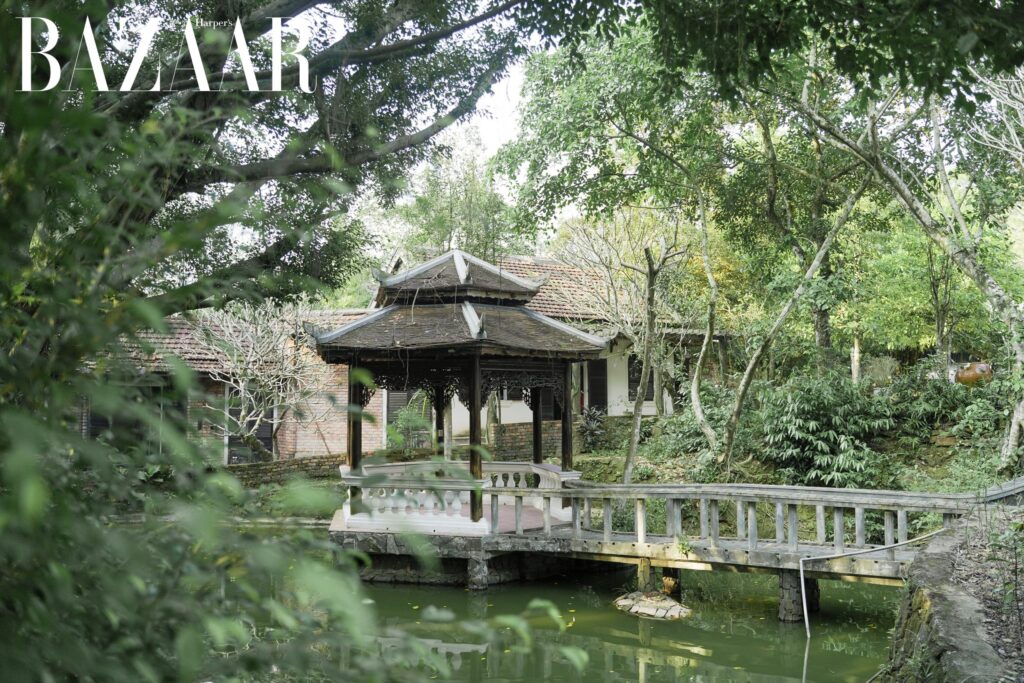
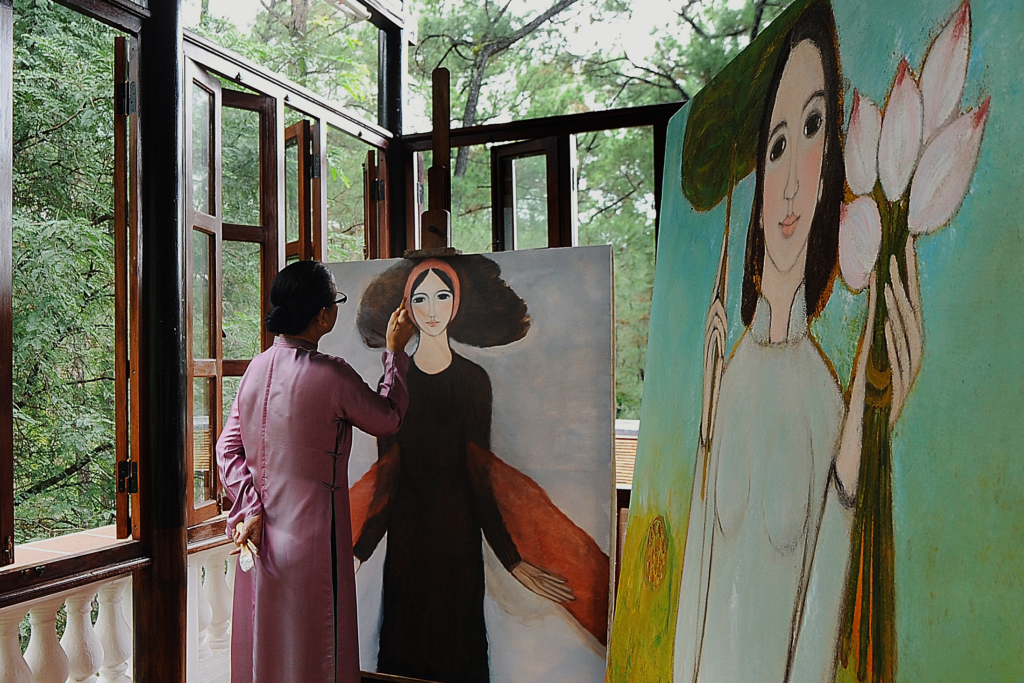
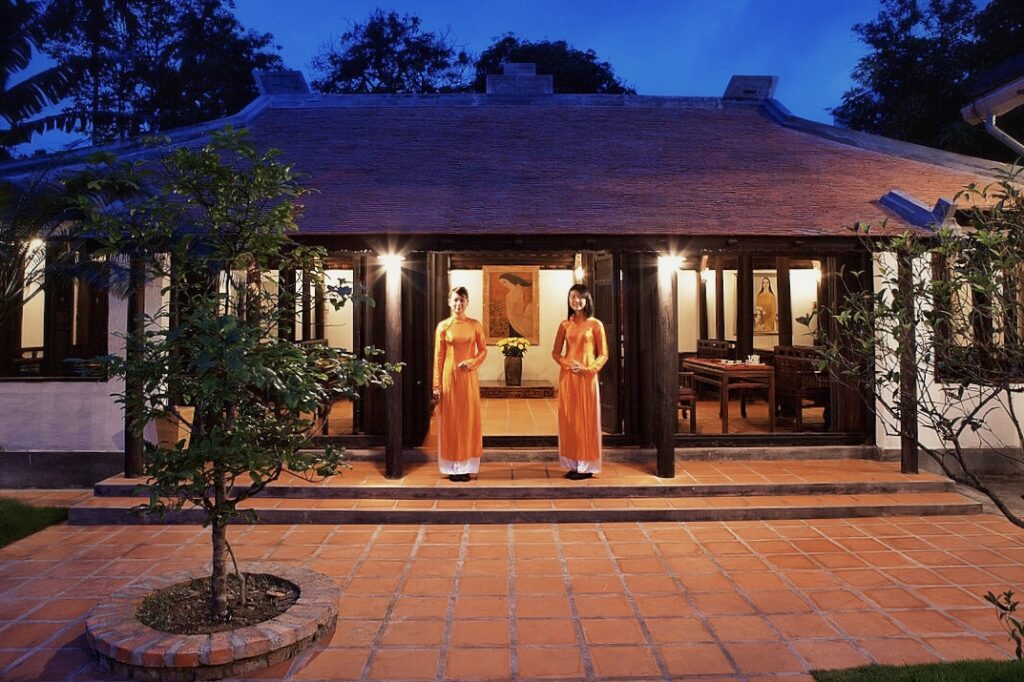
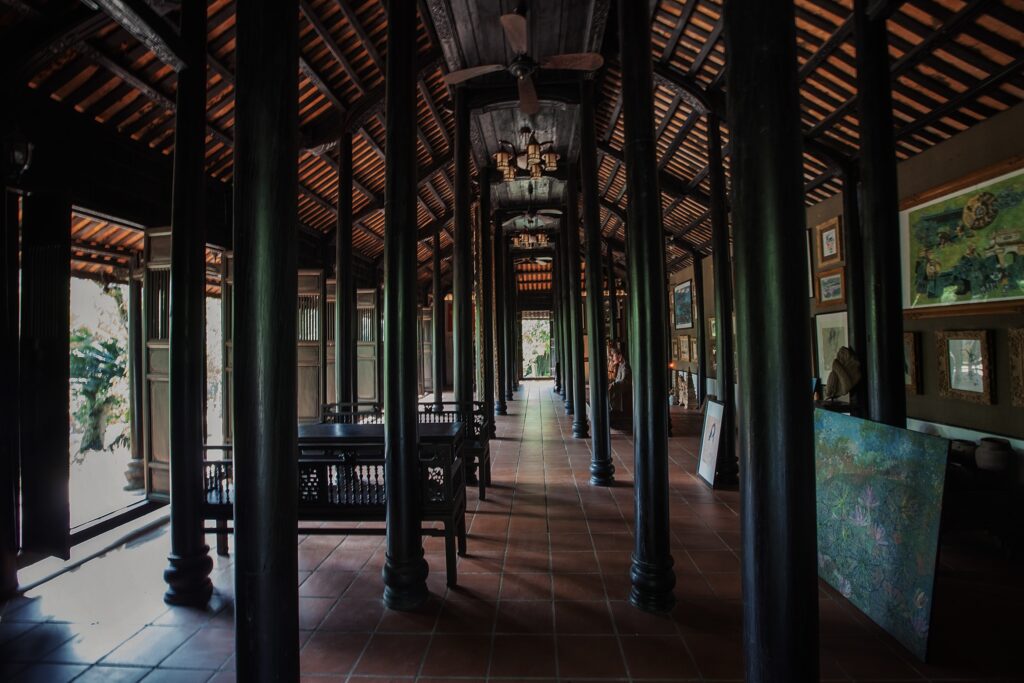
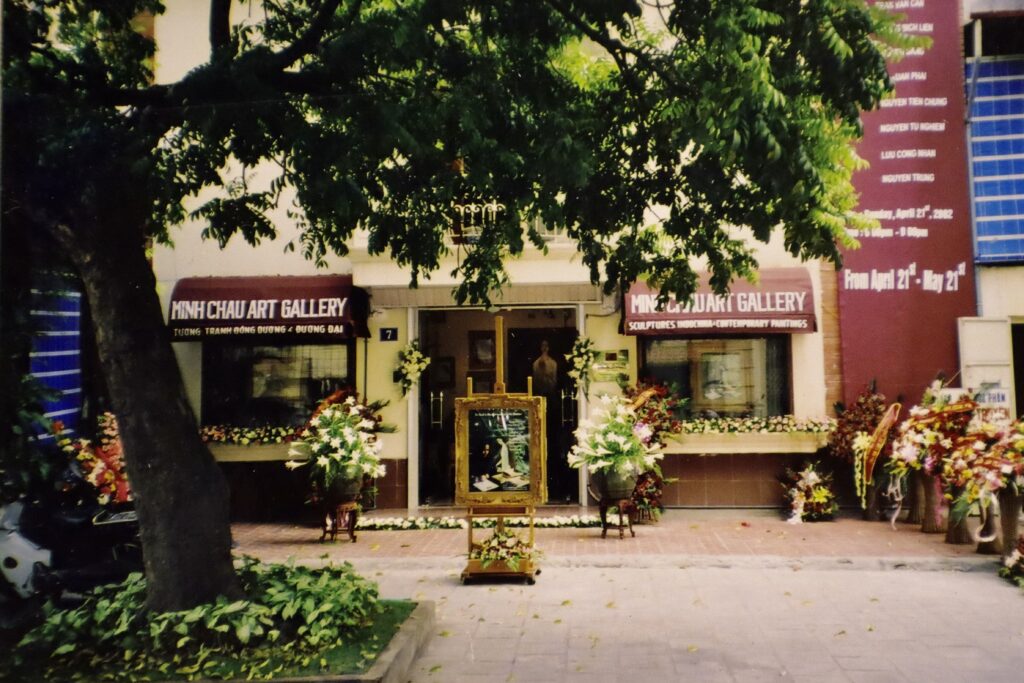
At Boi Tran Art Gallery, and later at Boi Tran Garden, this condition becomes visible. Art is not separated from life. It is not elevated beyond reach. It is held, quietly, within a framework where making, preserving, and inhabiting coexist.
In this sense, the gesture of Truong Be is not an isolated act. It is part of a larger alignment, between two practices that do not mirror one another, yet recognise each other without hesitation.
A recognition that does not expand into discourse.
Because it is already complete.
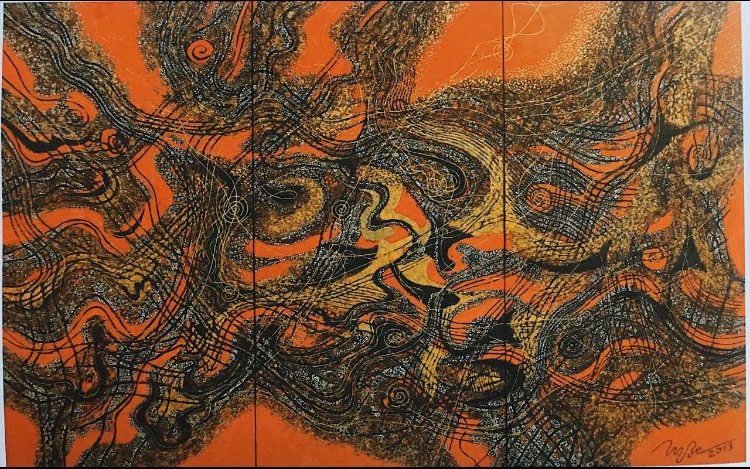
Truong Be: The Quest for the Absolute
Just exactly what do you know about a person? His life?
It is simply what you find out about the world: nothing. The artist, however, affords us (at our own risk and peril) an interpretation of the world, hence a look at himself (“himself” in relation to the world; “himself” as an artist).
Trương Bé is a great artist for the obvious reason that he is a true man who has been able to embody the history of his country even though he refrains from doing so. Behind his candid and alluring smile and beyond his stalwart posture, a strong character is revealed. Some people view a solid appearance as something almost akin to a threat.
For me personally, it is sine qua non for bringing to light a genuine talent that I find amidst Vietnamese painting production when it was at its peak. In dealing with lacquer, Trương Bé is Nguyen Gia Tri’s equal.
In his domain, namely art, he proves to be a happy man and he takes pride in this. His pride bears witness to his happiness and his happiness ennobles his pride. Those who know Vietnam will rightly identify in him not only this pride tinted with a touch of rudeness inherent in the men of Quang Tri (where he was born) but also the happiness tinted with some sadness characterizing the inhabitants of Hue (where he has been painting and teaching for a very long time now).
Pride and sadness are the concepts that Vietnamese has adopted for its own sake all through its history. Far from being haughtiness, Vietnamese pride is the assertion of a destiny; Vietnamese sadness does not consist in tears but in a look at times blurred and drowned by a gently repressed broad smile.
Who is more Vietnamese than Truong Be? Nobody is. Some others are but differently. In this aspect, to be sure. He is second to none. To contemplate one of Truong Be’s works is to start out on a poetic search for the perfect technique. Each of his works deserves close scrutiny and calls for an adherence to his internal world.
His demand is total and puts us in mind of Y Lan who died in 1117:
BEING AND NON-BEING
Being is non-being, non-being is being
Non-being is being, being is non-being
He who does not cling to anything
Is the only one capable of living in perfect harmony with the Absolute?
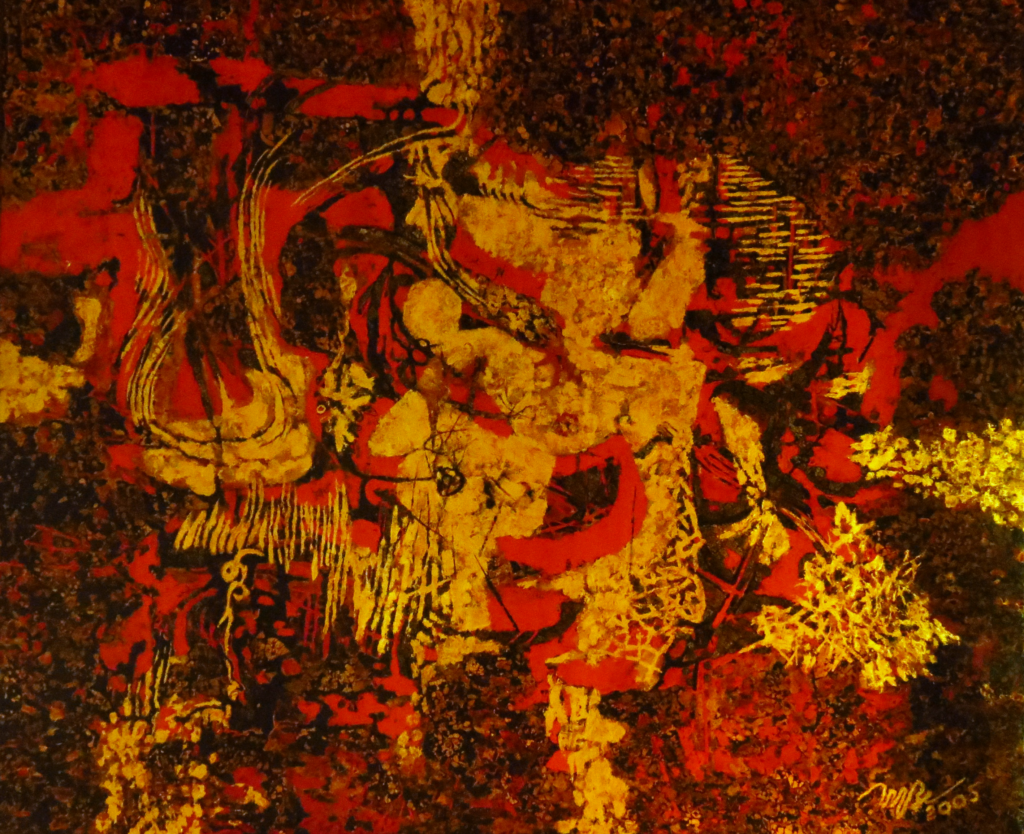
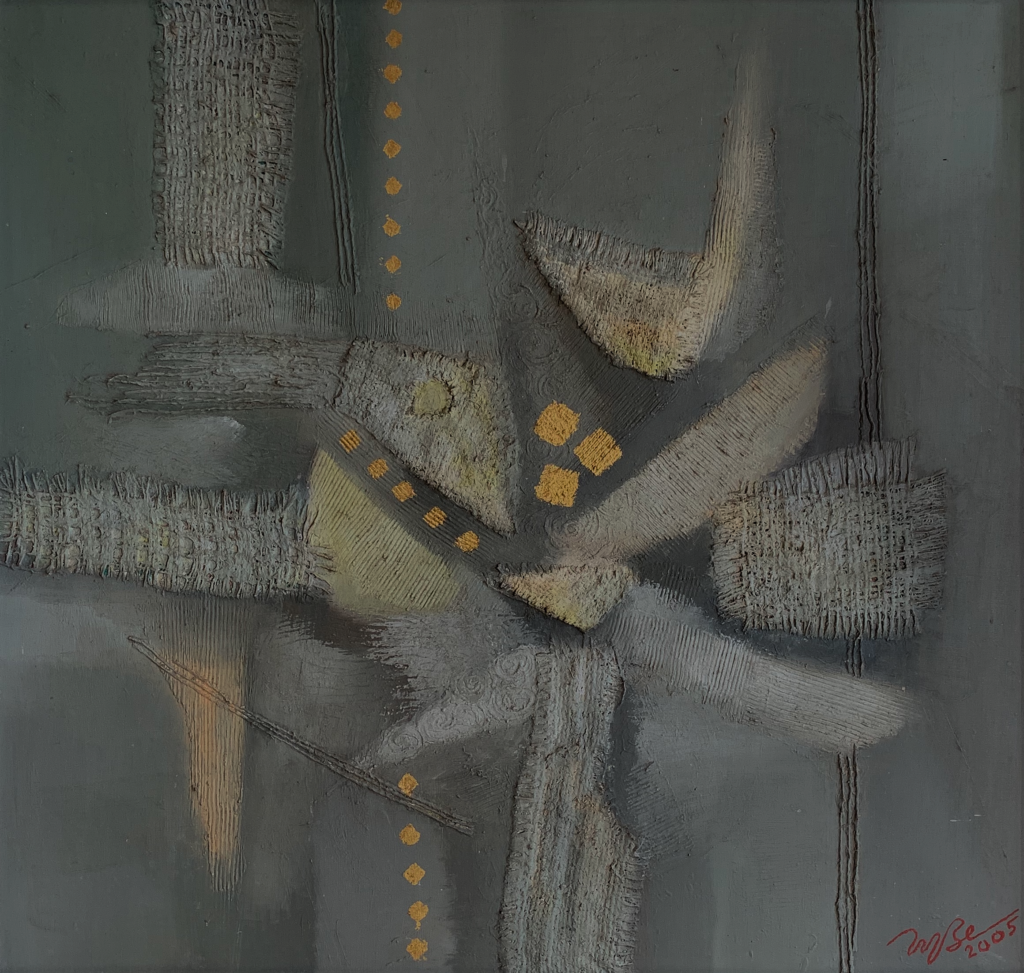
Chiefly when he expresses himself by means of lacquer (where painting on silk is concerned, lacquer is one of the significant contributions of Vietnamese painting art to the world’s one), Truong Be puts forth a language which is non-verbal yet replete with sounds, a vision which is void of images yet resplendent with colours.
Truong Be has set his mind on dismantling the world, not to build it anew but to bolster it up. He illustrates this “impermanence of the world” mentioned by Nguyen Gia Thieu (1741-1798):
Countless people have gone through tribulations and trials!
They still retain their human forms; their hearts, however, are dead.
No wonder that the moment he is born, a human being cries to welcome life!
He has been able to overlook (or to move elsewhere) the lament to transform it into an ode.
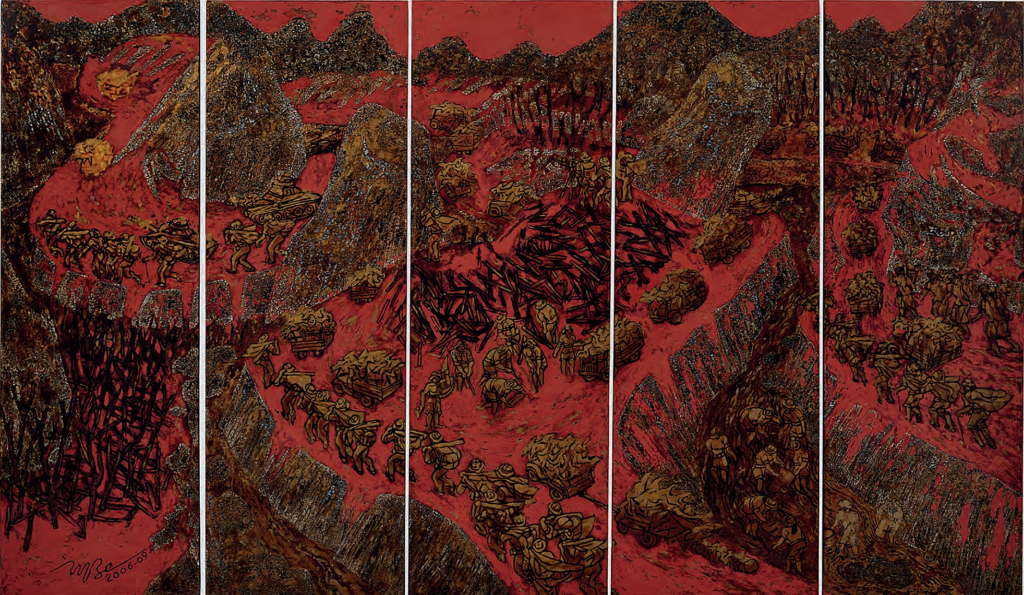
He has been able to portray the spirits of yore with a profusion of orange and gold where the lines craving for infinity are held back by unobtainable immortality. Conscious of this paradox, the painter never ceases giving preference to extremely large formats. We encounter here the quest of a lone but not isolated man, a passionate soul that has managed to subdue passion.
In witnessing this poetic quest so happily ended, how can we ever miss thinking of Nguyen Trai (1380-1442):
POINT OF VIEW
Does it really matter if a nobleman is clad in slovenly clothes beneath his dignity? All that we have to do is follow the path of the sages of Yore
With a cup of tea perfumed with the scent of apricot flowers; I wake up at night to gaze at the moon
During springtime I read and punctuate my books; Careers involving honour bring nothing but anguish and humiliation
In a foolish secluded life there lies liberty; Of my peers a great many are gone; Like paulownia leaves scattered when autumn comes to a close.
The pride of Hanoi, the strength of Quang Tri, the nobility of Hue and the sweetness of Budapest, all those stages and landmarks have successfully come to make a road a highway.
Jean Francois Hubert
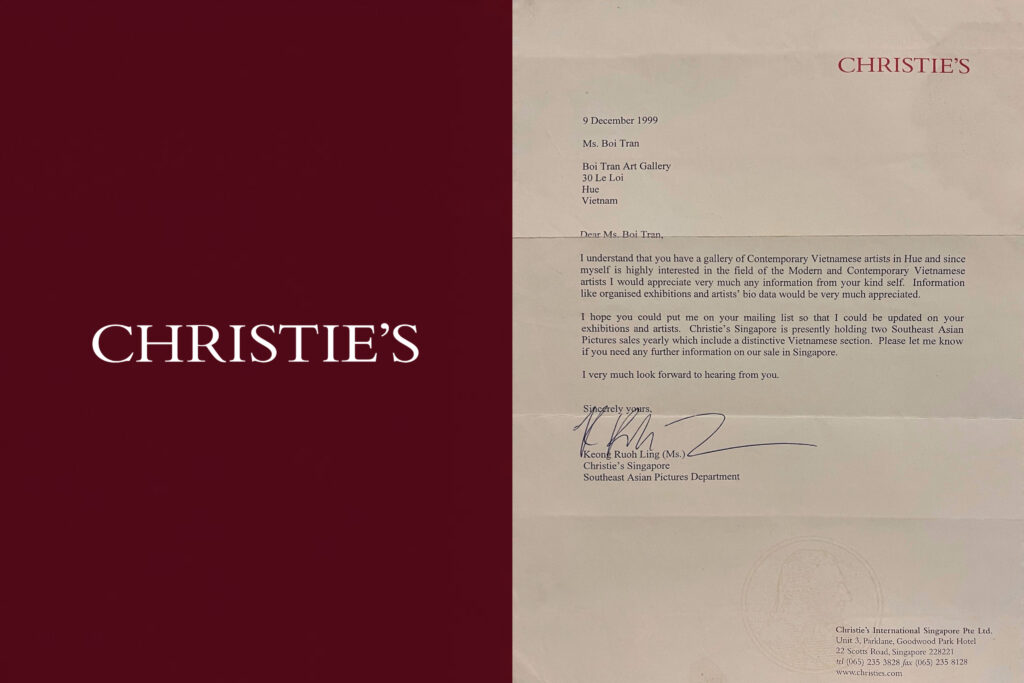
Senior Expert, Vietnamese Art, Christie's