Small and Miniature Masterpieces: The Art of Vietnam's Iconic Artists
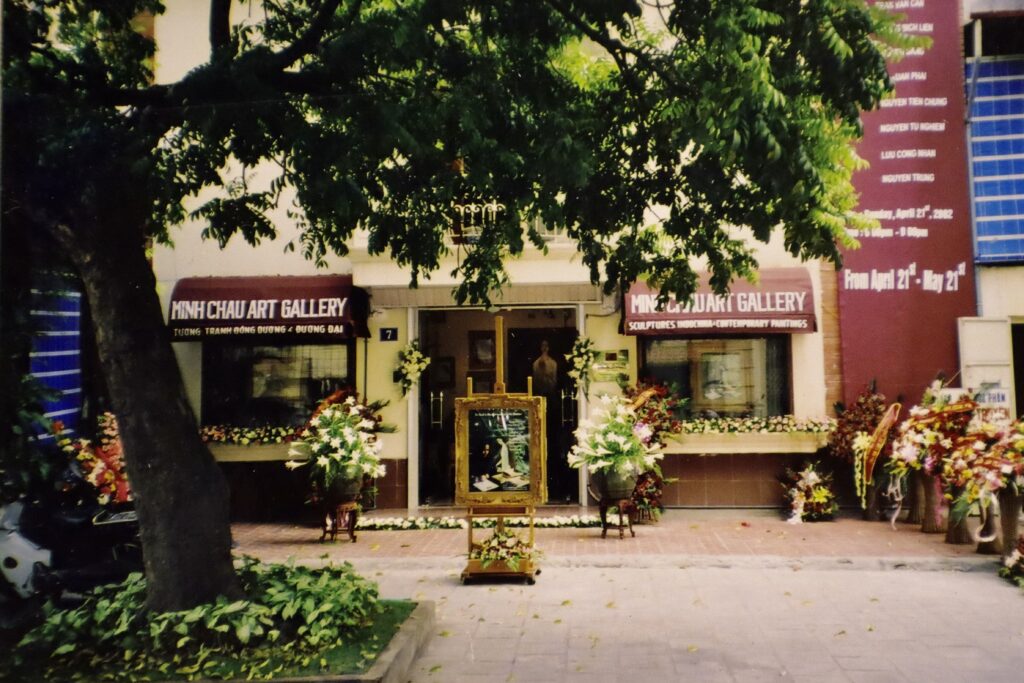
Minh Chau Art Gallery's Exhibition
In each small frame, a world unfolds: tender, intimate, and quietly profound. From Bui Xuan Phai’s ink-drawn matchbox portraits to Nguyen Trung’s reflective sketches, these miniature masterpieces speak not of scale, but of soul. Rooted in centuries of artistic tradition, yet wholly Vietnamese in spirit, they remind us that greatness often comes gently, in the smallest of gestures.
It is likely that those who want to deal with any genre or aspect of Vietnamese modern painting cannot avoid reverting to its origin, namely Western art, from which our artists have been benefiting since the beginning of the 20th century to date.
Small paintings or miniatures dated back to the Middle Ages in France. By the 10th-11th centuries, artists of that time had used the technique of small paintings to portray the life of Jesus Christ or illustrate the Holy Bible for religious preaching. Because of printing difficulties, the pictures had to be minimised with tiny details so as to fully express the essence of each work of art.
In the 18th-19th centuries, especially when the Impressionist School reached its zenith, miniatures had on many occasions left their primary role as sketches to develop into a very original art school since the emotive fever of this genre sometimes towered over that of large-size paintings. Hence, artists had to spend more time meticulously refining miniatures until their total complete satisfaction. Yet this goal generally proves to be very difficult to attain, since the more the latter is finished and refined, the more they lose warm feelings and the freshness and vigour of the artist's strokes and colours, an advantage commonly found in the initial drafts of sketches.
To compare miniatures with large-size paintings, a genre that requires a great deal of time for their execution, Auguste Renoir, a French master painter, said: "To confront the two genres of paintings, I would like to make a comparison: Just like a passionate lovemaking during a short night with so many years of an ardent love." At this, Renoir's friends exclaimed, "OH!" and they realised the value of the miniatures that Renoir left to the world.
Many great French Impressionists, such as Monet, painted miniatures, and even the street artist Utrillo left us plenty of miniature paintings.
A single Renoir's or Monet's miniature was sold at Drouot auctions (Paris) for USD 40,000 - USD 50,000, and it measured only 15 × 40 cm.
Now, let's return to our Vietnamese art. In reality, few of our ant collectors pay special attention to this genre of painting. Legend tells us that in Bui Xuan Phai's lifetime, his friends used to come to see him. They lingered at his home to watch him paint and talk. The master painter told them about the power and great success of miniature paintings. He said: "Don't look down upon miniatures, they are very beautiful and by no means inferior to the large-size paintings which artists have spent lots of time to execute and embellish."
To turn his words into deeds, Bui Xuan Phai drew a series of miniatures with a steel pen dipped in red ink or pupil's blue ink. Most of the portraits are those of his friends or talented writers and artists in northern Vietnam and were done on pieces of paper as large as a matchbox. Later, a certain family acquired them and resold them on the market. When viewing them, art lovers could not help but exclaim their admiration at such wonderful and successful portraits. One more detail: Bui Xuan Phai did not fail to sign his name, and at times, he even dated the miniature portraits. This is clear enough to show his regard and responsibility for each of his mini artworks.
The master painter quietly resolved his creative curiosity with this genre of miniature paintings. He made them while sitting or standing, at every hour or minute of his life. Upon completion, he signed them and dedicated them to a friend whom he'd painted. Sometimes he threw them into the wastebasket as soon as he had finished them, fetched another piece of paper and went on drawing. Perhaps this genre of painting responded to his creative artistic need. "Truyen Kieu" ("Kim Van Kieu") and Ho Xuan Huong's poems offered abundant inspiration to him, e.g. these: "Men are hesitating: they are reluctant to go: - It's not good to miss the opportunity, but lingering is indecent behaviour!"
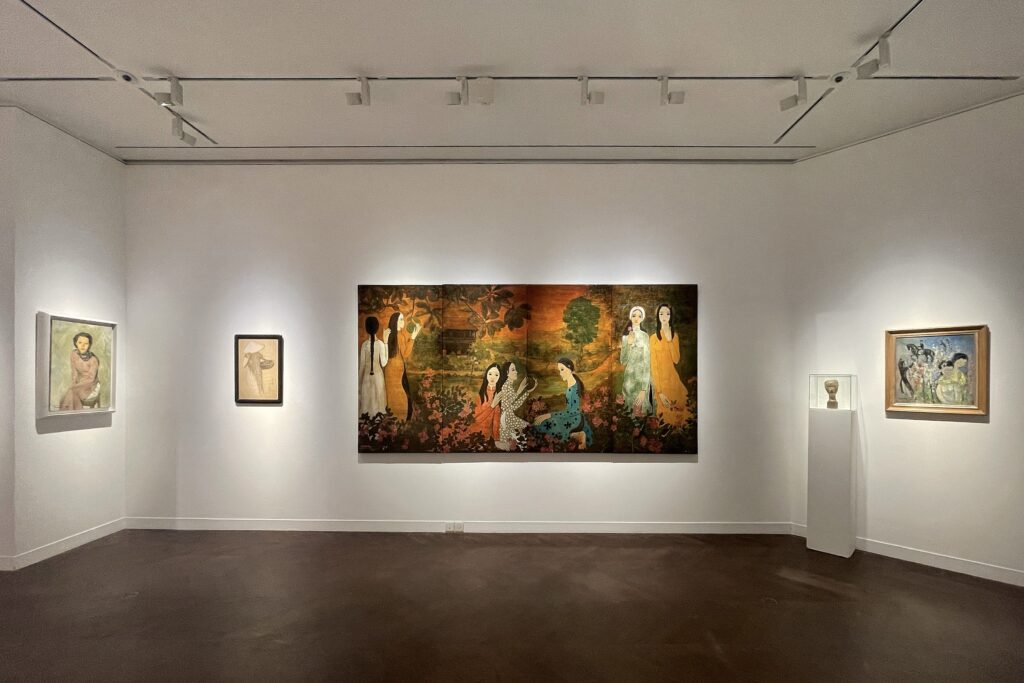
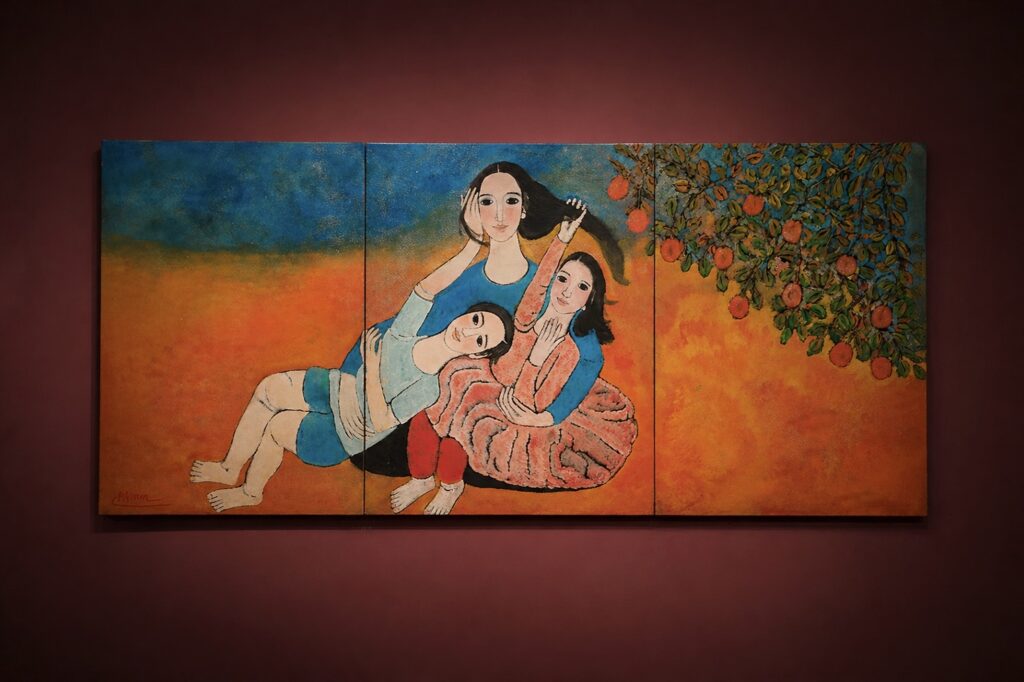
The miniature paintings, including drafts or sketches by other contemporary artists on display at my exhibition today, are made by: Nguyen Phan Chanh, Tran Van Can, Dung Bich Lien, Nguyen Tu Nghiem, Nguyen Sang, Bui Xuan Phai, Nguyen Tien Chung, Luu Cong Nhan from North Vietnam and Nguyen Trung from South Vietnam. I think that they are sufficient to show the power and success of Vietnamese art, which follows the tradition of Western painting: "Any genre of painting will do. It is essential that one should add something that has never been found in the world's art."
An art critic from New Zealand wrote: "From the beginning of the 20th century up till now, the world's atmosphere of artistic creation has seemed to come to a dead end". Conversely, Vietnamese painting, though still timid and awkward when it proceeds to do creative work and voice its opinion or notwithstanding it is only a "distant relative" of European Impressionism and Fauvism, is still regarded as a fresh breeze of creativity. Vietnamese pictures are indeed contributing their presence to European museums and Western families. Now they are expanding to America…
In my opinion, the fact that Vietnamese art is present all over the world is due to a very simple reason: dissimilar to any other painting, it is very original and truly Vietnamese.