
Beyond Influence: Rethinking Vietnamese Modern Art Through Echoes of Tonkin
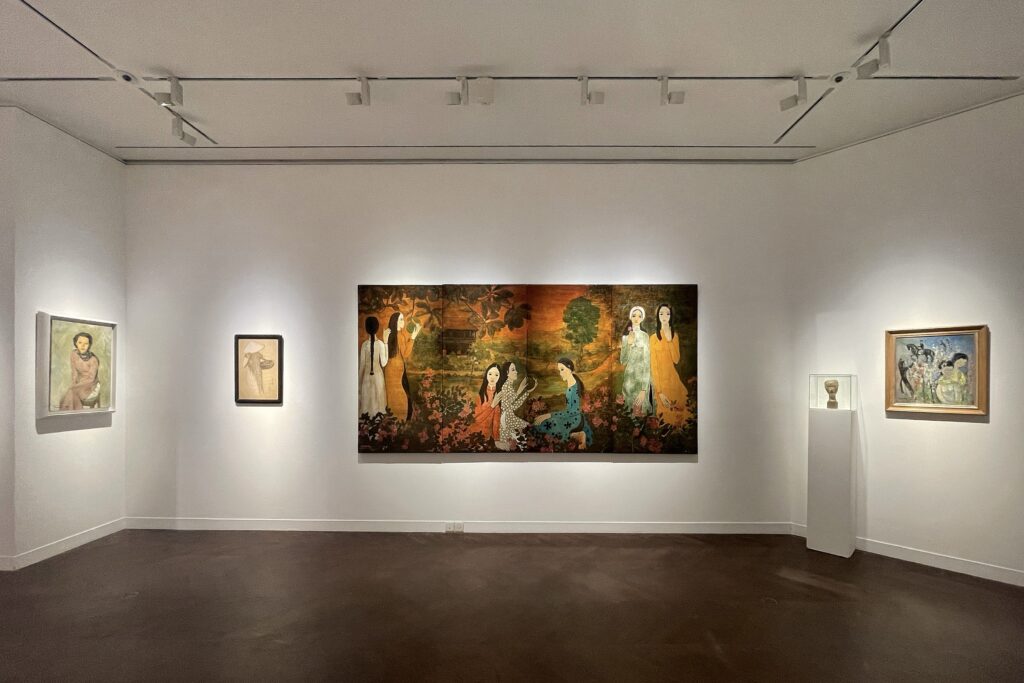
Presented at DE SARTHE in Hong Kong, Echoes of Tonkin: Vietnamese Modern Art offers a compelling reappraisal of Vietnamese modernism through an exceptional selection of paintings, lacquer works and sculptures. Distinguished by its scholarly depth and thoughtful curatorial vision, the exhibition illuminates the artistic encounters, material innovations and cultural exchanges that shaped Vietnamese art in the twentieth century, marking a significant contribution to its international recognition and appreciation.
The history of Vietnamese modern art has often been understood through the encounter between European academic traditions and Vietnam’s artistic heritage. Central to this history is the École des Beaux-Arts de l’Indochine, founded in Hanoi in 1924. Yet the significance of Vietnamese modernism extends far beyond the transmission of French influence. Its distinctive achievement lies in the ways artists absorbed, reinterpreted and transformed different visual traditions into languages of their own.
Presented at DE SARTHE in Hong Kong, Echoes of Tonkin: Vietnamese Modern Art offers a compelling reconsideration of this history. Bringing together fourteen modern works dating from approximately 1905 to 1960, alongside two Cham sculptures, the exhibition explores the relationships between artistic encounters, material innovation, cultural identity and memory.
Co-curated by Leah Do and Tran Dinh Thuc Doan, with scholarly guidance from Jean-François Hubert, the exhibition is distinguished by its thoughtful selection and the dialogue established between works of different periods and traditions.
Encounters and Transformations
The exhibition opens with two paintings by Albert Cézard, dating from around 1905, whose contrasting depictions of river activity and domestic life reveal different ways of observing Vietnam before the foundation of the École des Beaux-Arts de l’Indochine.
Victor Tardieu’s Portrait d’homme, painted around 1923, introduces a more intimate concern: the psychological presence and individuality of the sitter. Together, these works establish a historical context for the artistic transformations that followed.
Le Pho’s Le Bol bleu (The Blue Bowl), painted in 1930, the year of his graduation, exemplifies the creative possibilities of this encounter. Its depiction of an affluent northern Vietnamese household reflects European academic training while retaining a distinctive sensitivity to local culture and the expressive qualities of silk.
Here, two visual traditions do not merely coexist; they are transformed into a coherent artistic language.
Lacquer as an Expression of Modernity
Among the exhibition’s notable achievements is its presentation of lacquer as one of the most sophisticated expressions of Vietnamese modern art.
In Alix Aymé’s La jeune femme et le fleuve (The Young Lady and the River), gold becomes both sky and water, distinguished through subtle variations of texture and reflection. The material itself participates in the construction of pictorial space.
Pham Hau’s lacquer box, House near the River, extends artistic invention beyond the conventional picture plane, transforming an object into a unified pictorial composition.
Nguyen Gia Tri’s Bateaux dans la baie d’Halong (Fishing Boats in Ha Long Bay), dated 1960, offers a quieter interpretation of the medium. Its restrained palette and simplified forms evoke a landscape remembered rather than directly observed.
Together, these works demonstrate how lacquer developed into a distinctive language of modern artistic expression, combining technical mastery with remarkable creative freedom.
Distance, Memory and Artistic Identity
The exhibition also considers the relationship between artistic imagination and geographical distance.
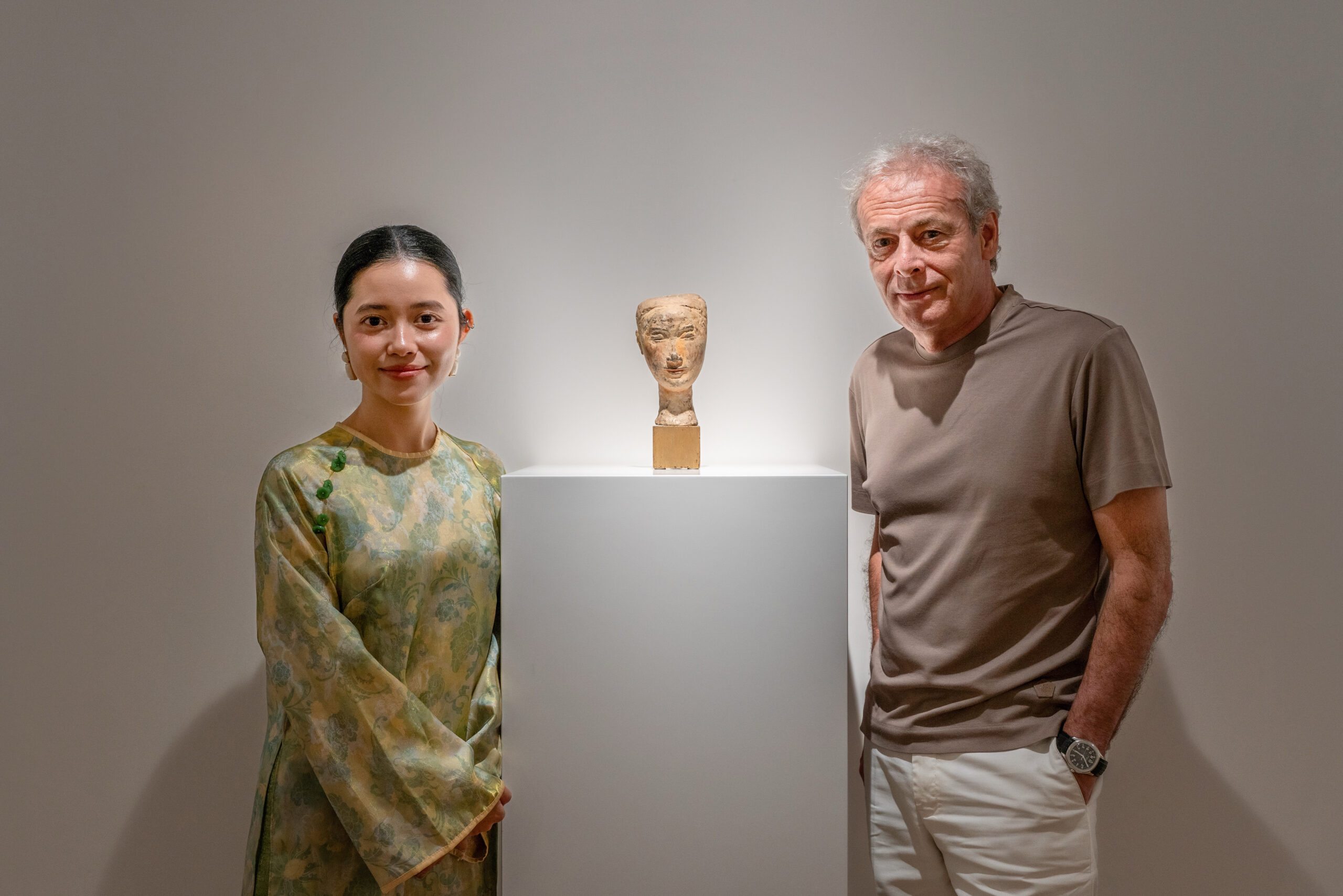
In Vu Cao Dam’s terracotta Tête de femme (Head of a Woman), dating from around 1939, simplified and idealised forms suggest a movement beyond direct observation towards an image shaped by memory. The traces of the artist’s fingers and tools, preserved on the reverse, offer a compelling reminder of the physical intimacy of sculptural creation.
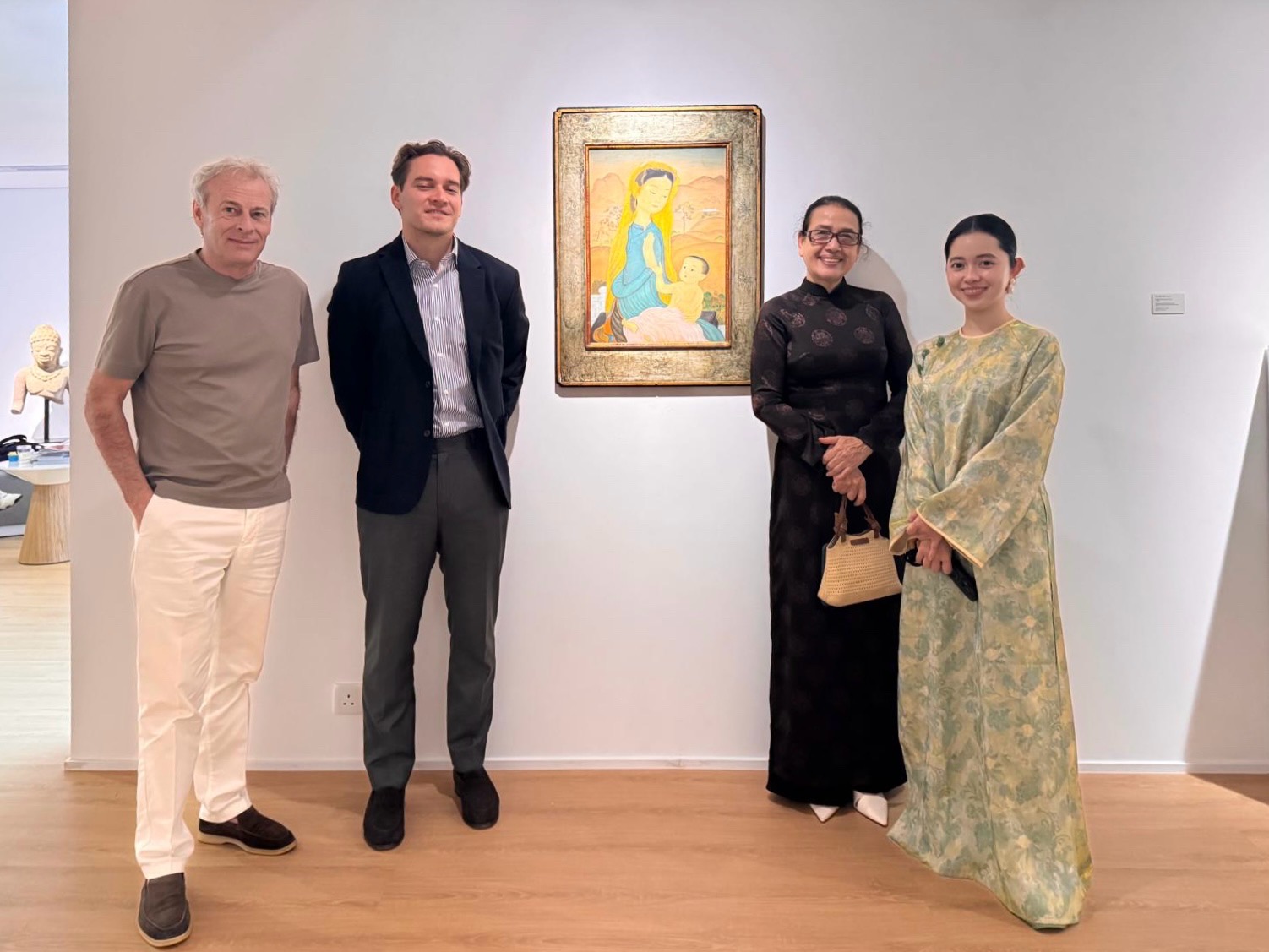
Mai Trung Thu’s Mère et enfant (Mother and Child), painted in 1959, expresses a different sensibility. Through the delicate exchange of gestures between mother and child, the artist conveys tenderness and contemplation with extraordinary restraint.
The inclusion of two Cham sculptures, representing the Buddha and Ganesha, further enriches the exhibition’s historical perspective. Their presence recalls the diversity of artistic and religious traditions that flourished across the territories of present-day Vietnam, extending the exhibition’s intellectual horizon far beyond the emergence of twentieth-century modernism.
DE SARTHE: Scholarship and Curatorial Vision
The distinction of Echoes of Tonkin lies not only in the quality of its works, but also in the intelligence of their presentation.
Under the leadership of Pascal de Sarthe, and through his collaboration with co-curators Leah Do and Tran Dinh Thuc Doan, DE SARTHE has brought together a remarkable selection of works within a coherent art-historical framework.
Supported by careful research, provenance and a substantial exhibition publication, the project demonstrates how a commercial gallery can make a meaningful contribution to scholarship and international cultural exchange.
The generosity of collectors and lenders has been equally essential, allowing works from different collections to enter into a shared historical dialogue.
Above all, Echoes of Tonkin affirms that Vietnamese modern art deserves recognition not simply through the influences it received, but through the originality and artistic achievements of those who shaped it.
In bringing these works together with discernment and scholarly ambition, DE SARTHE has made a distinguished contribution to the understanding and international appreciation of Vietnamese art.
Exhibition Information
Echoes of Tonkin: Vietnamese Modern Art
Venue: DE SARTHE, Hong Kong
Dates: 10 October – 21 November 2026
Co-curators: Leah Do and Tran Dinh Thuc Doan
Boi Tran Garden warmly congratulates Mr. Pascal de Sarthe and the entire DE SARTHE team on this remarkable exhibition.