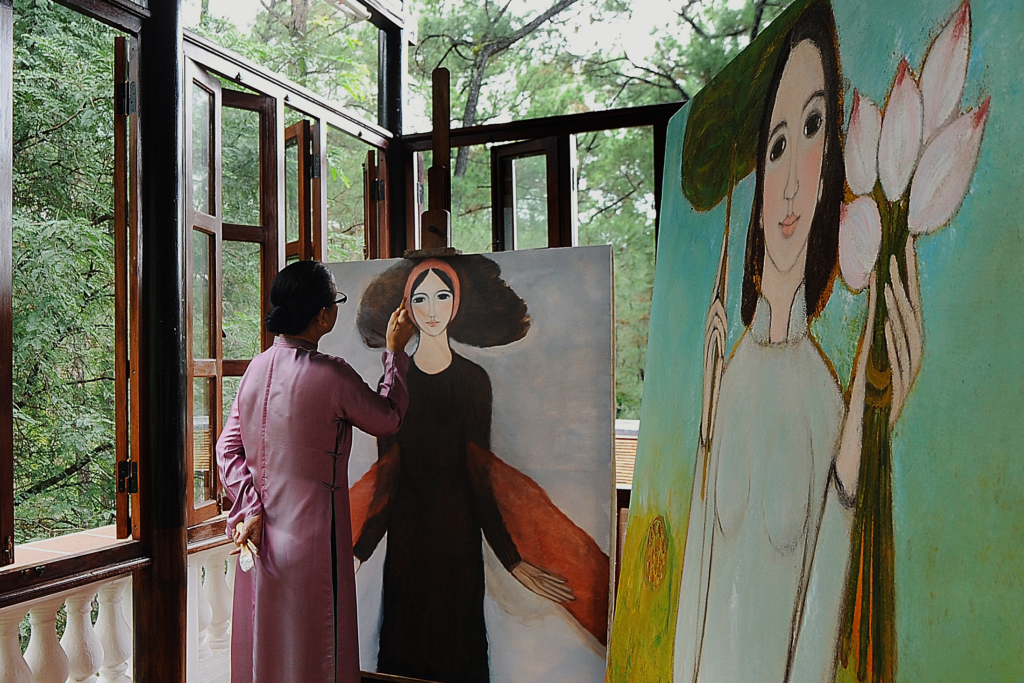


BOI TRAN (VIETNAM, B. 1957)
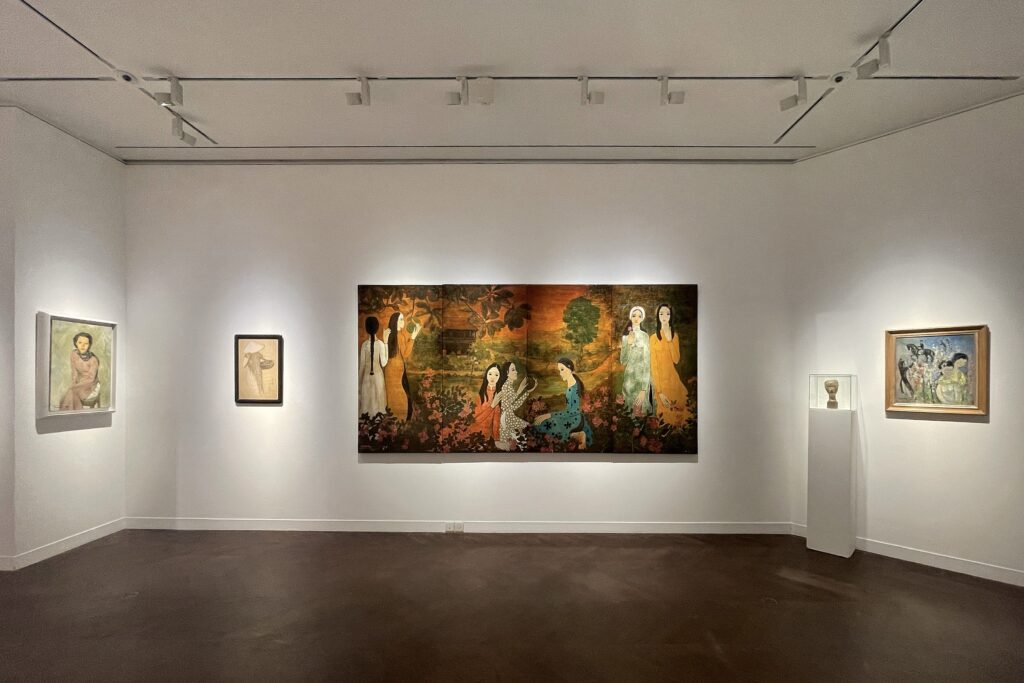
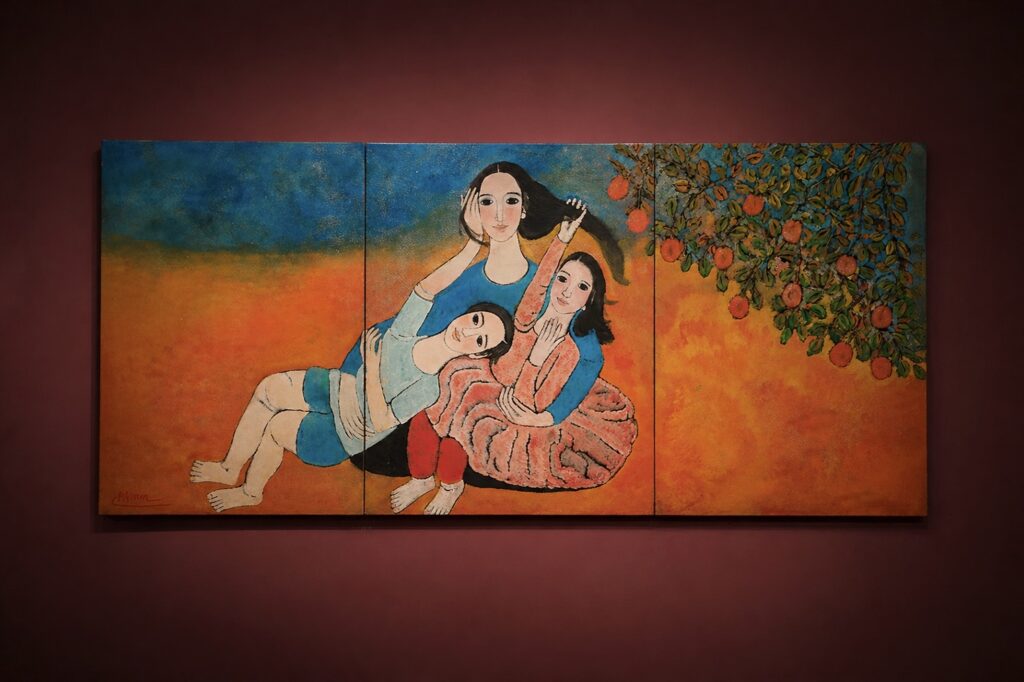
Hué en Fleurs (Hue in Bloom)
Price on request
Boi Tran (Vietnam, B. 1957)
Hué en Fleurs (Hue in Bloom)
signed 'Btran' (lower right)
oil on canvas
140 x 250 cm. (55 1/8 x 98 3/8 in.)
Painted between 2023-2025
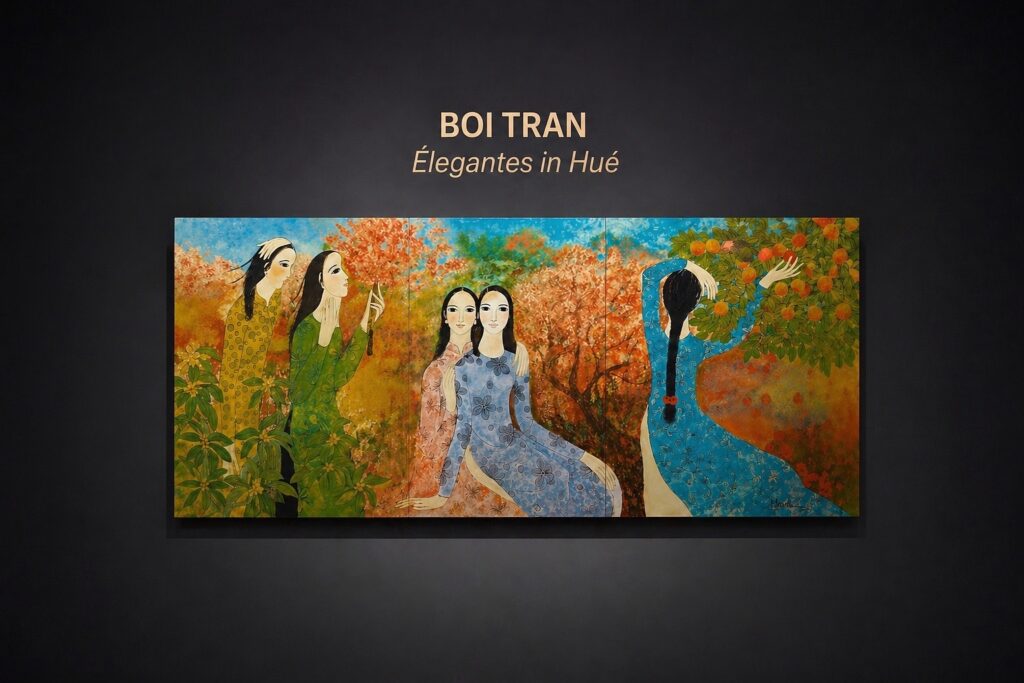
This painting does not unfold as a story; it settles as a condition. The figures do not advance, converse, or resolve. They inhabit. What Boi Tran offers here is not narrative memory but suspended duration, a visual state in which time has slowed to the pace of breath and blossom.
Four women, nearly identical yet irreducibly separate, occupy a garden at the threshold between flowering and rest. Their white áo dài does not read as costume but as atmosphere, absorbing light and diffusing it back into the landscape. White here is not absence; it is accumulation, of restraint, of care, of continuity. Against the dense greens and flowering branches, the figures appear less painted than preserved, as if the scene were discovered rather than composed.
Each posture is introspective, self-contained. One listens inwardly, another leans into repose, another gathers blossoms without triumph. No gesture claims dominance over the others. The painting resists hierarchy. Instead, it constructs a quiet choreography of equivalence, where emotional gravity replaces dramatic action. These women are not symbols of femininity in the ornamental sense; they are bearers of composure. Their beauty lies in containment.
The garden itself is neither wild nor ornamental. It is cultivated without ostentation, a lived-in space shaped by patience rather than control. Trees bend gently, blossoms do not overwhelm, the horizon remains open. This environment does not frame the figures; it receives them. Human presence here is not disruptive but consonant, as if the land recognizes these women as extensions of its own rhythm.
Notably, the figures do not meet the viewer’s gaze with insistence. When eyes lift, they do so without demand. This refusal of spectacle is central to the painting’s ethic. In an art-historical lineage where women have often been rendered to be seen, Boi Tran paints women who remain with themselves. Visibility is allowed, not courted.
The repetition of similar faces and garments is not a denial of individuality but a meditation on shared interiority. Identity here is not announced through difference but sustained through continuity. The painting suggests that survival, cultural, emotional, and spiritual, may depend less on rupture than on repetition: the same garden, the same gestures, the same care, practised again and again.
There is no overt tragedy depicted, yet the calm is earned, not naïve. This is tranquillity after knowledge, not before it. The figures’ serenity feels deliberate, disciplined. It proposes stillness as an active stance, a form of endurance refined into grace.
Ultimately, this painting does not ask what has been lost, nor does it illustrate what has been overcome. It proposes something quieter and more radical: that meaning can persist without declaration, that elegance can exist without display, and that continuity, patient, attentive, and restrained, can be its own quiet victory.
In this orchard, time does not move forward. It rests. And in that rest, something lasting takes root.
We are here to answer your questions and help guide you. To request a price for a particular private sale, please contact information can be found below, we will follow up with you shortly.
BOI TRAN FINE ARTS CO., LTD
Kim Son Hill, Bui Dinh Tuy Street, Thuy Xuan Ward, Hue City, Vietnam
art@boitran.com
+84 234 388 4453
boitran.com