
Anthony Bourdain at Boi Tran Garden | CNN Parts Unknown: Vivacious in Vietnam
CNN
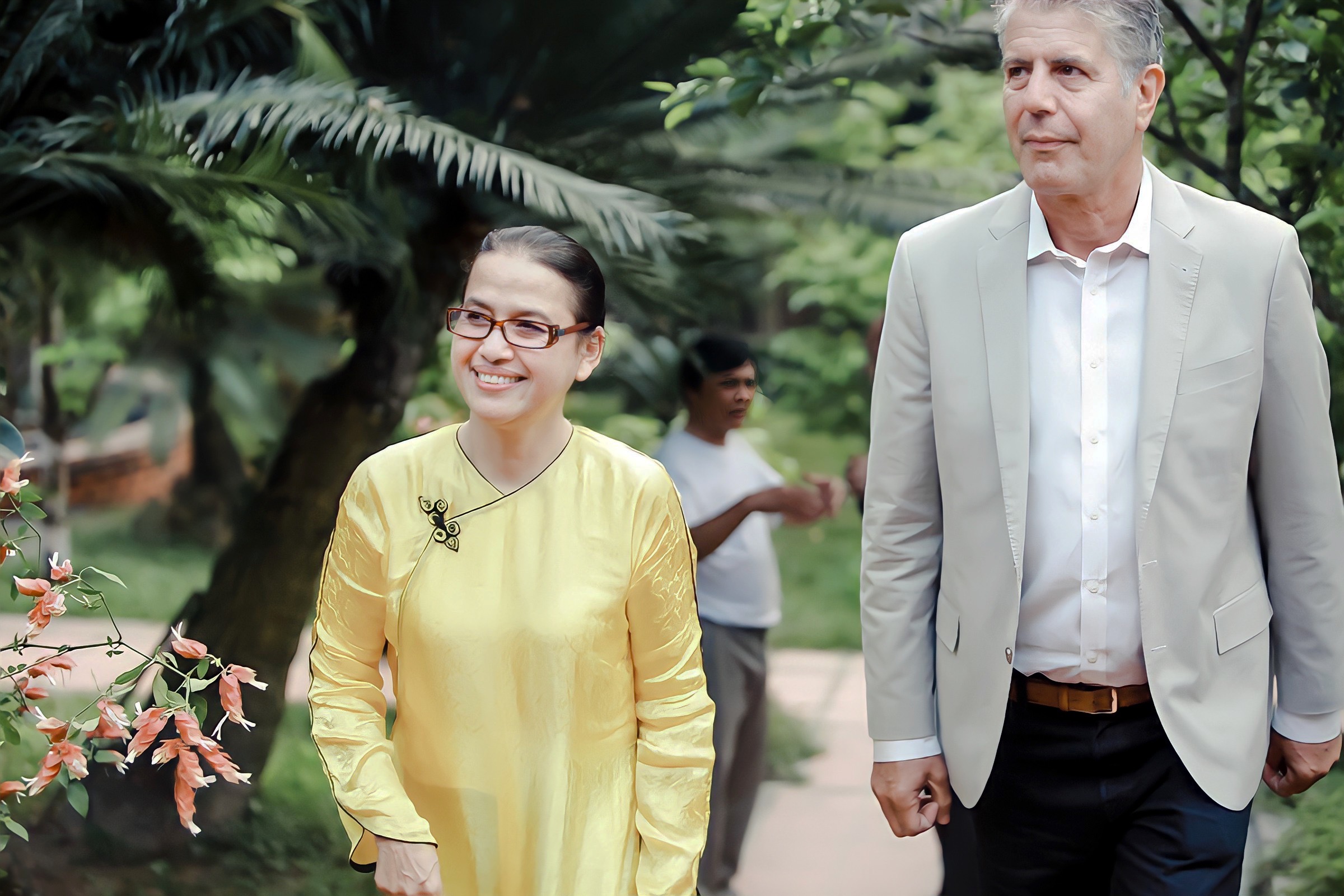
When Anthony Bourdain came to film for his show Parts Unknown aired on CNN, what emerged was not a story of food, but of memory made tangible. At Boi Tran Garden, a meal unfolds alongside architecture, ritual and the residue of time. Flavours do not seek intensity, but balance; gestures do not display, but endure. In such a place, taste becomes a language through which the past continues to live.
When Anthony Bourdain came to Hue to film Parts Unknown for CNN in 2014, he did not arrive in a city that could be understood through cuisine alone. Hue, the former imperial capital of Vietnam, stood for him as a place layered with memory, war, ritual and beauty, “a city of ghosts, of memories and spirits.” The phrase was not ornamental. It named something palpable in the streets, in the old citadel, in the mist above the Perfume River, and in the particular gravity with which Hue continues to hold its past.
It was within this atmosphere that Bourdain encountered Boi Tran.
"Boi Tran is a painter and something of a throwback, an anomaly, a creature from another, earlier time in the life of the onetime Imperial City. She lives in an area called Thien An Hill, in a magnificently restored compound. These traditional wooden houses were once part of the regal style, with sloped grooves to handle the rainy Hue weather. But most importantly, she features a garden at the centre which follows the eastern philosophy that all things originate from a single source and expand in all directions.
She also cooks, magnificently from a repertoire of Imperial Hue-era dishes numbering over 100. Back in dynastic times, the Emperors demanded variety: in wives, of whom they would sometimes have over 100, and in food, the menus of the 19th Century Imperial Palaces boasted new dishes every night. Small, flavorful, and beautifully presented. And that culinary tradition, which gave Hue its reputation as a food capital, continues today."
Anthony Bourdain
He described her as “a painter and something of a throwback, an anomaly, a creature from another, earlier time in the life of the onetime Imperial City.” The description is revealing not because it romanticises her, but because it locates her at an unusual intersection: one where art, architecture, domestic ritual and food remain part of the same lived world. On Thien An Hill, in a magnificently restored compound of traditional wooden houses arranged around a central garden, Boi Tran appeared not simply as a host, and certainly not merely as a cook, but as someone who had shaped a space according to an older and more continuous logic.
The houses themselves matter. Their sloped forms, designed for Hue’s long rains, belong to a structural intelligence that is as practical as it is beautiful. At the centre of the compound lies a garden shaped by an eastern idea of origin and expansion, that all things arise from a single source and extend outward in relation to it. This is not decoration. It is order. It is a way of understanding how life, art and hospitality might be held within a common ground.
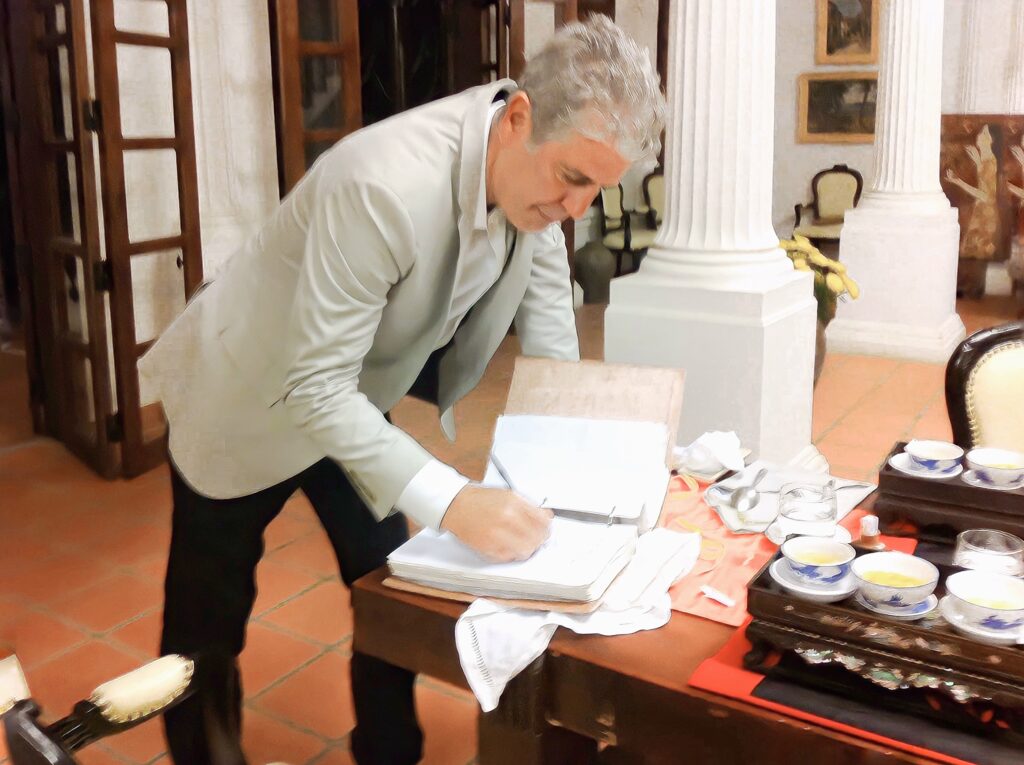
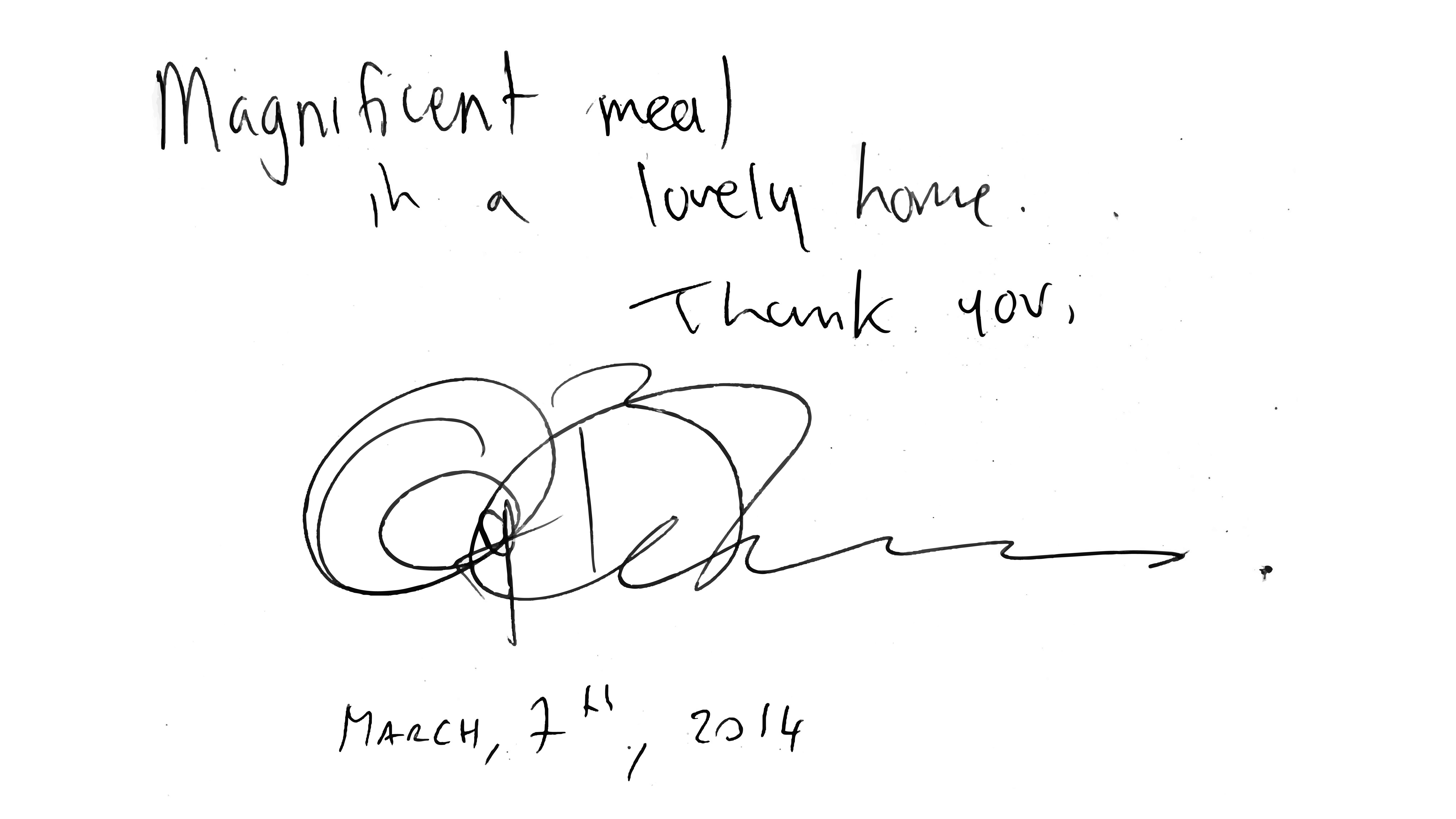
Here, Boi Tran cooks from a repertoire of more than one hundred imperial Hue dishes. That fact alone might invite spectacle, but what defines her table is not abundance for its own sake. As Bourdain notes, imperial Hue cuisine was historically marked by variety, delicacy and presentation. Small dishes. Nuanced flavours. Precision rather than excess. Boi Tran’s work in the kitchen belongs to that inheritance, but it is not antiquarian. It is alive, measured, and practised with the assurance of someone who understands that tradition is not revived by performance, but sustained by repetition, care and judgement.
When Bourdain asks how much of those imperial roots still persists, Boi Tran answers simply: “Yes, the tradition has stayed, and it will stay forever here to cook all these different things all the time.” The directness of that statement matters. It is not nostalgic. It is declarative. It suggests not a reconstruction of the past, but a continuity that has not been broken.
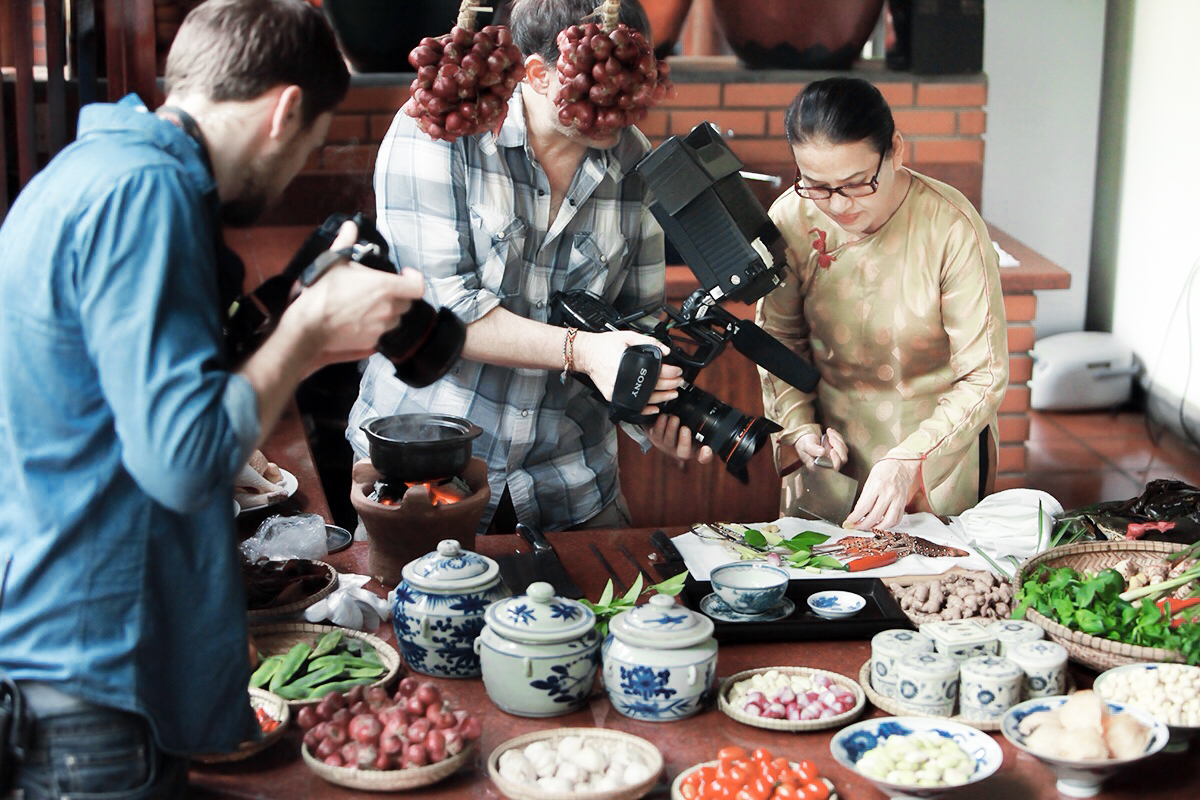
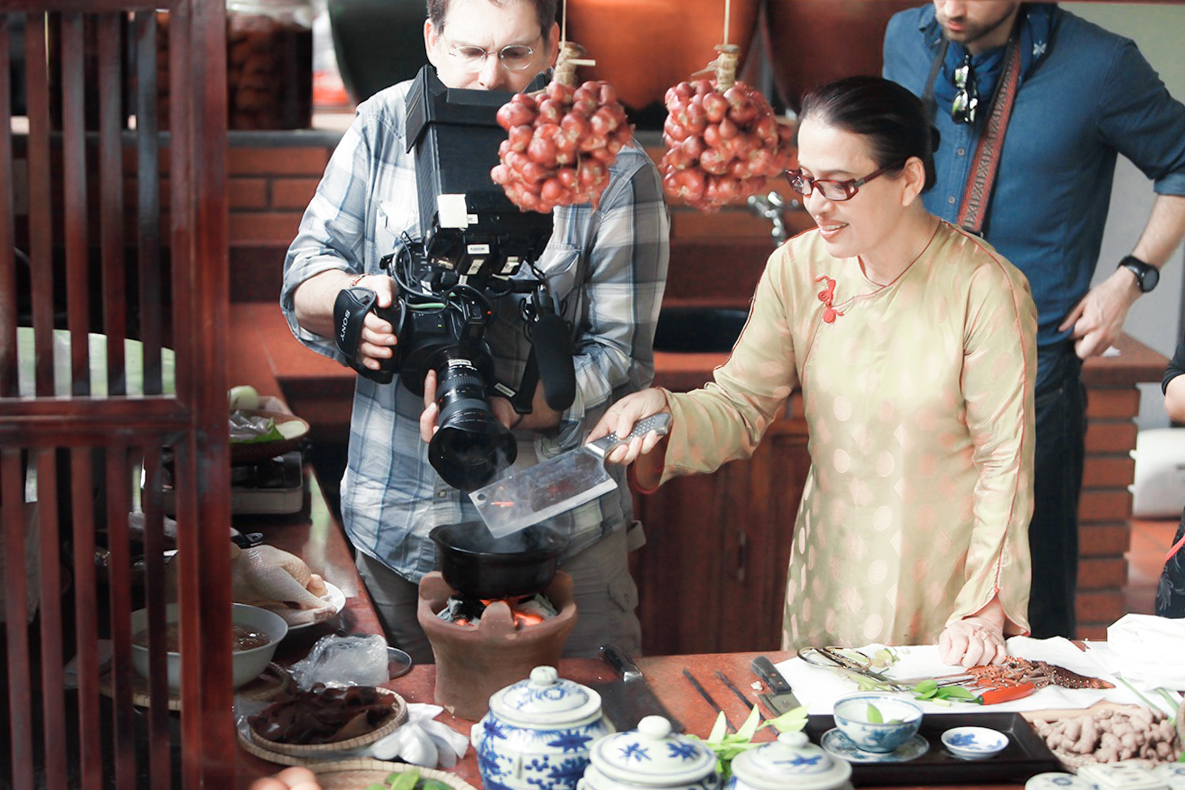
The dishes presented for the programme reveal this clearly. Bird’s Nest Soup, unusually delicate even to Bourdain’s palate, is prepared with chicken stock, crab meat, lotus seeds, and crab roe gently simmered into the broth. Gỏi Huế, a dish now seldom made because of its complexity, requires an exacting sequence of preparation, fish stock, herbs, banana flower, rice noodles, prawns, assembled only at the last moment. Lobster with five spices is explained through the balance of Yin and Yang, the coolness of the shellfish offset by the heat of ginger, lemongrass, chilli and onion. In each case, the method resists haste. In each case, flavour is inseparable from structure.
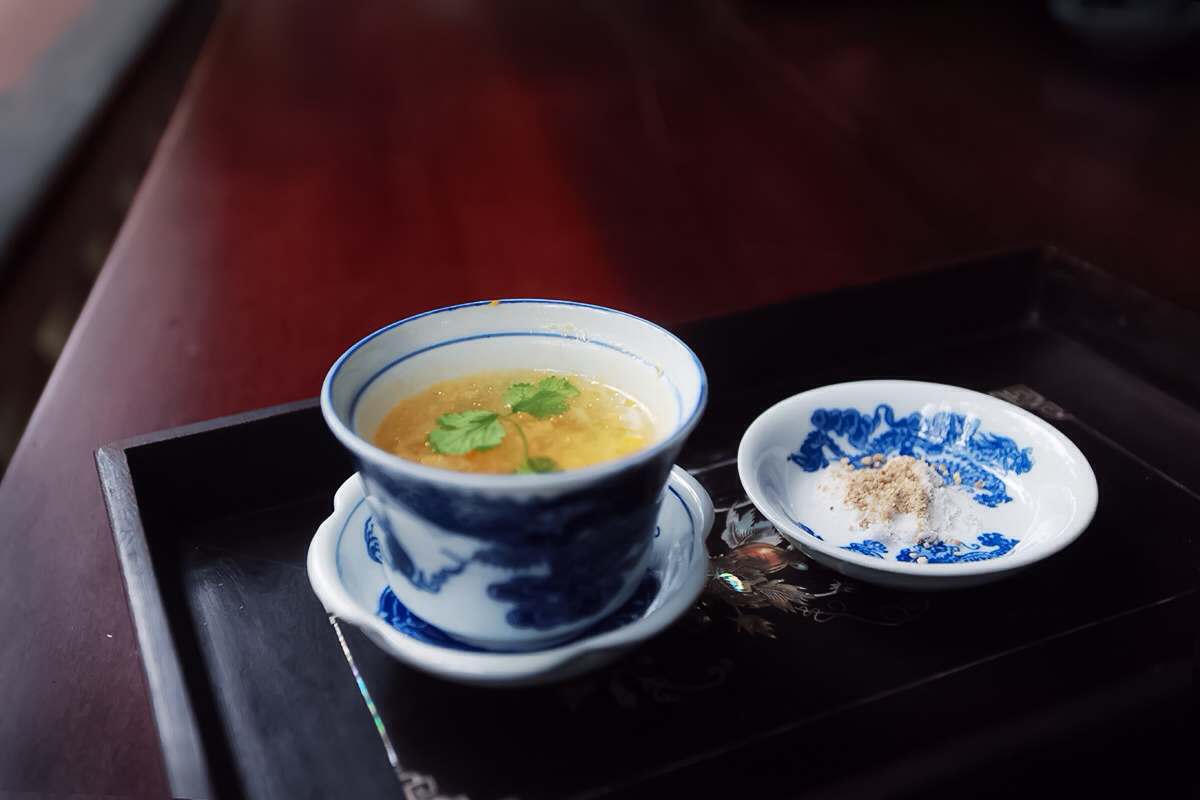
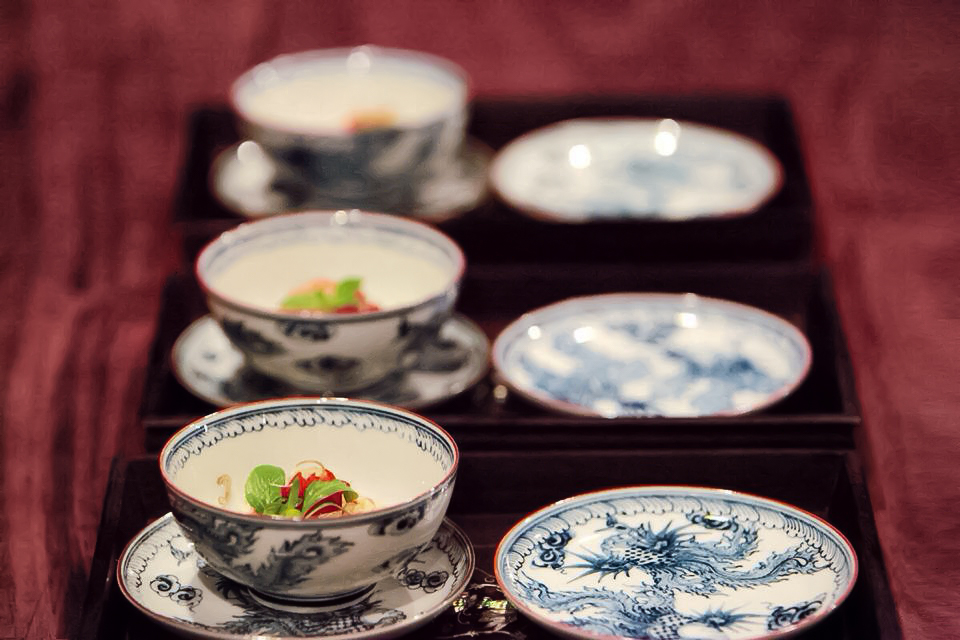
“The special thing about Hue cuisine is that we use very few spices,” Boi Tran says. “The ingredients are so fresh and good, they require very little seasoning.” This is perhaps one of the clearest statements of her philosophy. Nothing is overworked. Nothing is forced into intensity. The role of the cook is not to dominate the ingredient, but to understand its natural sufficiency.
That same restraint appears in her painting.
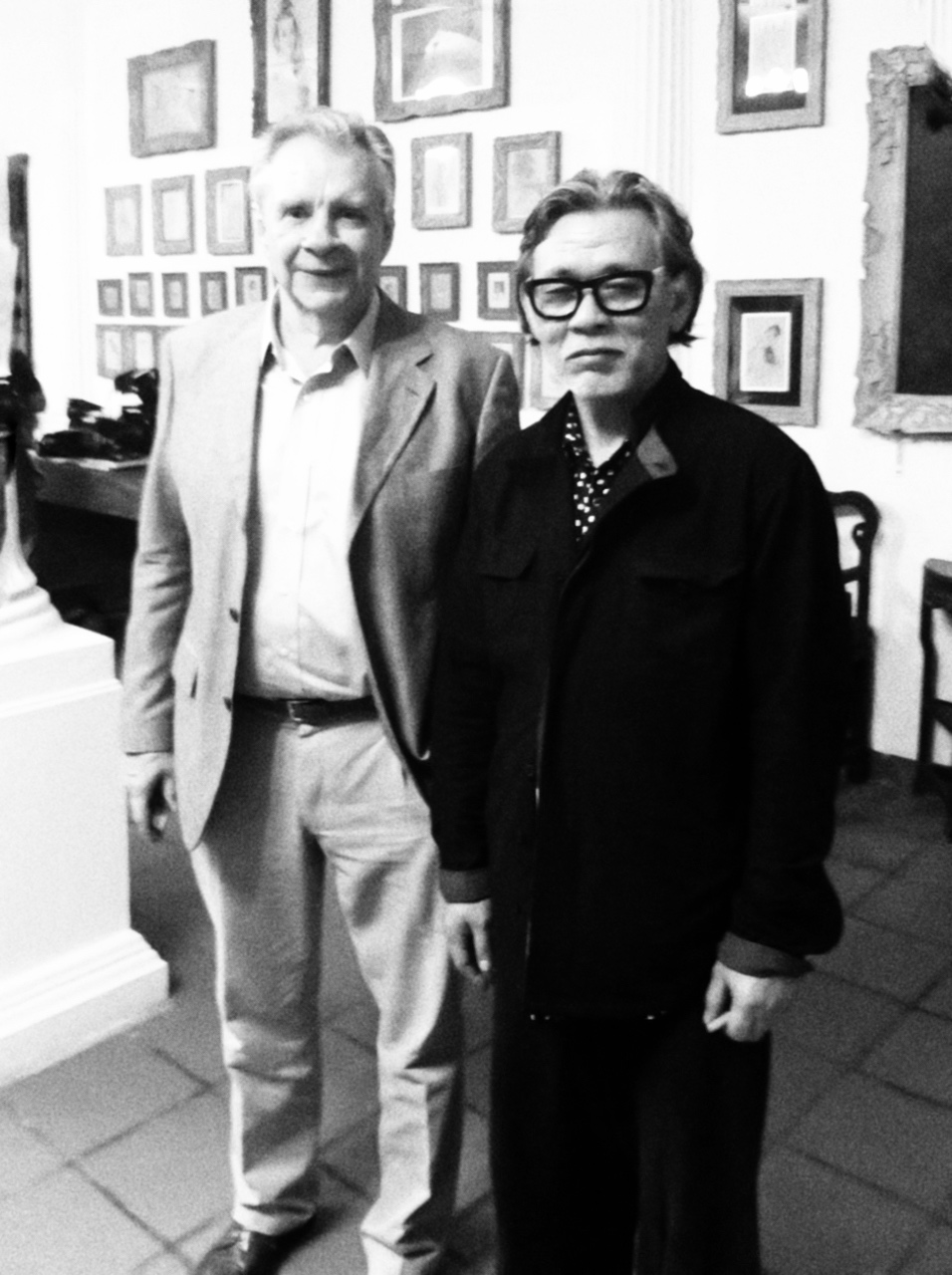
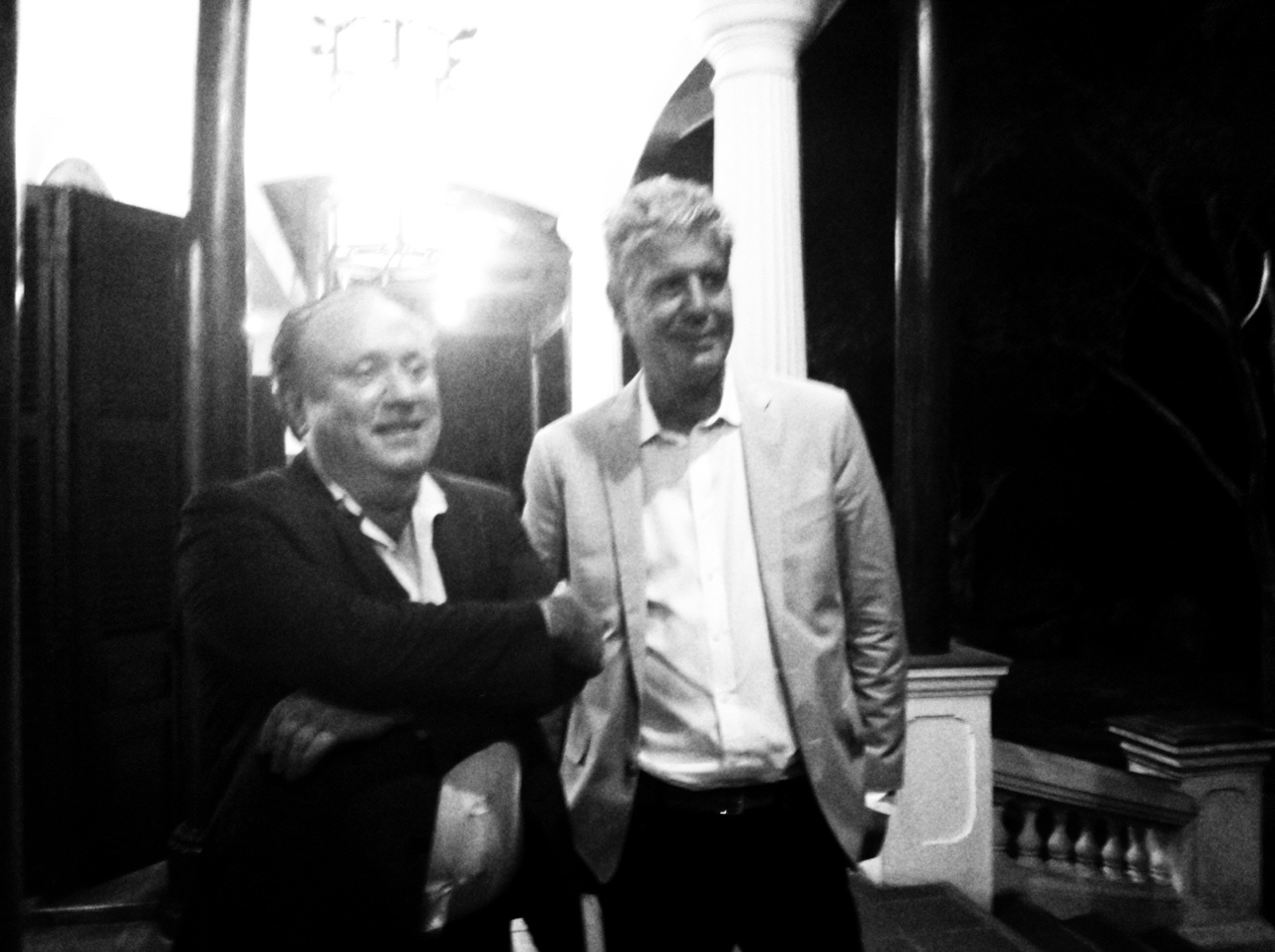
The episode repeatedly moves between table and canvas, between dishes and images, and it becomes clear that these are not parallel practices but related ones. Bourdain sees before dinner the large oblong gallery at the front of her compound, where her paintings of enigmatic women and landscapes unfold in daylight. Later, Jean-François Hubert, reflecting on Hue itself, speaks of its “wonderful architecture and very quiet people,” adding that if one stays in Hue for some days, “you feel quiet, you take your time.” It is hard not to hear in this observation something that applies equally to Boi Tran’s work, whether painted or prepared. Nothing announces itself too quickly. Everything asks for time.
And yet, as Bourdain understood, the meal at Boi Tran Garden could never remain untouched by Hue’s deeper history. “Boi Tran spoils all of us with a succession of dishes,” he writes, “but the past, as it often does in a place like this, intrudes.” That intrusion is not dramatic. It is simply present. The conversation turns, inevitably, toward 1968, toward the war, toward what the city remembers and cannot forget. Nguyen Qui Duc speaks of visiting his grandfather’s house and feeling the darkness of that history beneath the sidewalks, where so many had been buried. Jean-François Hubert says quietly, “Smiling, but of course, they remember everything.”
This doubleness, grace and grief, refinement and memory, is central to the meaning of Boi Tran Garden.
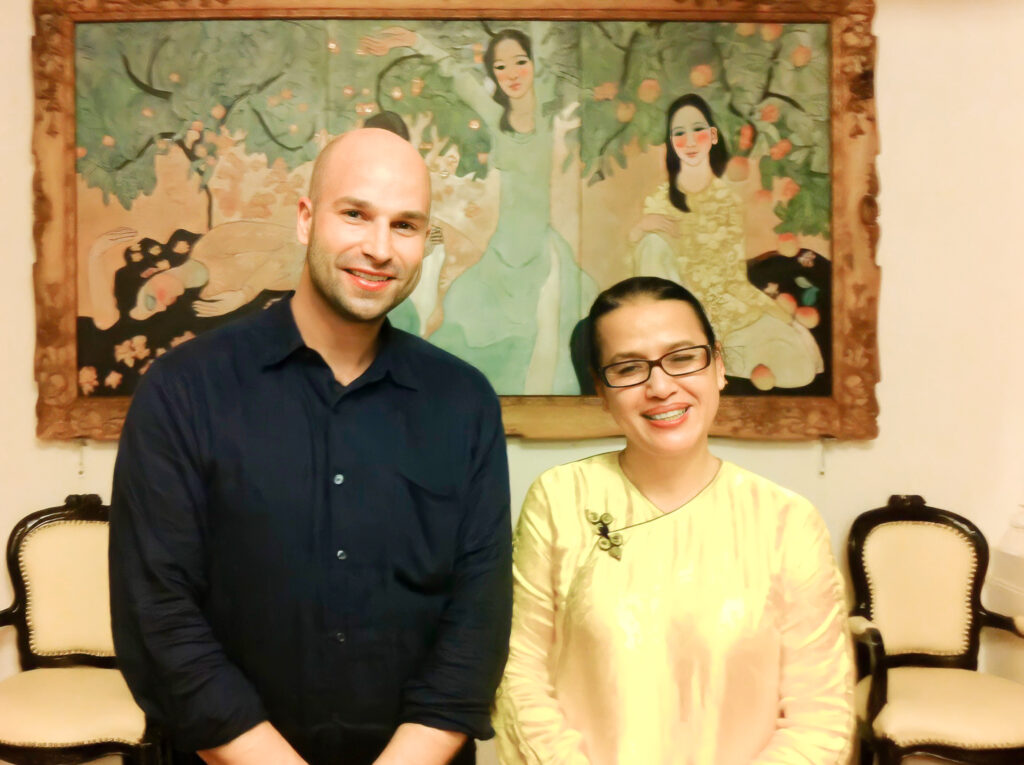
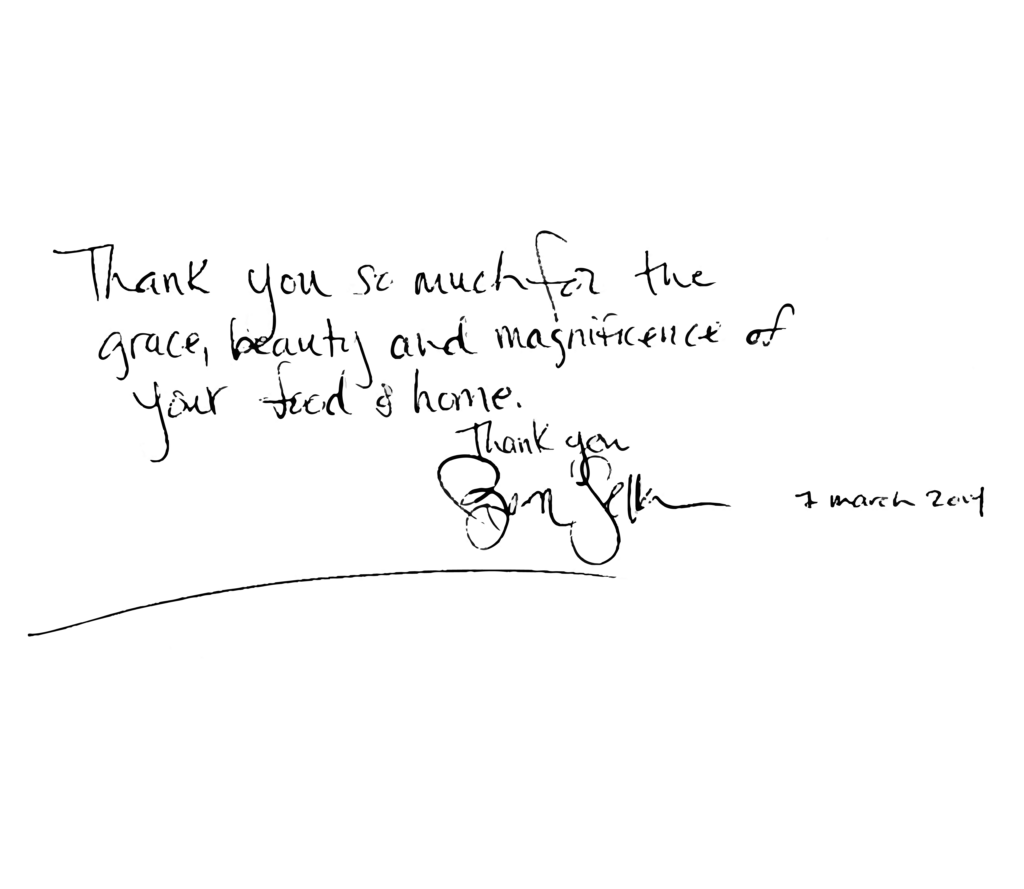
The strongest testimony to this may come not from the broadcast itself, but from Ben Selkow of the Parts Unknown production team, who returned to the garden and experienced something beyond filming. He recalls “the finest iced coffee set-up” he had ever seen, its perfection and detail unexpectedly moving. Yet the true weight of the place came later, before the shrine of Boi Tran’s son. There, he felt “both the sadness of his early departure, but also the strength of his presence.” What moved him most was not only the shrine, but Boi Tran herself, her “selflessness, grace, warmth, and infinite love,” and the instinctive tenderness with which she comforted another grieving person while carrying her own loss.
This, perhaps more than anything, explains the singularity of Boi Tran.

"It's such an honour to have an actual artefact from the artist who touched me so deeply while I was there. Your grace and hospitality were so appreciated for the television scene we filmed. I know Tony and the whole were very, very moved.
When we returned one of the following days, that's when I was able to really feel the weight and the love. It started with the simple gesture of bringing out the finest iced coffee set-up, I've seen ever (ask Ha - I drank a lot of iced coffee in Hue). Something about the perfection and detail of it was moving (maybe it was close to the end of the trip). But then when we moved inside and spent time at your son's shrine - it started catching up to me. When Ha suggested we light some incense for your son, I really took pause and really felt both the sadness of his early departure, but also the strength of his presence. We talked so much about wandering spirits while in Hue, your son is not one of them - he is so well looked after. He has a home and love in his afterlife, next life, and spiritual life. Your maternal strength and personal resilience filled the room. I was warmed by that feeling, but the height of the moment was later. You, Ha and I were talking - soon, Ha and I was crying talking about your loss. But your instinct, knowing something so personal was touching Ha, was to pull her into your embrace and comfort her. She needed it. And only you, maybe more than anyone in the world, could provide that solace and peace for her.
Ha appreciated and I was so touched by your selflessness, grace, warmth, and infinite love as a young parent it is a model for me. Having your painting in my house, and keeping an eye on my young family and I is such a gift. Thank you. I'm so lucky to have the memories of the experience with you and a tangible artefact to keep in our home."
Ben Selkow
She is not simply an artist who cooks, nor merely a custodian of Hue’s imperial repertoire. She is someone in whom hospitality, memory, discipline and beauty have been drawn into a single mode of life. At Boi Tran Garden, cuisine is not detached from art, architecture is not detached from feeling, and memory is not detached from the act of receiving others. Everything belongs to the same moral and aesthetic order.
That is what Anthony Bourdain encountered in Hue. And that is why the visit remains more than a television scene. It stands, instead, as a record of recognition: of a woman, of a city, and of a way of keeping culture alive without separating it from the life that sustains it.