Cao Trong Thiem, A Letter Of 2013, Or The Moment When An Institution Pauses Before A Lived Space
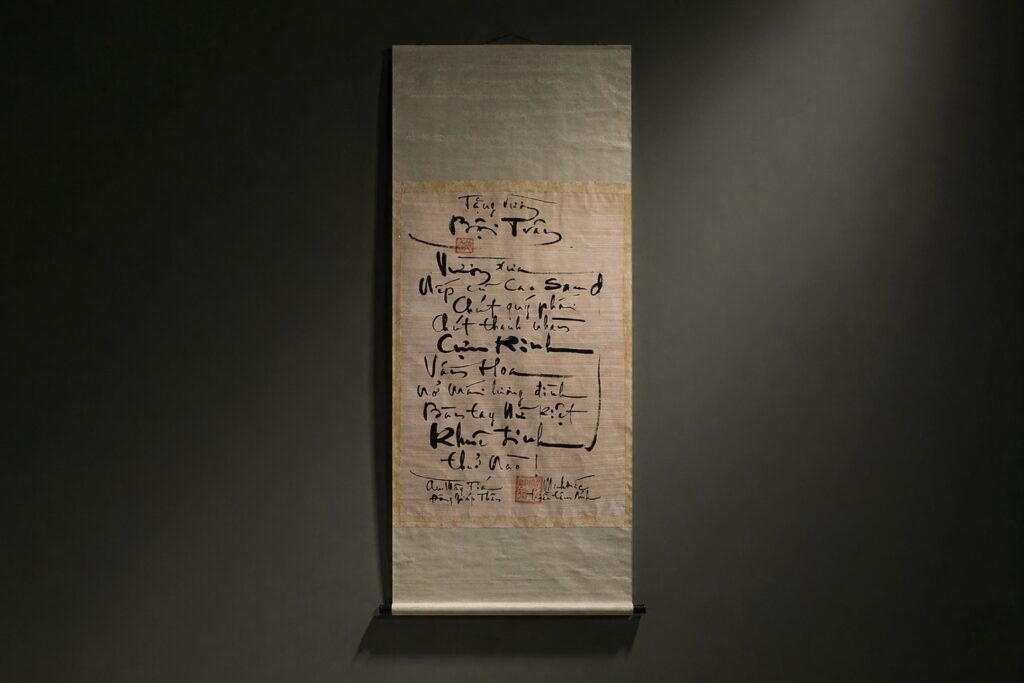
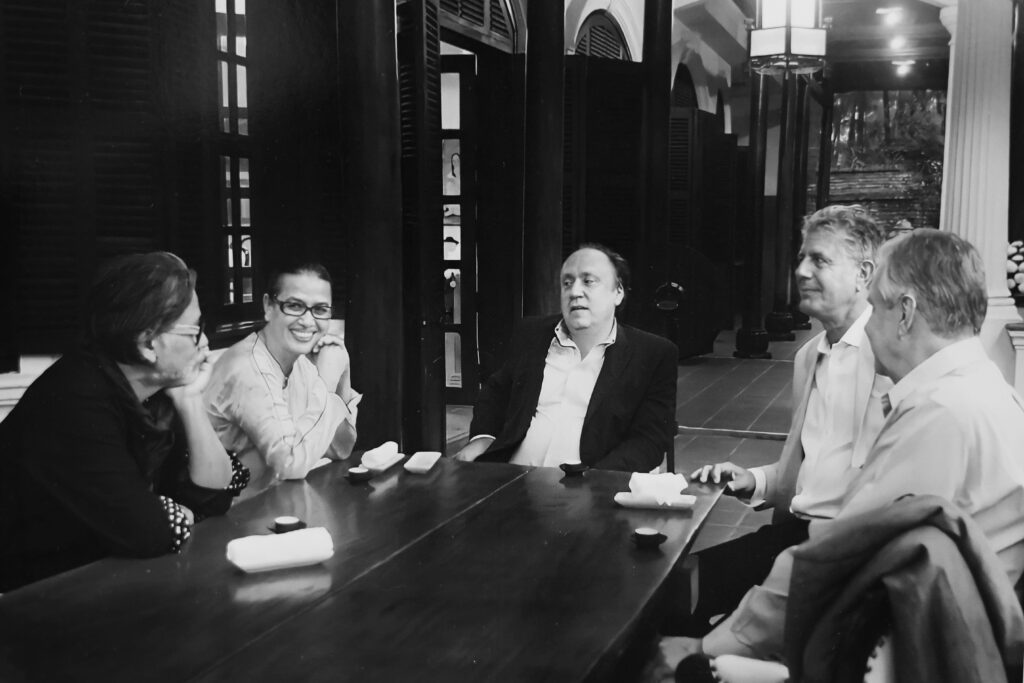
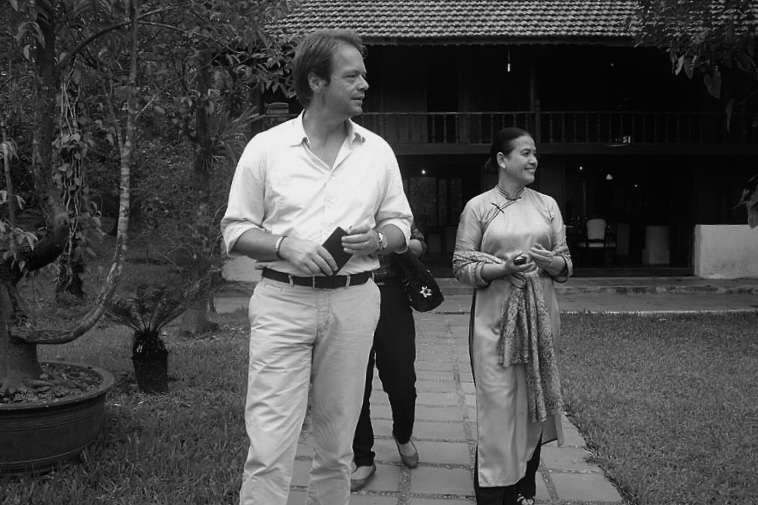
On 14 November 2013 in Hue, a letter was left for Boi Tran, signed by Cao Trong Thiem. He did not come alone. Alongside him were Phan Van Tien, Vi Kien Thanh, and Le Van Suu; figures who, each in their own capacity, embody the institutional structure of Vietnamese art.
Yet what was left behind was not a statement of authority, but a gesture. Not institutional, but human.
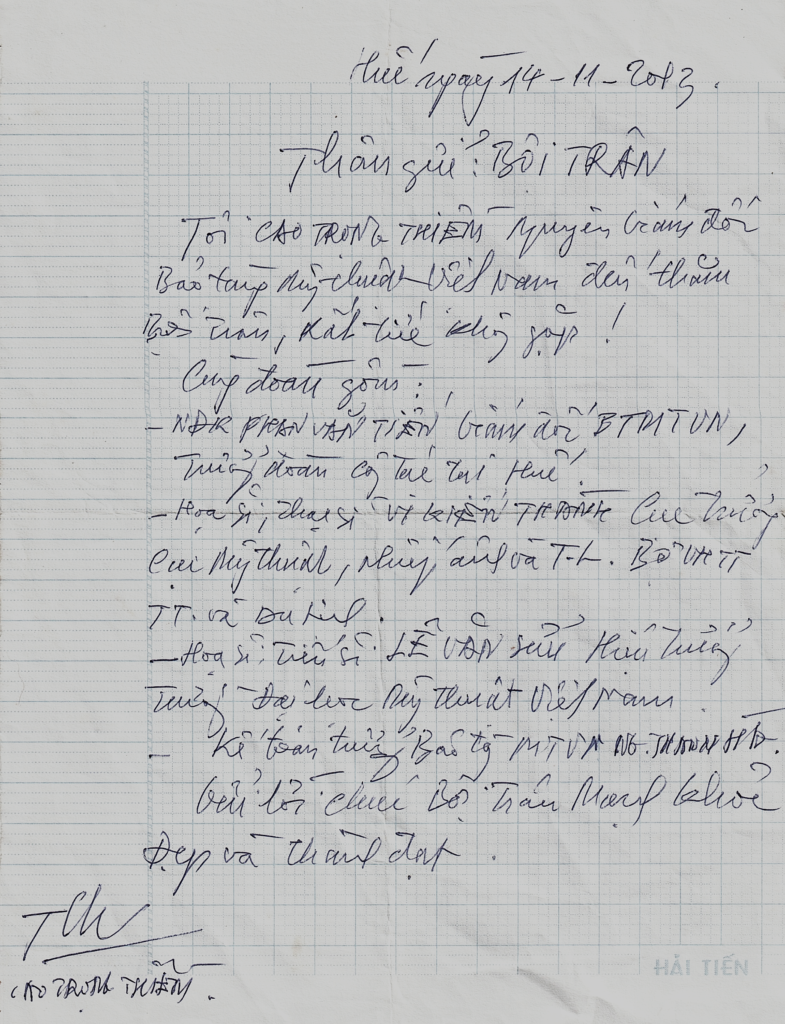
On 14 November 2013, in Hue, a letter was left for Boi Tran. Not a prepared document. But a trace.
The letter bears the signature of Cao Trong Thiem, who once stood at the head of the Vietnam National Fine Arts Museum, an institution that defines, preserves, and formalises the history of art. Yet here, he does not speak as an authority. He does not evaluate. He leaves a line.
He is accompanied by figures representing the highest levels of Vietnam’s art system: a museum director, a state official in charge of fine arts, and a university rector. A complete structure. A system capable of assigning value.
That system arrives in Hue. And pauses before a space that does not belong to it.
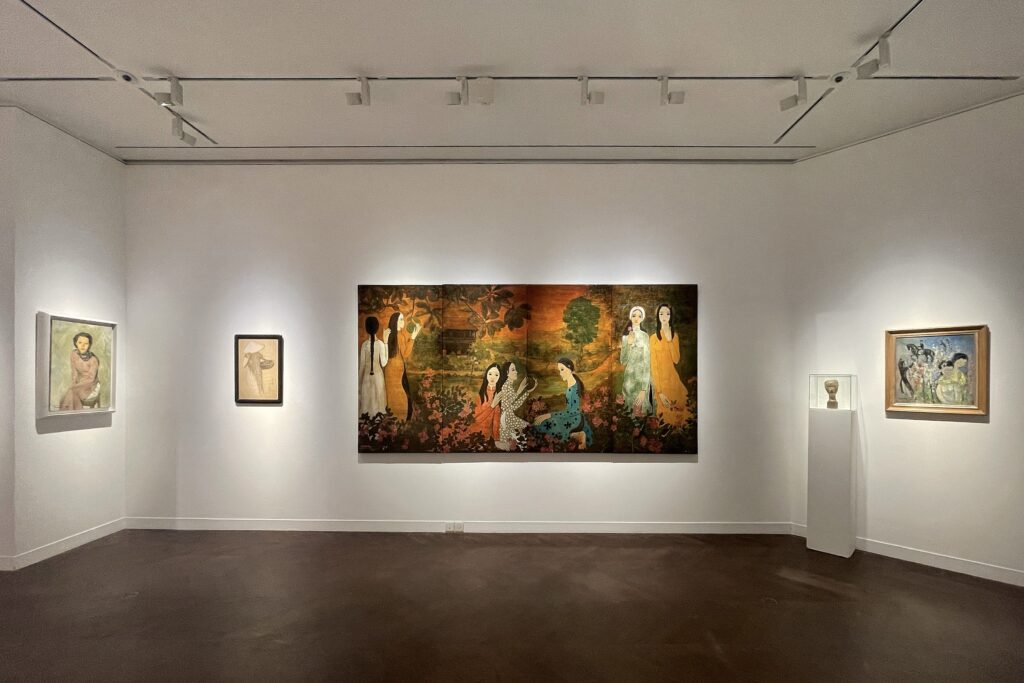
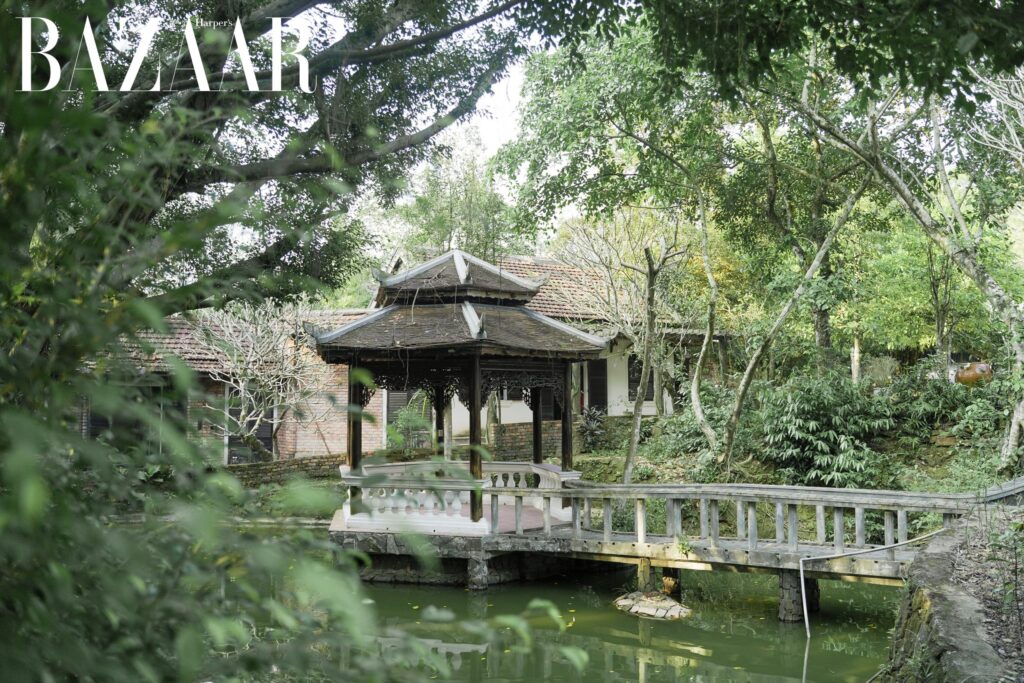
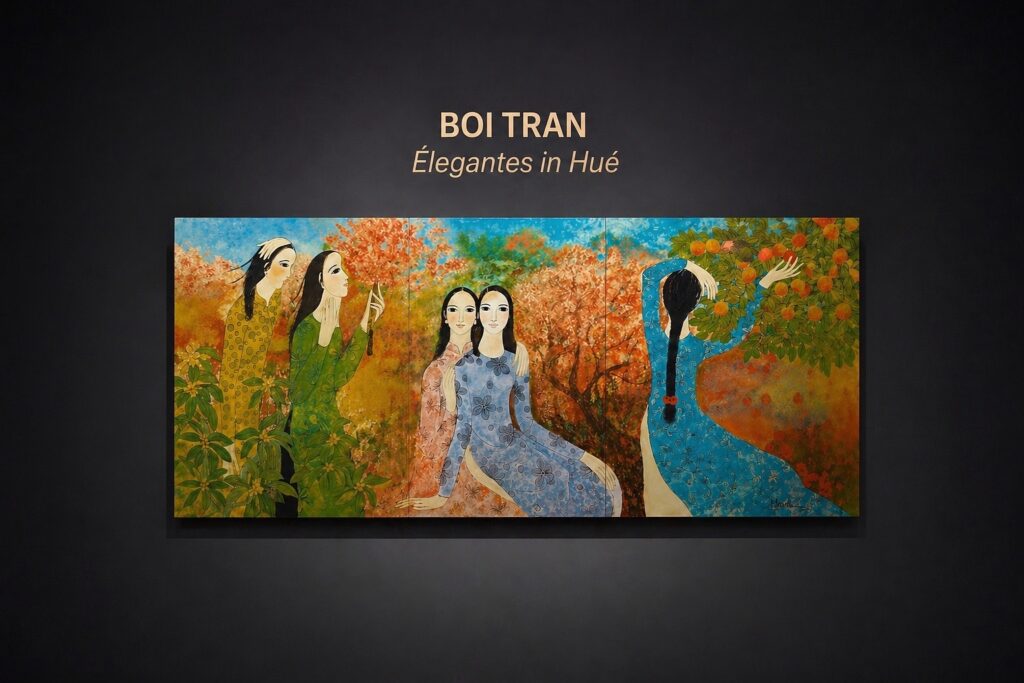
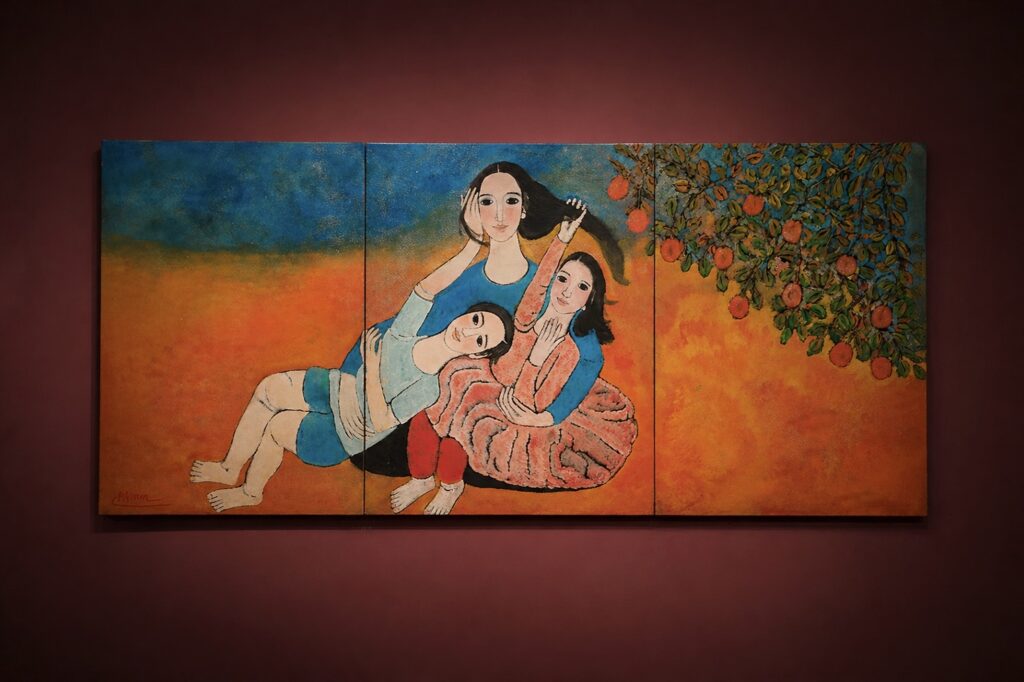
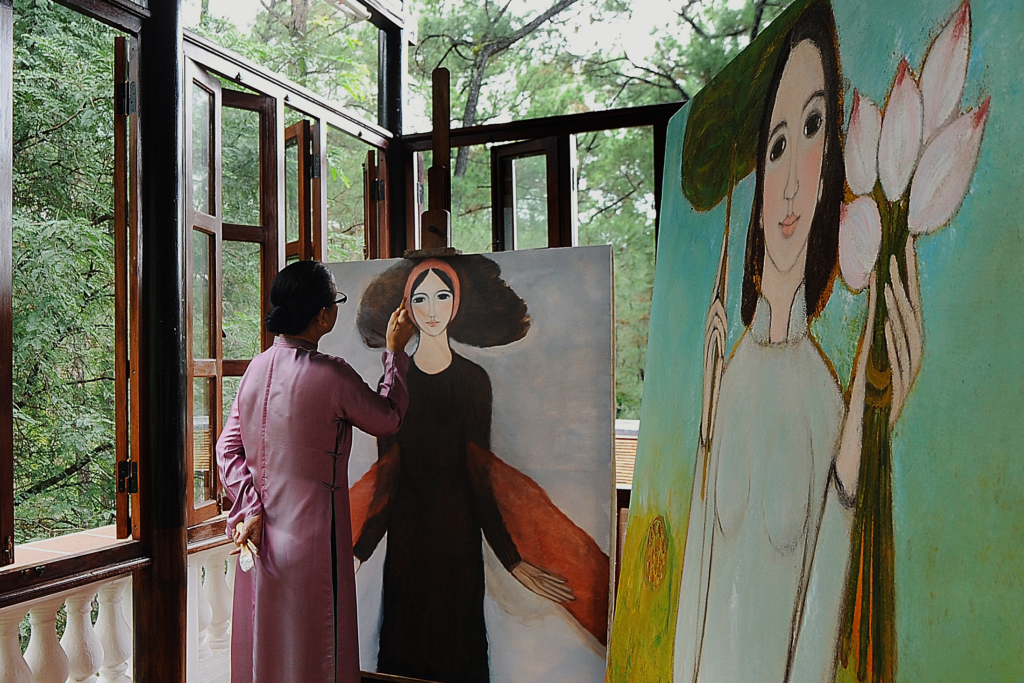
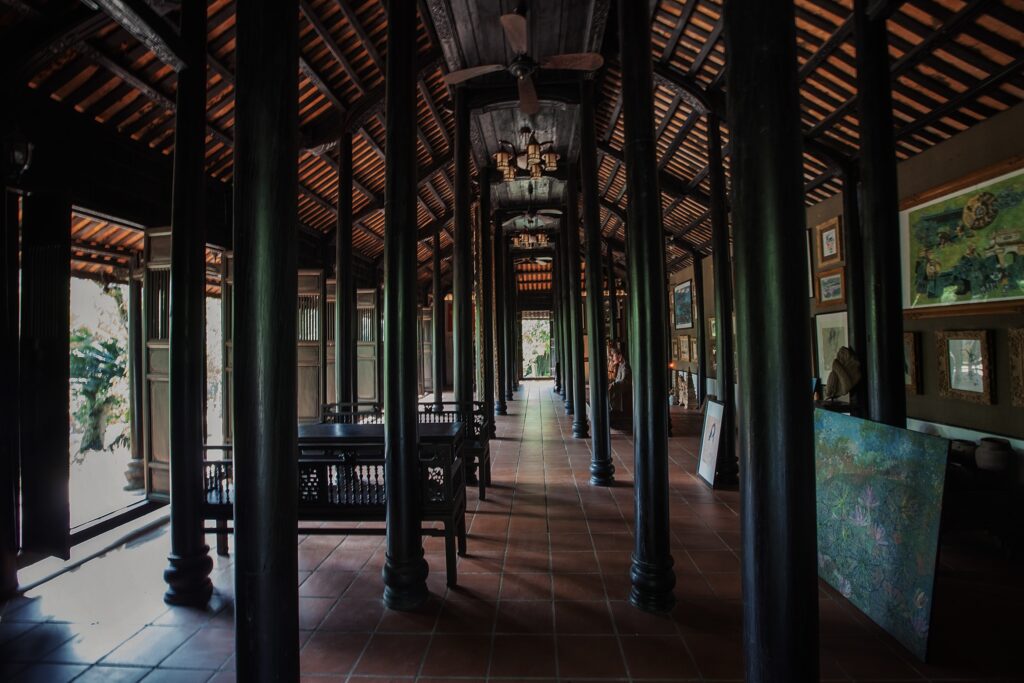
Boi Tran did not construct an institution. She created an environment. Here, works are not classified by movement. They are not defined by theory. They exist within space, within architecture, within life.
What occurs in the letter does not reside in its content.
But in a shift of position.
A man who once represented a system does not bring that system into his words. No judgement. No assertion. Only a gesture.
The institution does not disappear. It steps back.
In the words “health, beauty and prosperity”, language no longer belongs to title. It becomes the language of a person standing before a presence that requires no validation.
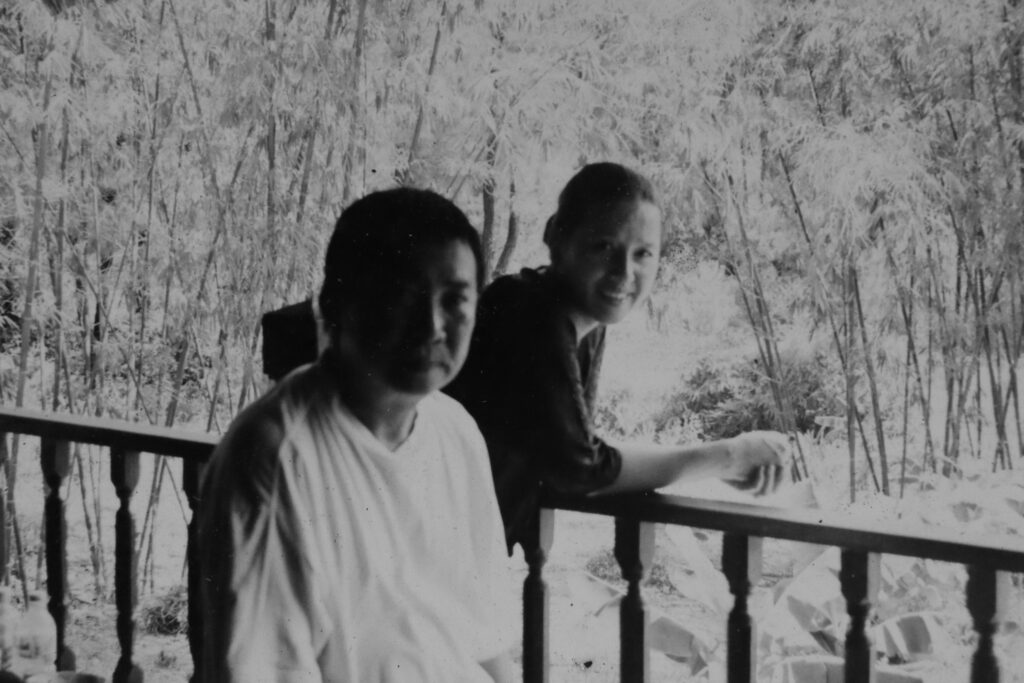
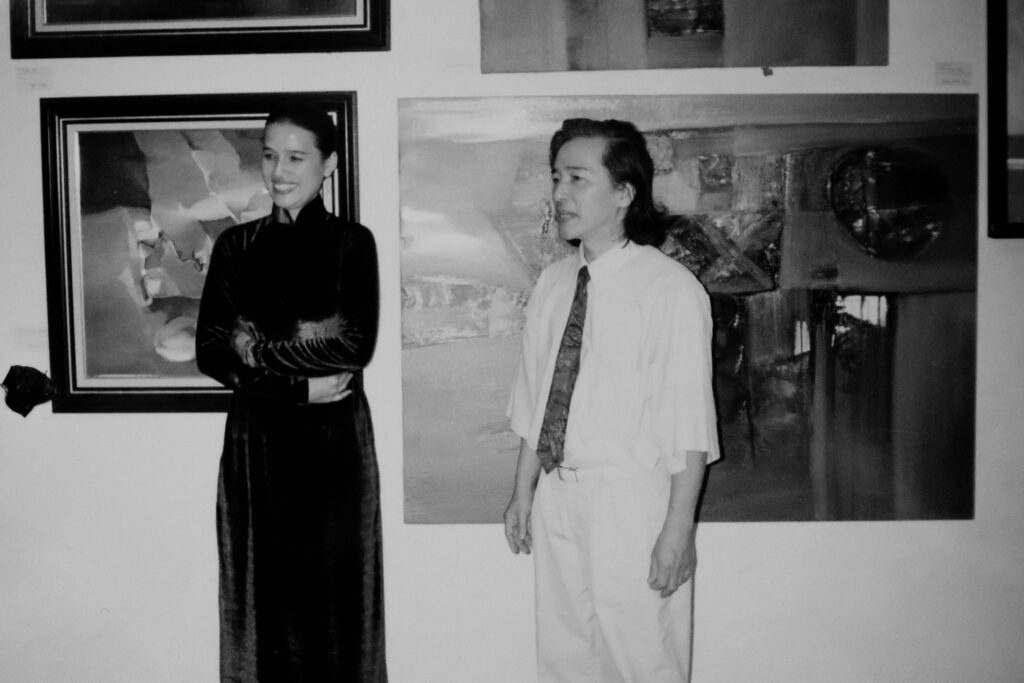
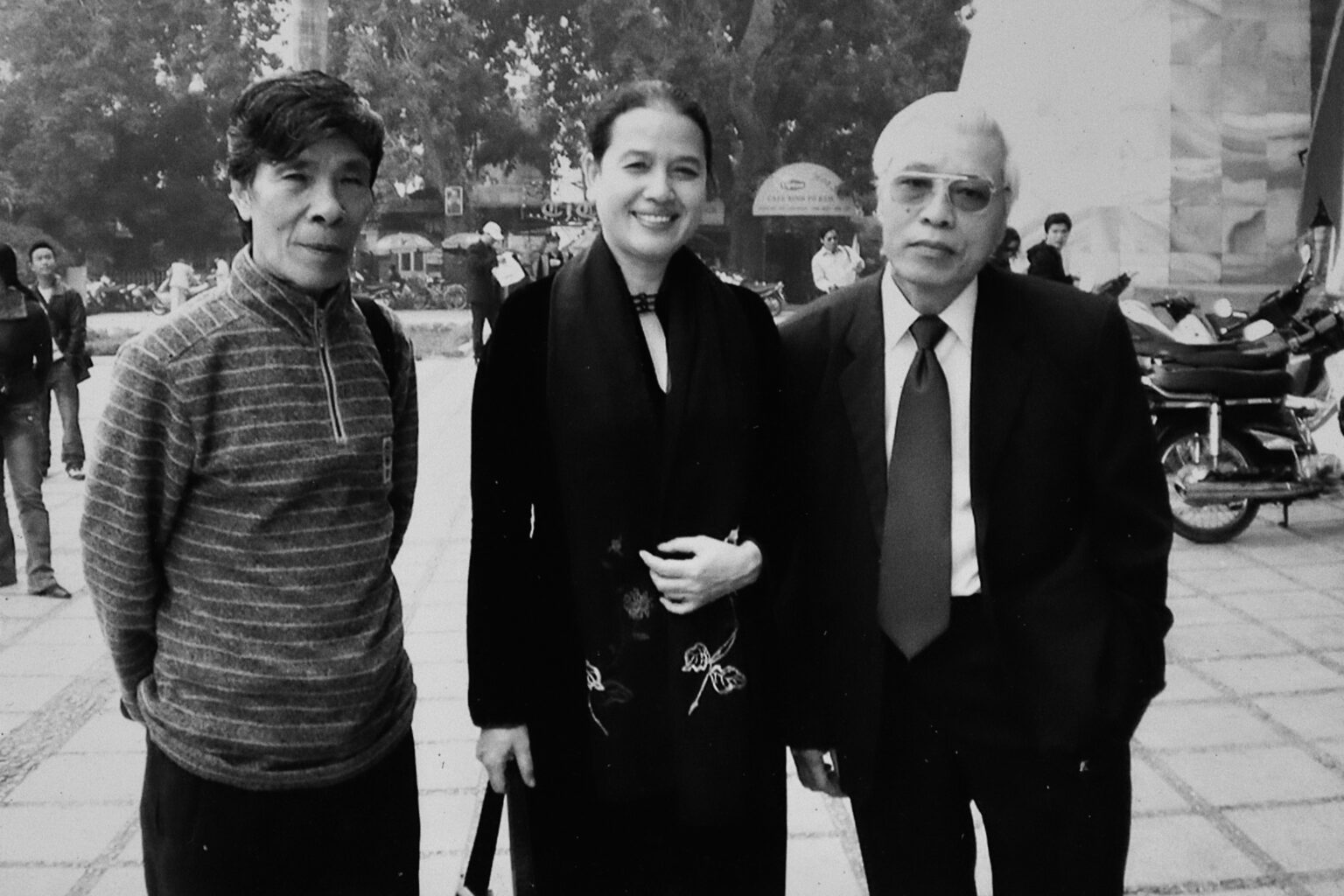
In a photograph taken circa 2000 in Hanoi, where Tran Nguyen Dan, Boi Tran and Cao Trong Thiem stand together, there is no clear hierarchy. No centre. No periphery.
Only individuals sharing the same field of art.
The letter of 2013 is therefore not an institutional statement. It is a moment in which the authority of language pauses, and yields to presence.
Not to confirm value. But because value no longer requires confirmation.
This is not a document of an institution. It is the moment an institution recognises its own limits.