
Boi Tran Garden and the Gift of Ancestral Recognition, A Tribute Remembered
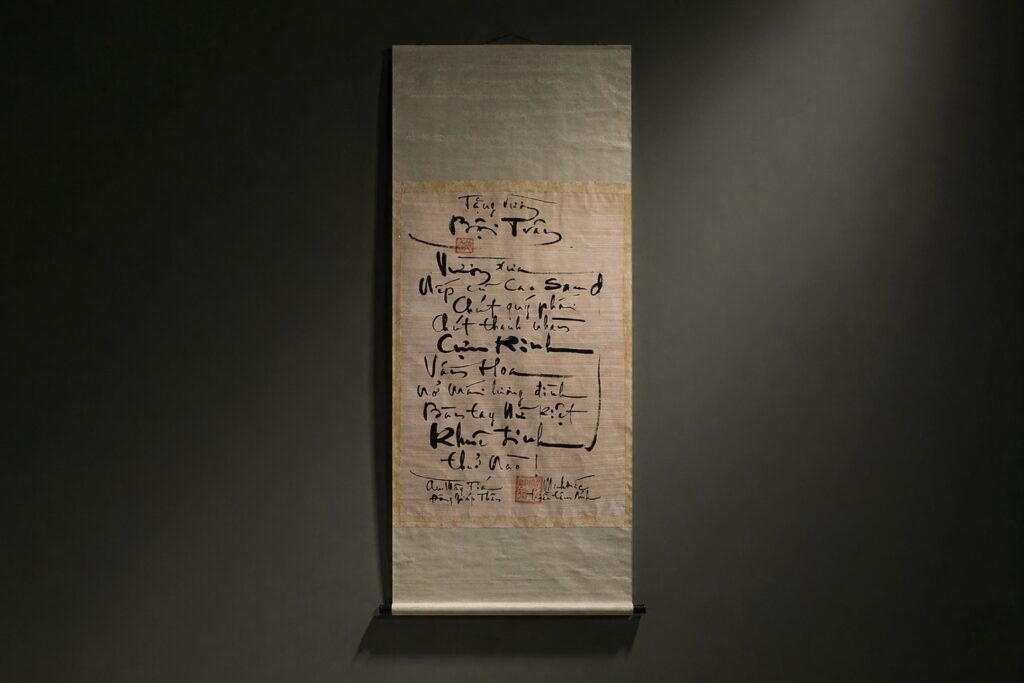
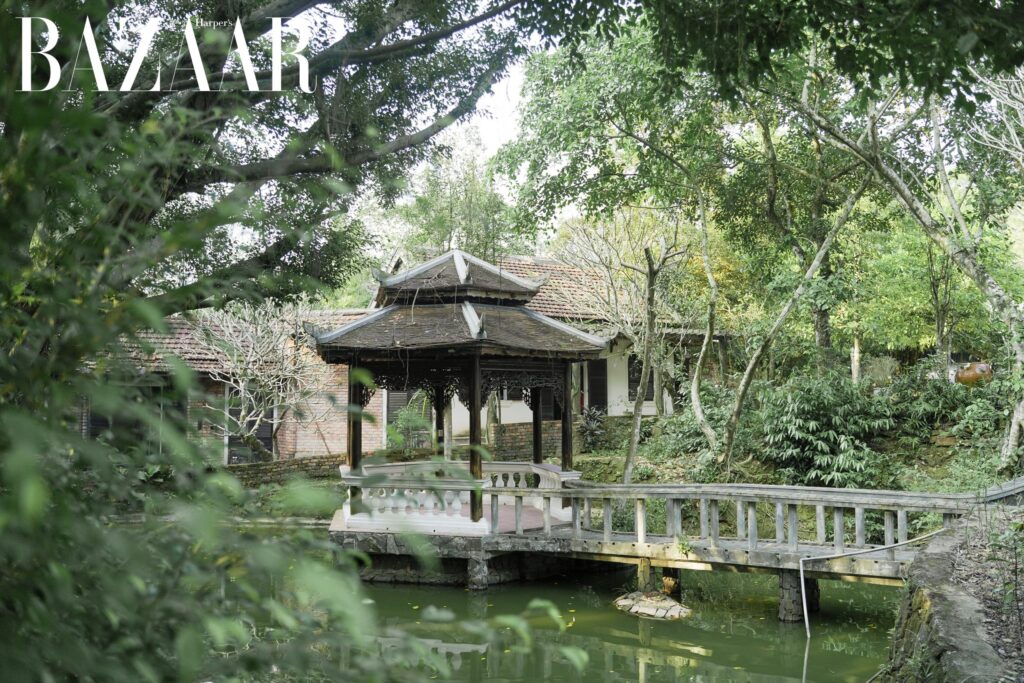
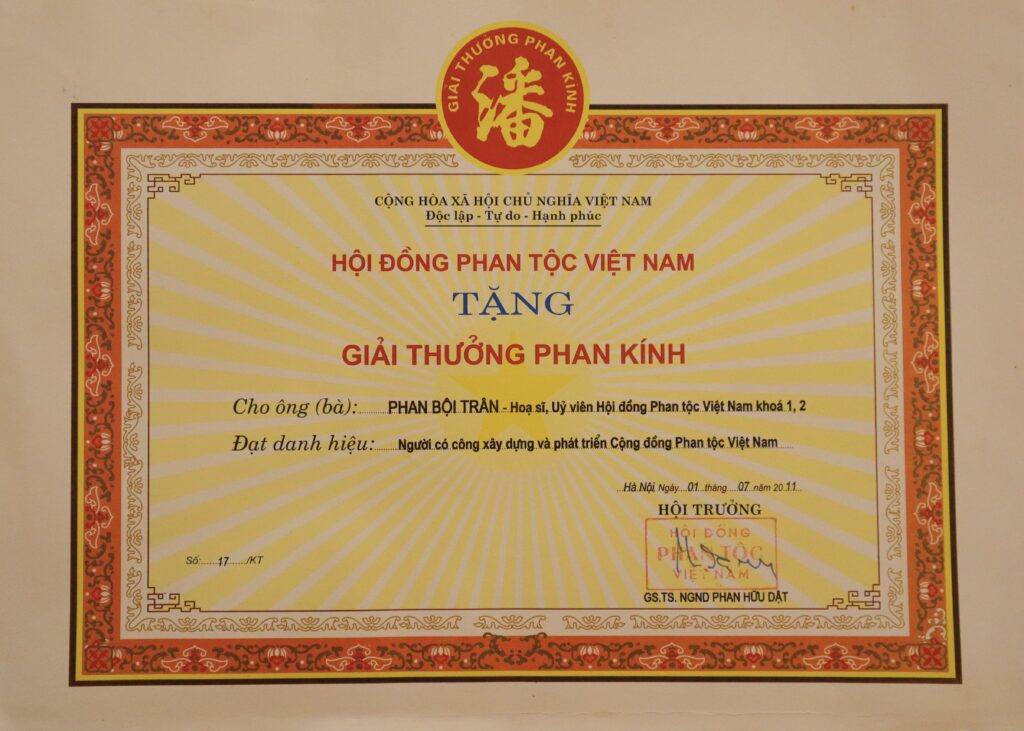
In the quiet heart of Hue, Boi Tran Garden blooms with memory, devotion, and the gentle breath of art. Created by painter Boi Tran as a sanctuary for the soul, it is a place where silence speaks, and beauty lingers in every stone and shadow. In 2011, her heartfelt contributions were honoured with the Phan Kinh Honorary Prize, a tribute from her ancestral family, offered in deep gratitude.
More than a garden, it is a living poem. A return. A bloom that never fades.

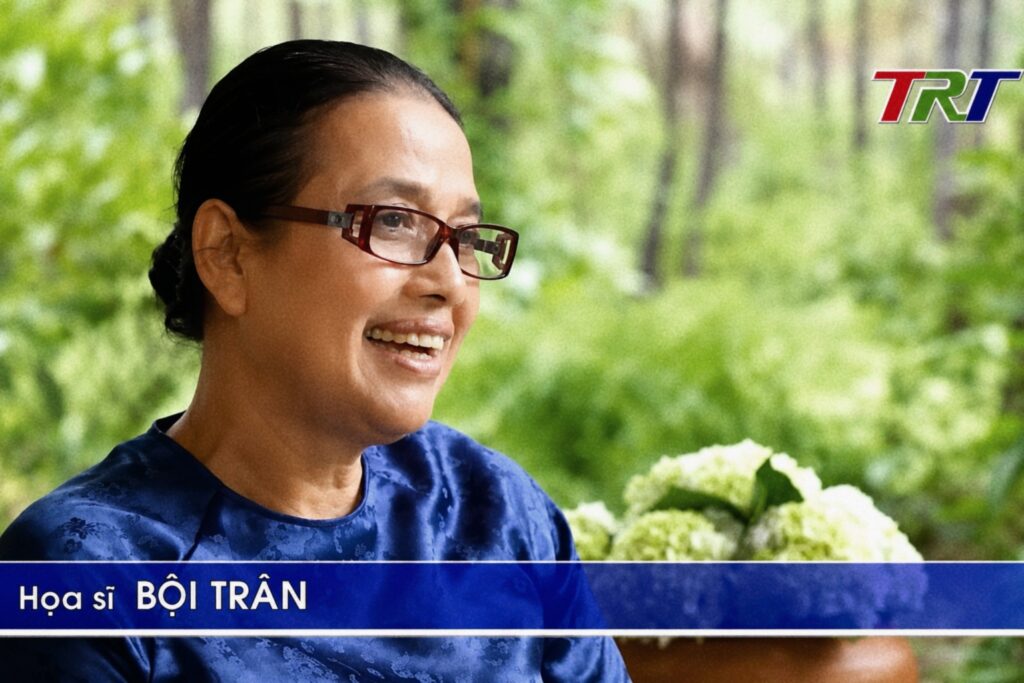
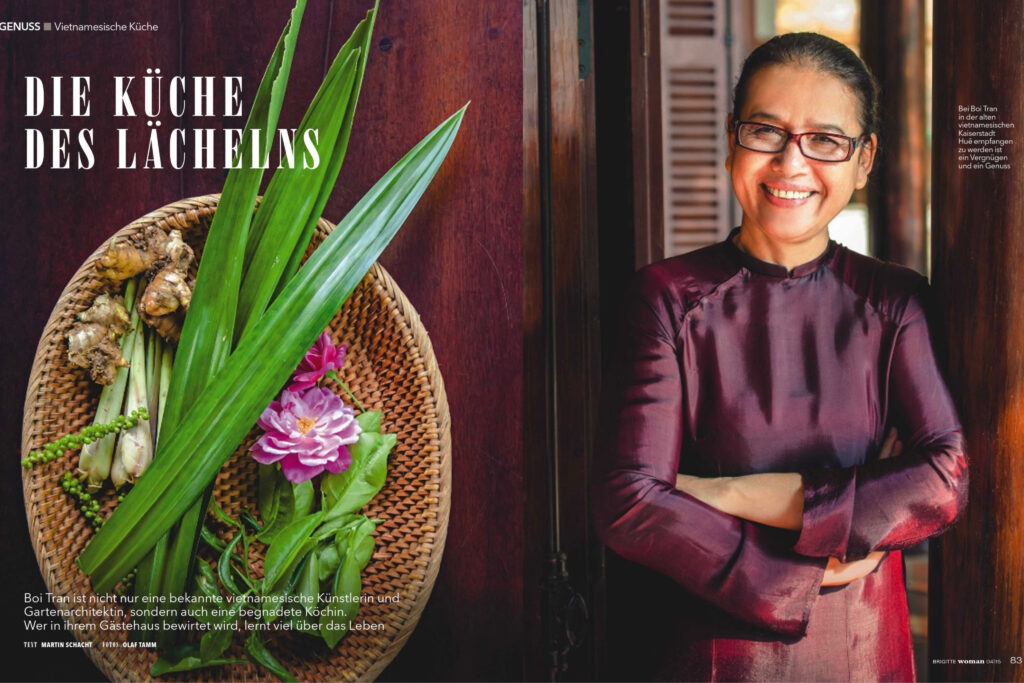
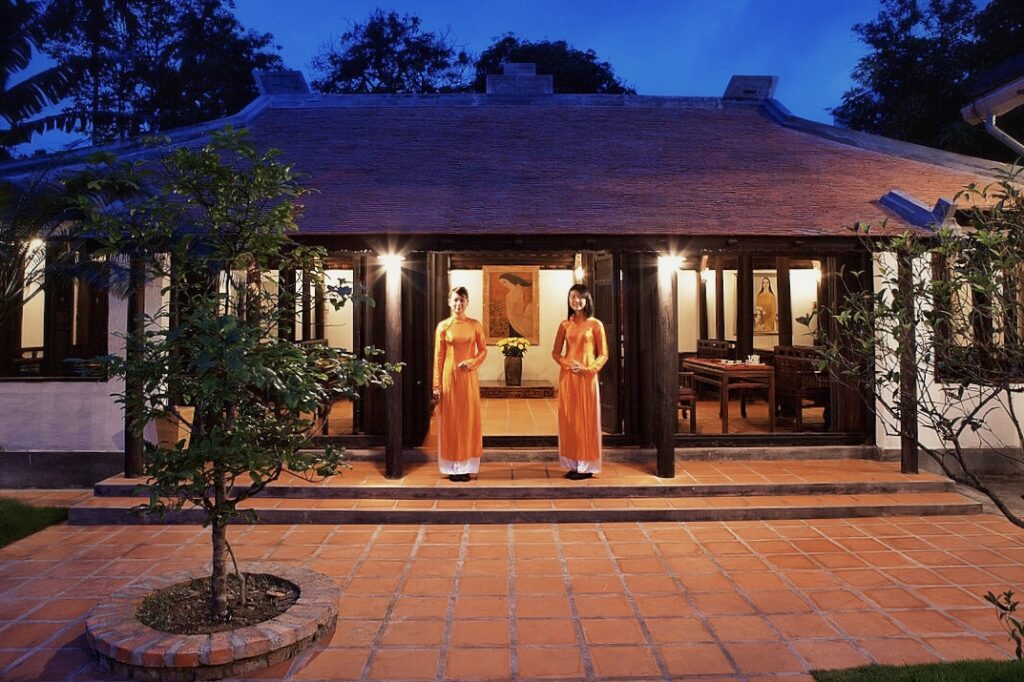
In a quiet fold of Hue, where the Perfume River meanders like a silk ribbon through ancient temples and moss-covered walls, there exists a garden that speaks not just in flowers but in silence, memory, and brushstrokes. This is Boi Tran Garden, the soul-home of painter Boi Tran, a woman whose life’s work has gently but indelibly enriched Vietnamese art and community alike.
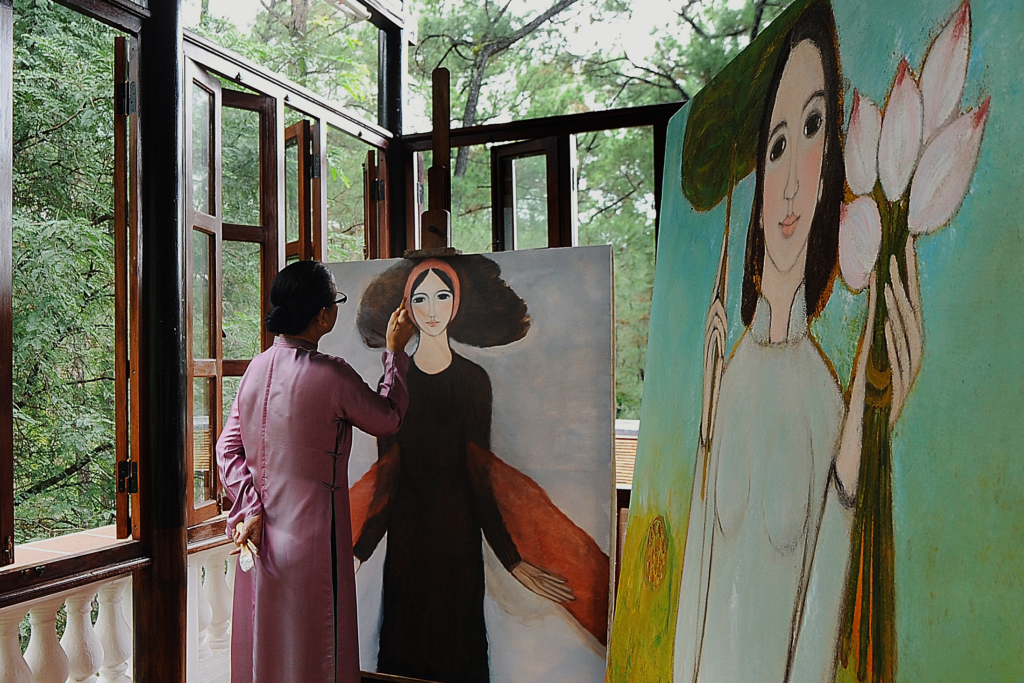
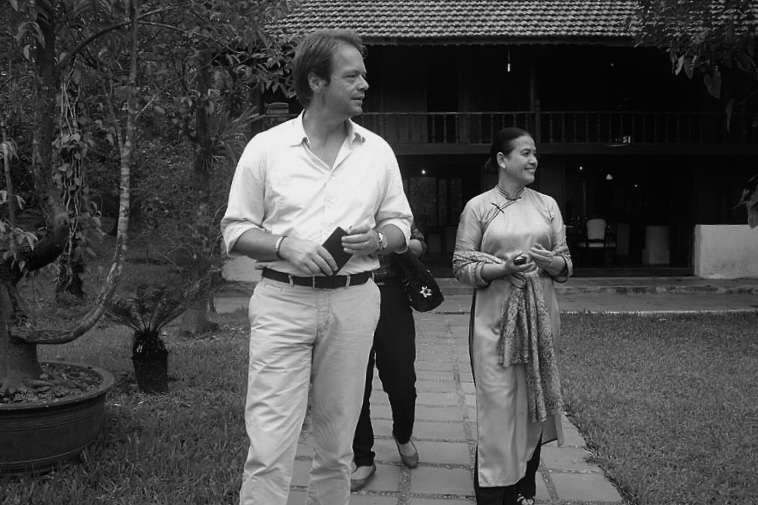
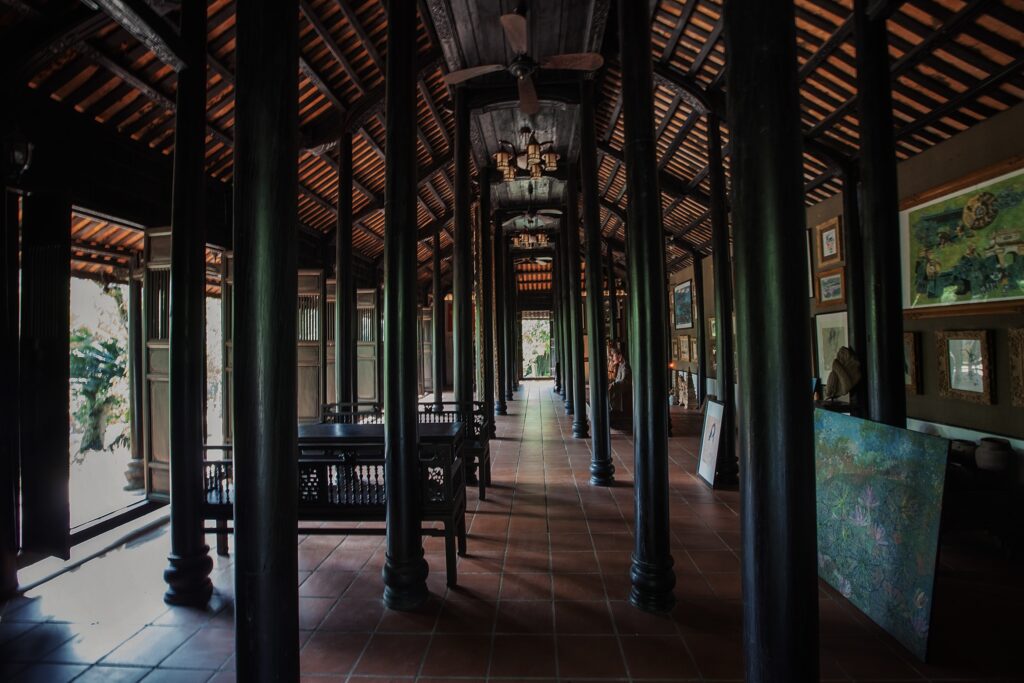
To cross the threshold of Boi Tran Garden is to enter a living poem. Bamboo sways beside ancestral altars. Lotus blossoms drift in thoughtful ponds. Latticed shadows fall across lacquered canvases that still carry the artist’s breath. Yet, the heart of this place is not just its beauty. It is Boi Tran herself, artist, cultural steward, and bearer of a quiet, radiant strength.
A Life Lived in the Language of Art
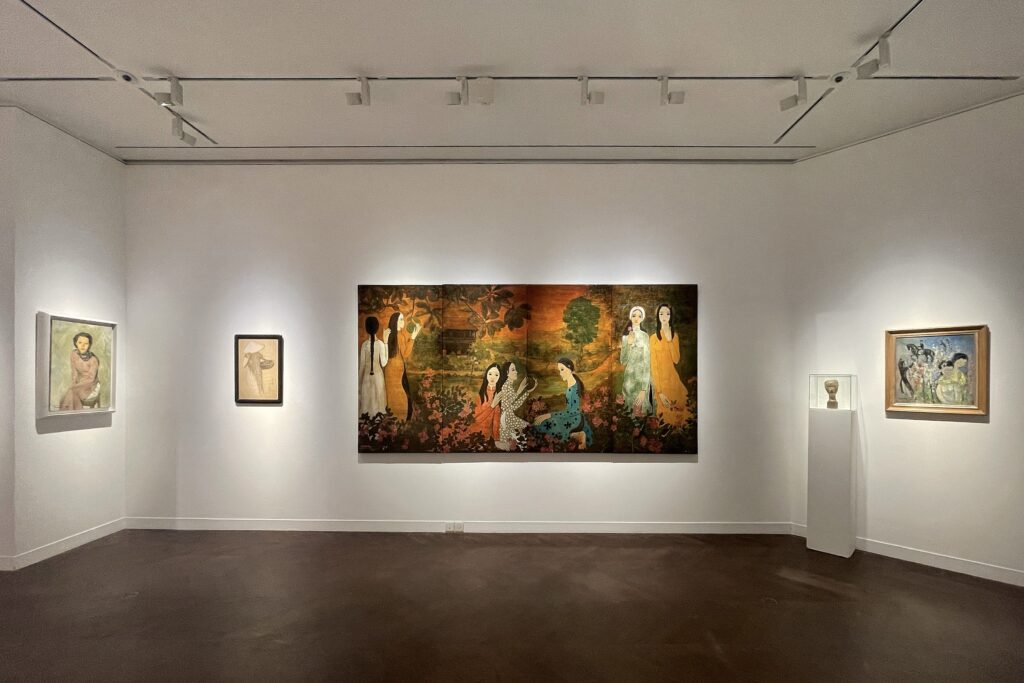
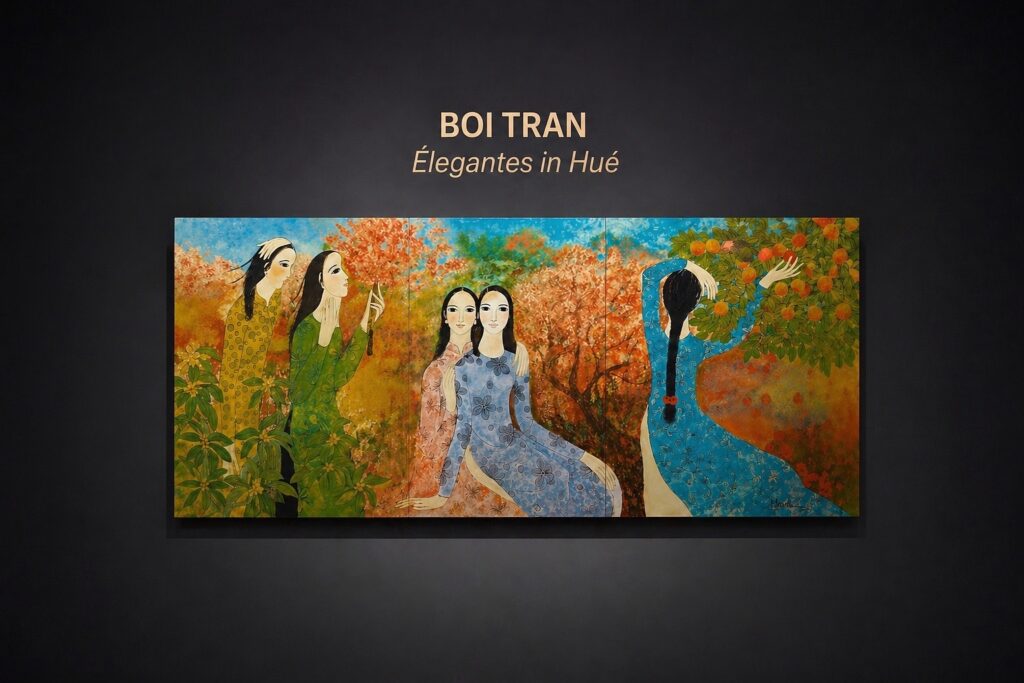
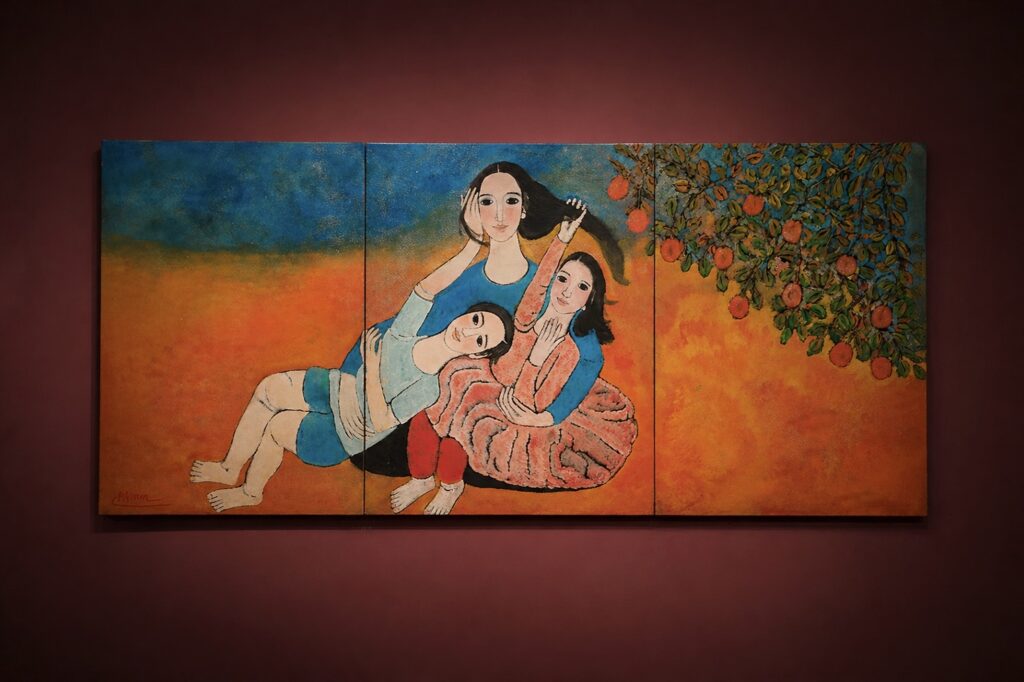
Born with an instinct for form, colour, and feeling, Boi Tran painted not only what she saw, but what she felt and remembered. Her art is known for its gentleness, its spiritual gravity, and its intimate sense of place. And like her paintings, she created the Garden not as a display, but as an offering, a retreat where guests might contemplate, dream, or return to something forgotten within themselves.
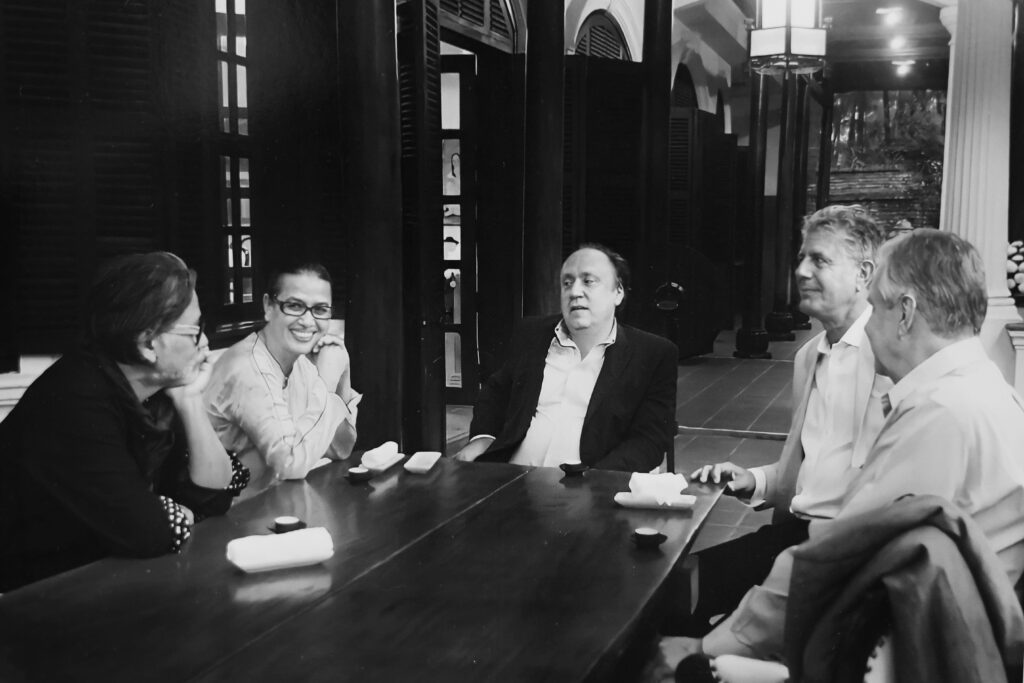
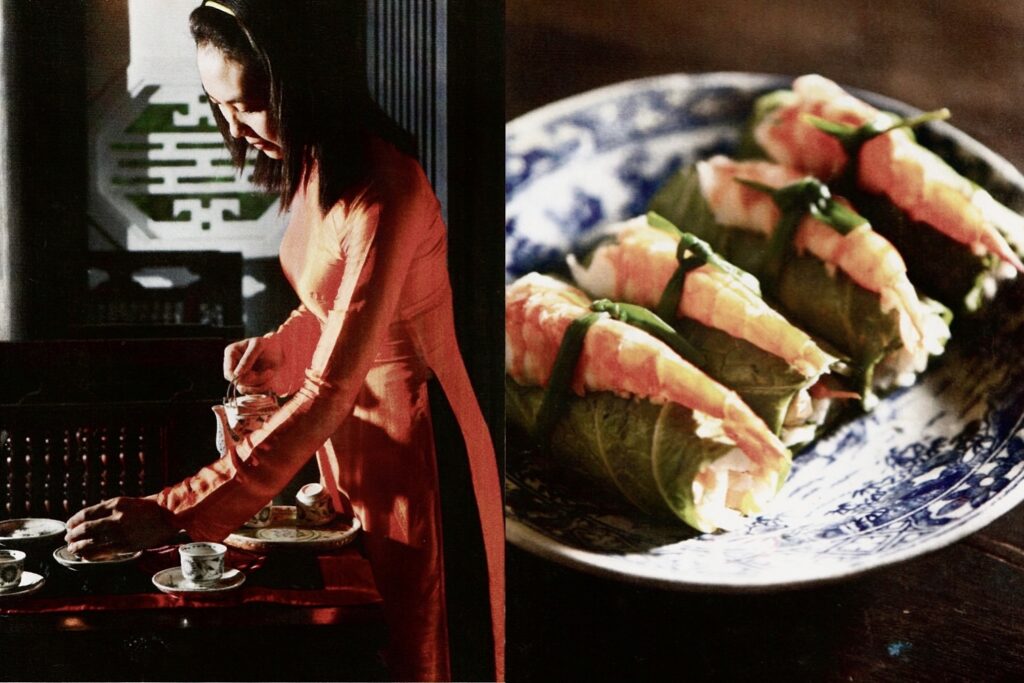
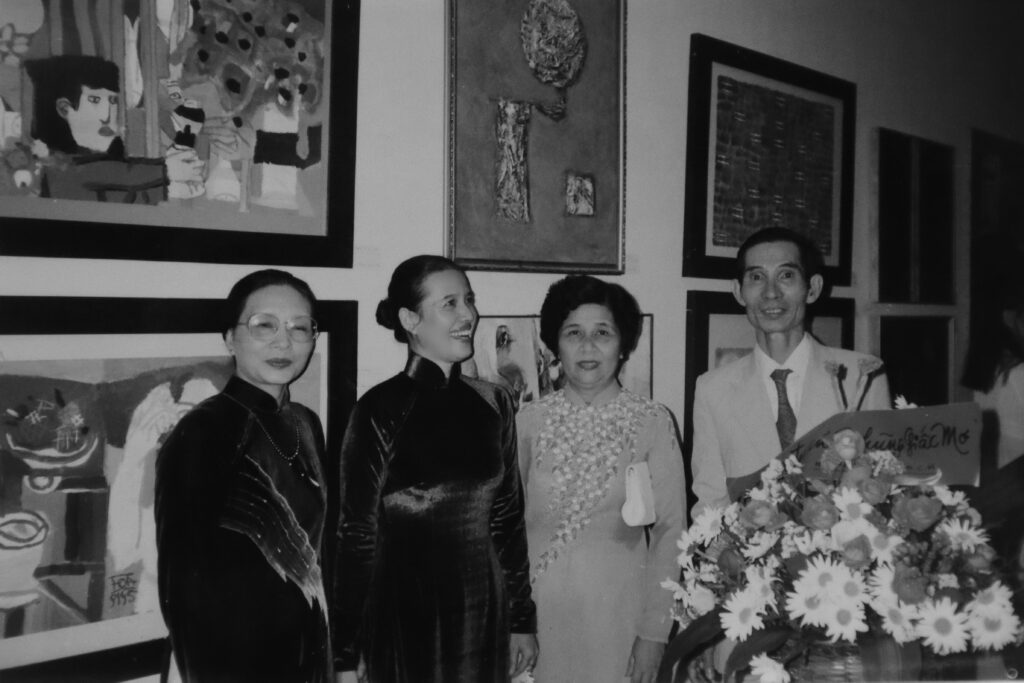
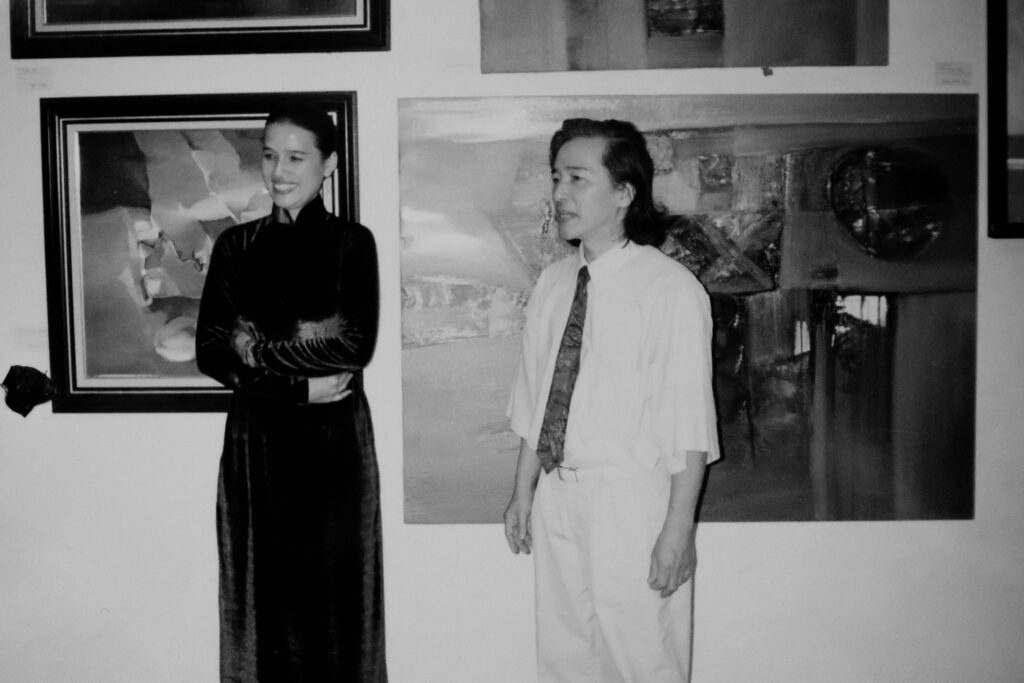
For decades, Boi Tran Garden served as both studio and sanctuary, a cradle for the Vietnamese spirit in its many forms: traditional, modern, personal, and collective. Here, poets recited under starlight, monks sipped tea, and artists, young and old, found refuge beneath the gaze of ancient Bodhi trees. From these quiet gatherings grew something far greater than any one exhibition or canvas: a legacy.
Recognition Rooted in Love and Kinship
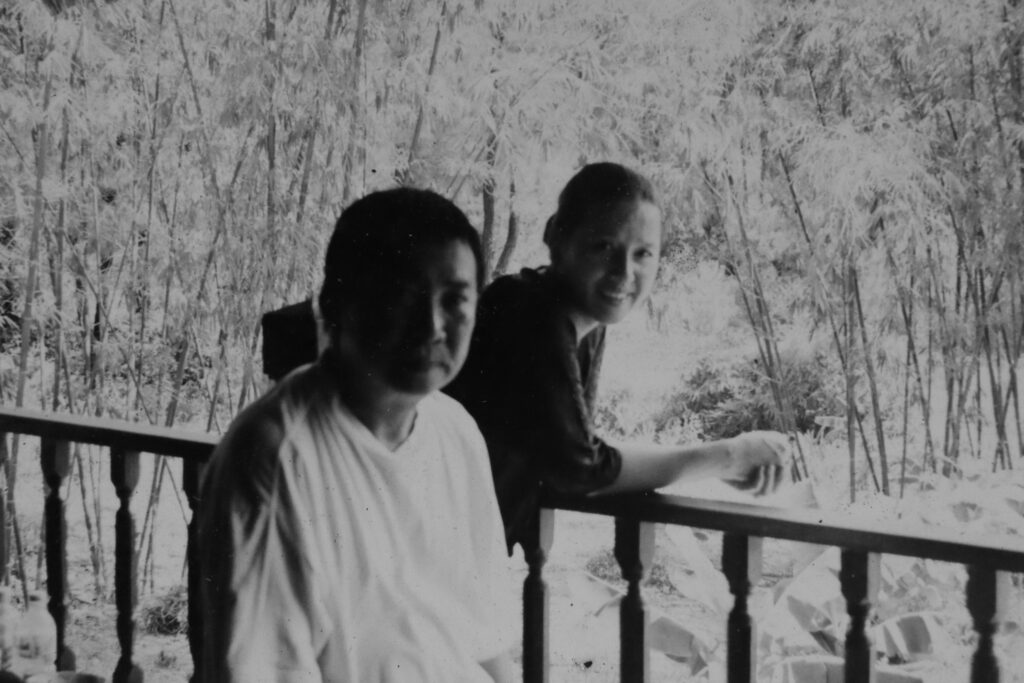
On July 1st, 2011, this legacy was recognized not by critics or collectors, but by family by kin who understood that heritage is not always loud, but often lovingly sustained in silence. That day, during a meeting of the Vietnamese Phan Family Council held at Boi Tran Garden, the artist was awarded the Phan Kinh Honorary Prize. It was a moment steeped in humility and deep emotion.
The award, presented by Professor Ph.D., People’s Teacher Phan Huu Dat, acknowledged Boi Tran’s tireless contributions to the preservation, development, and spiritual unity of the Phan family community. More than a title, it was a gesture of gratitude for her unwavering sense of responsibility, her voluntary service, and the way she nurtured tradition not through formality, but through love.
In the family's language, Boi Tran was not just an artist. She was a bridge between generations. A quiet architect of cultural continuity. A daughter of Hue whose devotion extended far beyond the canvas.
A Global Voice, Grounded in Vietnamese Soul
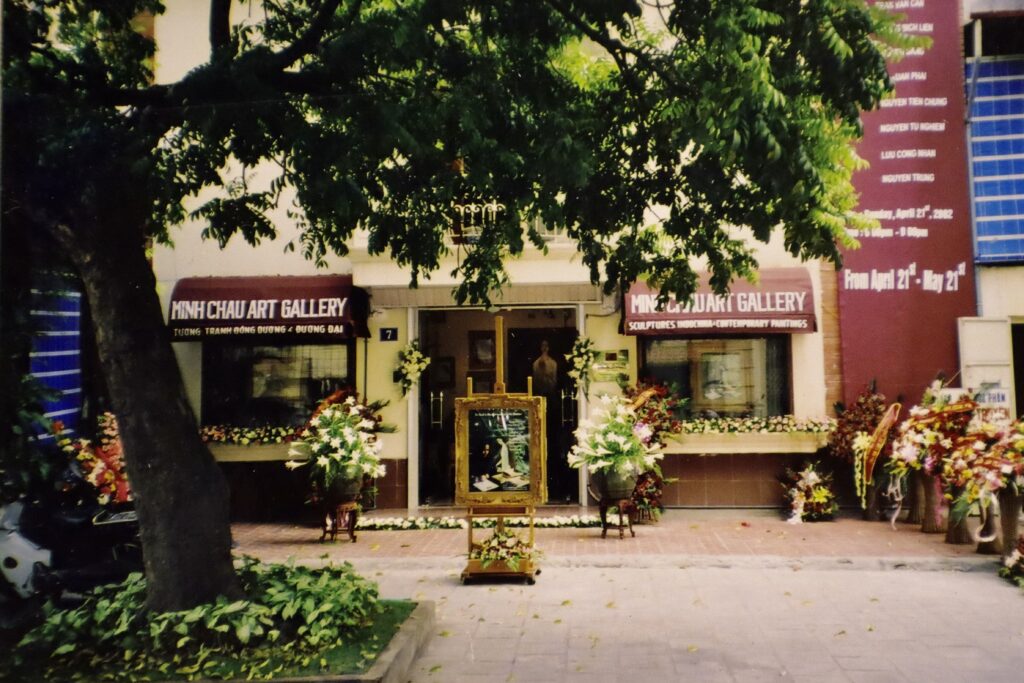
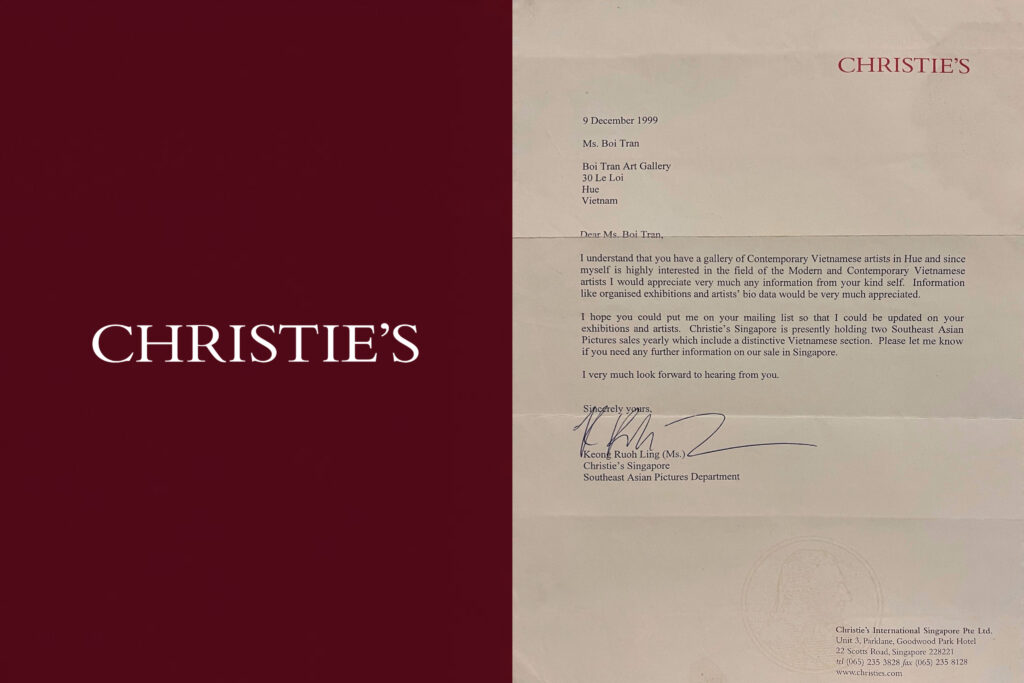
This wasn’t the first time Boi Tran’s quiet dedication had drawn wider recognition. In 1999, a letter arrived from Christie’s Southeast Asia: a simple, graceful document typed on creamy paper, signed by hand, and addressed personally to Ms. Boi Tran. It recognised her newly established Boi Tran Art Gallery (the precursor to today’s Garden) as a pioneering institution in Vietnamese contemporary art.
The letter, sent by Keong Ruoh Ling, the head of the Southeast Asian Pictures Department at Christie’s Singapore, was understated yet powerful. It affirmed that something remarkable had begun, something that resonated beyond Hue, beyond Vietnam.
Such acknowledgements matter not only because they validate an artist’s place in the world, but also because they reflect how truth, beauty, and care, when offered sincerely, transcend borders.
A Garden of Time, Tenderly Tended
Today, Boi Tran Garden remains what it has always been: a space of refuge, reverence, and reflection. It is a garden in the truest sense, not just of flowers, but of people, ideas, and spirit. Everything here is done with intention. From the brush marks on silk to the choice of stone in the courtyard, there is care. There is memory. There is meaning.
The accolades, letters, and certificates are not displayed as trophies, but kept as quiet testaments to a life lived well. Visitors may pass them without notice. But in the stories shared over tea, in the artwork lining the gallery walls, and in the hush that falls over the pond at dusk, one understands: this place is sacred.
Boi Tran once said that her art is “not only to be seen, but to be felt in the heart.” In that spirit, Boi Tran Garden is not merely a destination. It is an experience, a feeling, a breath, a return.
It is a place where art becomes legacy, and legacy continues to bloom.