The Grace of Memory: Boi Tran Through Vinh Tuong’s Letter
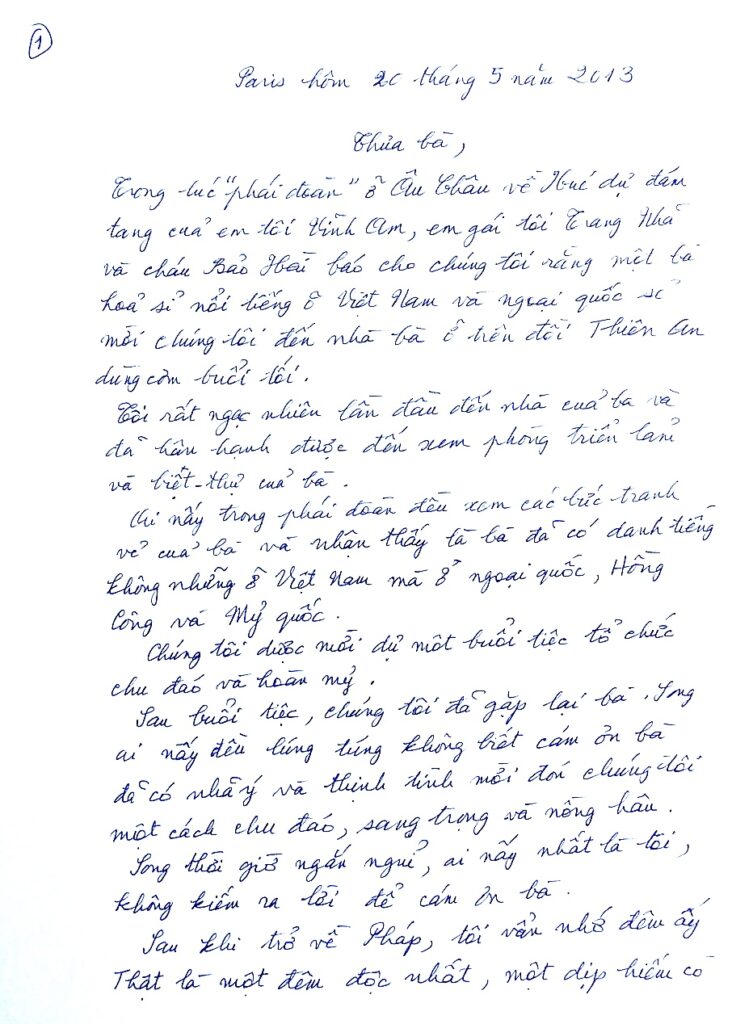
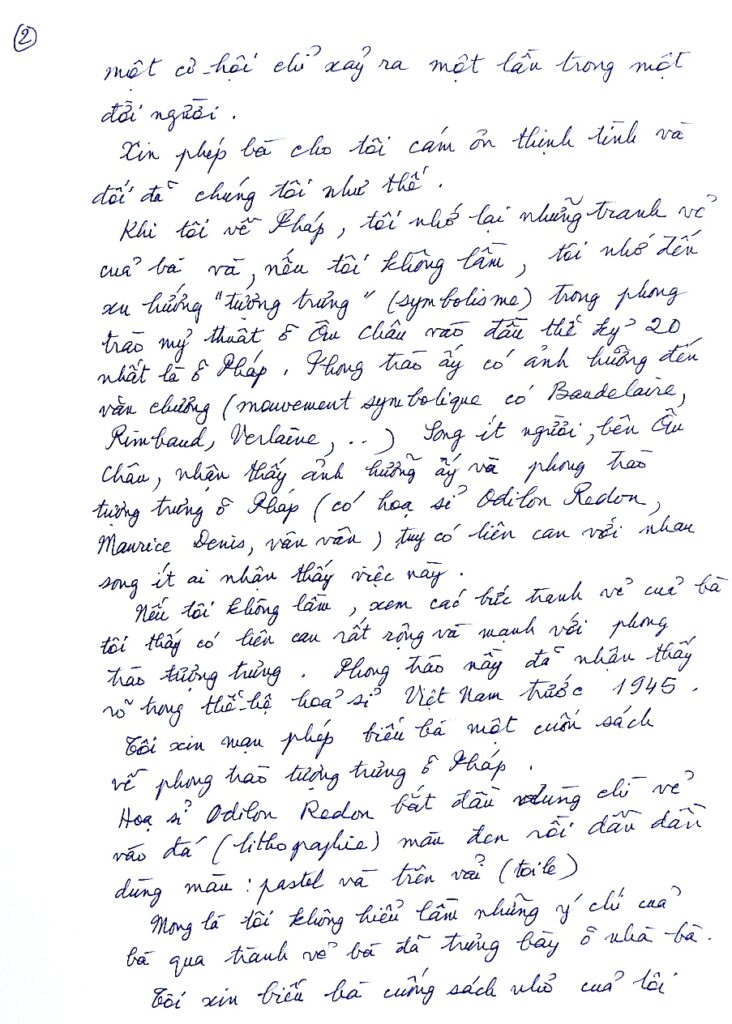
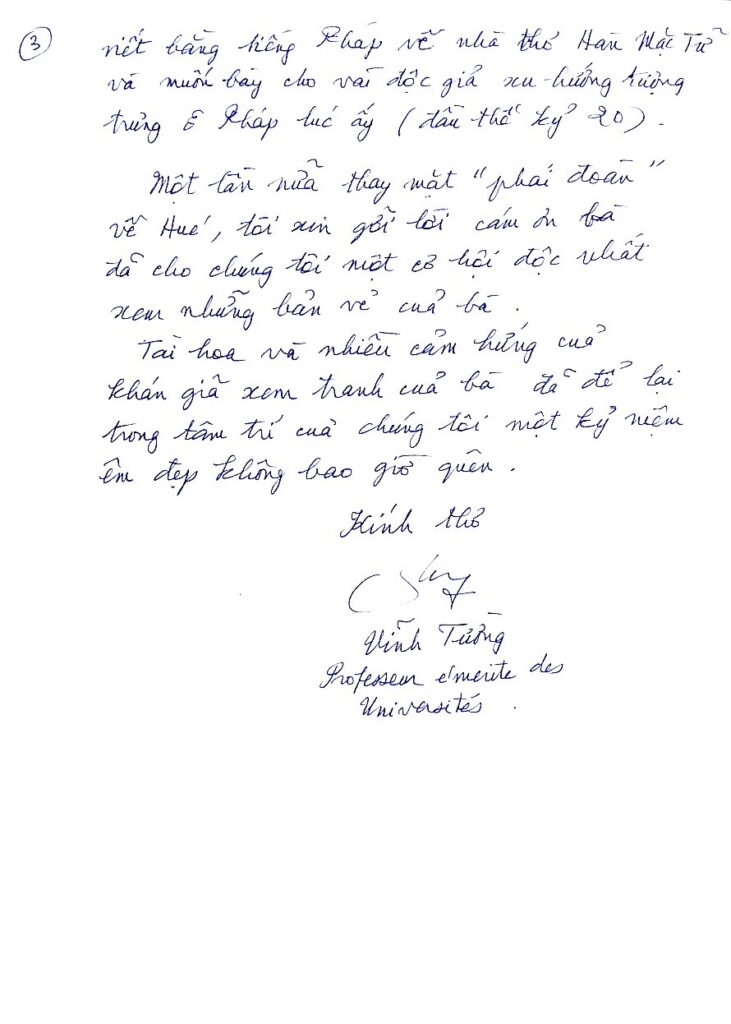
In a letter written in Paris on 20 May 2013, Emeritus Professor Vinh Tuong reflects on an evening that would come to inhabit memory with unusual clarity. What began as a family journey from Europe to Hue, undertaken in a moment of mourning, unfolded into something altogether unexpected: an encounter that seemed to exist somewhere between gesture and revelation, between the intimacy of hospitality and the quiet unfolding of art.
The invitation had come from Boi Tran, an artist whose reputation had already extended well beyond Vietnam. Yet the visiting delegation arrived without anticipation, unaware that the evening would leave such a lasting impression. As Professor Vinh Tuong recalls, what revealed itself was not simply a dinner, but a convergence of sensibilities. Art and life moved together without distinction, refinement met warmth, and what was seen gradually gave way to what was felt.
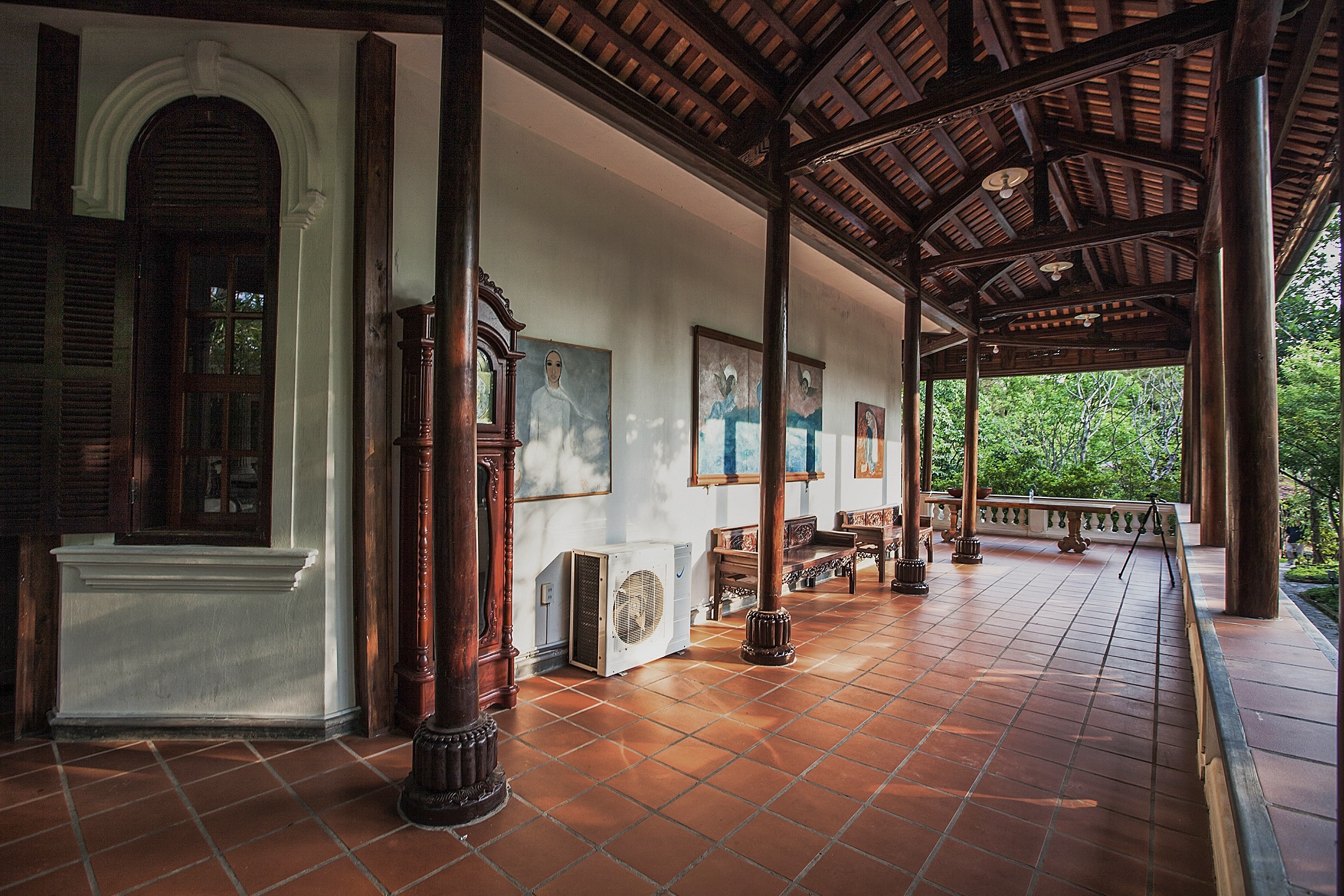
Set on the pine-covered slopes of Thien An Hill, the house opened itself gently. Both residence and place of contemplation, it offered not a display, but an atmosphere. Within it, Boi Tran’s paintings did not present themselves as isolated works. They seemed instead to belong to a continuous interior world, quiet yet resonant, carrying a sense of stillness that invited attention rather than demanded it.
The delegation moved through this space in silence. Each painting held its ground without insistence, offering no immediate explanation, no spectacle. Instead, there was an invitation, subtle but persistent, to remain a little longer, to look again, to allow meaning to emerge slowly.
All present, as Professor Vinh Tuong notes, recognised the assurance of an artist already established both in Vietnam and internationally. Yet what lingered was not the weight of reputation, but something more elusive. It was the sense of presence, of a lived experience that had been distilled and transformed, and now existed in another form, at once personal and shared.
The evening’s hospitality formed an essential part of this experience. The meal, prepared with evident care and offered with quiet elegance, extended the language of the paintings into another register. It spoke through gesture, through attention, through a generosity that required no emphasis. And yet, as he recalls with a certain humility, when the moment came to express thanks, words proved insufficient.
Only upon returning to Paris did reflection begin to settle. With distance came a different clarity. In remembering Boi Tran’s paintings, Professor Vinh Tuong found himself drawn toward an unexpected association, that of Symbolism in early twentieth-century France, a movement less concerned with description than suggestion, less with appearance than with inner resonance.
He evokes poets such as Baudelaire, Rimbaud and Verlaine, alongside painters including Odilon Redon and Maurice Denis. In Boi Tran’s work, he sensed a similar inclination, not a direct correspondence, but an affinity of spirit, a turning inward, a language shaped by suggestion, silence, and forms that seem to arise from a deeper, less visible order.
In a gesture that was at once scholarly and personal, he later offered the artist a publication on French Symbolism, together with his own writing on the poet Hàn Mặc Tử. It was a gesture of recognition, of shared ground between image and word, between what is seen and what is intuited.
He concludes his letter with a sentiment that remains quietly resonant: that Boi Tran’s artistry and brilliance had left within them not only admiration, but a respect, and a memory that endures.
There are moments in the life of art that do not declare themselves. They unfold without announcement, in the course of an evening, a conversation, a shared table. And yet they persist, long after, unchanged by time.
This letter, in its restraint and sincerity, preserves one such moment.